JD(U) Weighs Nitish Kumar Succession Amid Alliance Pressures
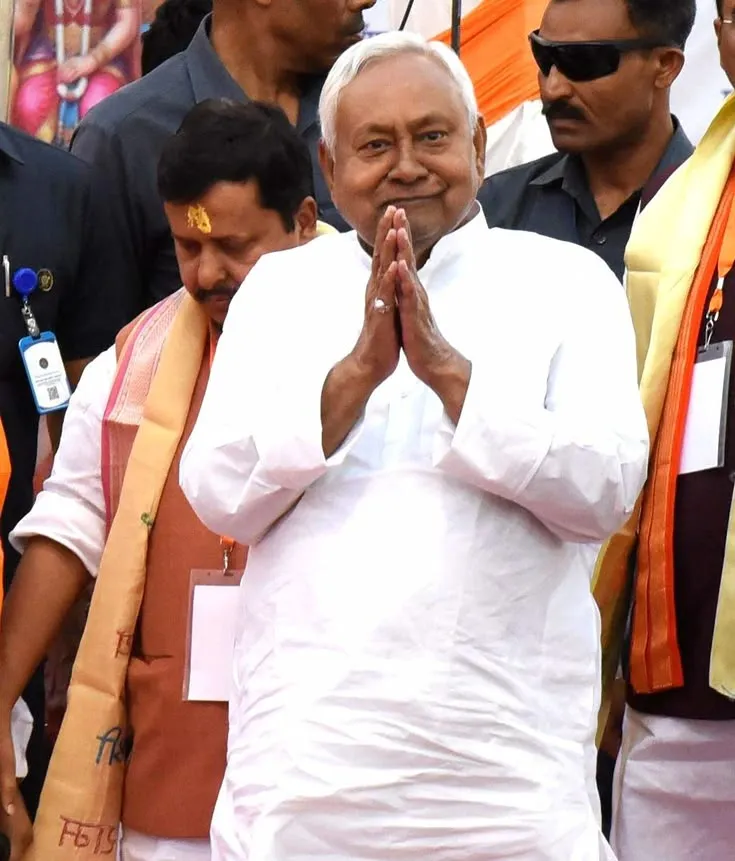
The Janata Dal (United) is navigating a delicate dual transition. On one hand, the party is actively reinforcing the political legacy of Nitish Kumar while elevating the profile of his son, Health Minister Nishant Kumar. On the other, it is calibrating its response to broader National Democratic Alliance priorities, including the push for a Uniform Civil Code, without surrendering its distinct organisational identity. Recent party programmes and internal messaging reflect this careful balancing act.
Reinforcing Legacy While Signalling Continuity
For more than two decades, Nitish Kumar defined JD(U) politics in Bihar through a combination of governance focus, social engineering and coalition management. After stepping down as Chief Minister and moving to the Rajya Sabha, he retained the position of national president. The party has used subsequent organisational meetings to underline that his leadership remains central even as day-to-day executive power in the state has shifted.
At the same time, senior leaders have openly projected Nishant Kumar as the face of the party’s future. In national and state council meetings earlier in the year, functionaries described him as the leader who would carry the organisation forward for the coming decades. His induction as Health Minister provided an institutional platform, allowing him to gain administrative experience while remaining closely associated with his father’s political brand.
Current orientation programmes and internal events serve multiple purposes. They celebrate the record of development and social justice associated with Nitish Kumar’s long tenure. They also create structured visibility for Nishant, presenting him as the natural continuation of that legacy rather than an abrupt break. Party spokespersons have framed this as a process of strengthening the organisation around a new generation while keeping the foundational leader’s imprint intact.
Nishant Kumar’s Expanding Role
Nishant Kumar’s political entry was relatively recent, yet the party has moved quickly to integrate him into both governmental and organisational structures. As Health Minister, he occupies a high-visibility portfolio that touches everyday public services. Internally, leaders have spoken of the need to build momentum around him, describing a growing consensus that the party’s long-term trajectory will revolve around his leadership.
This signalling is deliberate. By repeatedly linking Nishant to the themes of governance, social justice and organisational expansion that defined his father’s career, JD(U) is attempting to transfer political capital in a controlled manner. The emphasis remains on continuity rather than rupture. Nitish Kumar continues to hold the highest organisational post, providing institutional cover and legitimacy to the succession narrative.
The approach also reflects an awareness of Bihar’s competitive political landscape. With the BJP now leading the state government, JD(U) must maintain its relevance as a distinct force within the alliance. A clear, internally endorsed successor helps project stability and reduces the risk of factional uncertainty.
Navigating Alliance Dynamics and Red Lines
The succession conversation is unfolding against the backdrop of larger NDA priorities. Union Home Minister Amit Shah’s stated intent to implement the Uniform Civil Code across all NDA-ruled states before the 2029 Lok Sabha elections has required careful handling by JD(U). The party has historically maintained a nuanced position—open to the idea of a common code in principle but insistent on broad consensus and sensitivity to social realities.
Recent party gatherings have therefore carried an additional layer of purpose. Beyond legacy and succession, they offer a platform to articulate a measured stance that protects the alliance relationship while preserving JD(U)’s traditional space on issues of social harmony and federal consultation. Leaders have avoided confrontational language, preferring to stress study of specific provisions and the need for dialogue.
This calibrated response illustrates the red lines the party is trying to maintain. Full alignment with every central initiative risks diluting its distinct identity and alienating sections of its social base. Open defiance, on the other hand, could strain the coalition that currently provides it a share of power in Bihar. The preferred path appears to be quiet assertion of institutional positions, internal consolidation, and continued emphasis on Nitish Kumar’s governance model as the party’s core offering.
Organisational Priorities in a Post-Chief Minister Phase
Nitish Kumar’s decision to relinquish the chief ministership marked a significant shift. For the first time in years, JD(U) is operating without its tallest leader occupying the state’s top executive post. This has accelerated internal discussions about the party’s long-term architecture. The elevation of Nishant is part of a broader effort to ensure that organisational energy does not dissipate.
Party programmes now focus on legislative training, constituency engagement and reinforcement of the developmental narrative associated with the Nitish era. By placing Nishant at the centre of these efforts, the leadership is testing and building his connect with workers and the wider public. The message is that the party’s future will be shaped by continuity of policy direction and gradual generational transition rather than sudden upheaval.
Balancing Autonomy and Alliance Discipline
JD(U)’s current posture reflects the classic challenge of a regional ally within a larger national coalition. It must demonstrate reliability to its senior partner while protecting the autonomy that allows it to speak to its core support base. Succession planning around Nishant Kumar serves the dual purpose of internal stabilisation and external signalling: the party has a clear leadership pipeline and is not adrift after the change in the chief minister’s office.
At the same time, the careful handling of issues such as the Uniform Civil Code shows an unwillingness to allow alliance priorities to completely override its traditional positions. The party continues to frame its approach in the language of consensus and social sensitivity, leaving room for negotiation without issuing public ultimatums.
Looking Ahead
The coming months will test how effectively JD(U) can convert organisational messaging into sustained political capital. Nishant Kumar’s performance in the Health Ministry and his ability to connect with party workers will be closely watched. Equally important will be the party’s success in maintaining a distinct voice within the NDA on matters that touch its social coalition.
For now, the dual emphasis is clear. The party is determined to keep Nitish Kumar’s legacy of governance and social engineering at the centre of its identity. Simultaneously, it is preparing the ground for Nishant Kumar to assume a larger leadership role in the years ahead. Managing this transition while navigating the expectations of a powerful national ally remains the central strategic task before the Janata Dal (United). The orientation exercises and internal deliberations currently under way are early steps in what is likely to be a prolonged and carefully staged process of succession and repositioning.
Read more – blessandseemusic.com