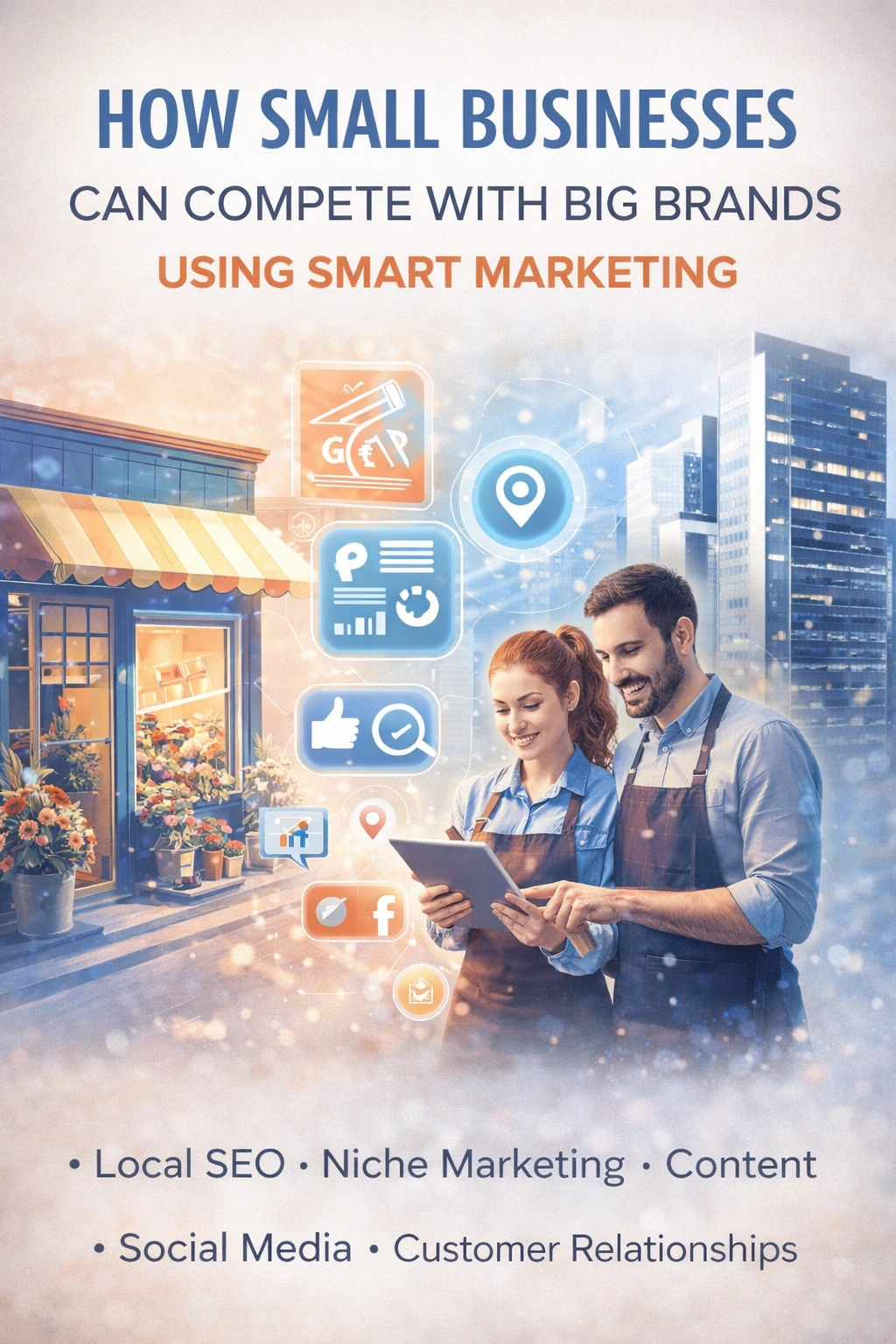
How Small Businesses Can Compete with Big Brands Using Smart Marketing
In today’s competitive marketplace, small businesses often find themselves competing with large corporations that have extensive budgets, resources, and brand recognition. However, the digital revolution has significantly leveled the playing field. With the right marketing strategies, small businesses can not only survive but thrive alongside industry giants.
Smart marketing is not about spending more—it is about using resources wisely, understanding your audience deeply, and leveraging agility and creativity. This article explores practical and effective strategies that small businesses can use to compete with big brands.
Understanding the Competitive Advantage of Small Businesses
Small businesses may lack the financial power of large corporations, but they possess unique advantages that can be leveraged effectively. One of the biggest strengths is agility—the ability to adapt quickly to market changes, customer preferences, and emerging trends. Unlike large organizations that often require multiple approvals, small businesses can make fast decisions and implement strategies immediately.
Another key advantage is the ability to build personal relationships with customers. Small businesses can offer a more human and personalized experience, which fosters trust and loyalty. This emotional connection is something that large brands often struggle to achieve. By focusing on authenticity and direct engagement, small businesses can create strong customer bonds that translate into long-term success.
Leveraging Local SEO and Hyper-Targeted Marketing
One of the most powerful tools available to small businesses is local search engine optimization (SEO). Instead of competing on a national or global level, small businesses can dominate local markets by optimizing their online presence for location-specific searches. This includes maintaining accurate business listings, collecting customer reviews, and using relevant keywords.
Hyper-targeted marketing allows small businesses to reach the right audience without wasting resources. Digital platforms enable precise targeting based on location, interests, and behavior, ensuring that marketing efforts are focused and cost-effective. By concentrating on a specific audience, small businesses can achieve higher conversion rates compared to broad, untargeted campaigns.
This localized and targeted approach gives small businesses a competitive edge, especially in communities where personal reputation and trust play a significant role in purchasing decisions.
Creating High-Quality and Authentic Content
Content marketing is one of the most effective ways for small businesses to build visibility and credibility. By creating valuable and informative content such as blogs, videos, and social media posts, businesses can establish themselves as experts in their niche. Research shows that businesses focusing on content marketing can significantly increase traffic and engagement.
Authenticity is a key factor that differentiates small businesses from large corporations. While big brands often produce polished but impersonal content, small businesses can connect with audiences through genuine storytelling and relatable messaging. This authenticity resonates with modern consumers who value transparency and real experiences.
Consistent and meaningful content not only attracts new customers but also builds trust and loyalty over time, making it a crucial component of smart marketing strategies.
Utilizing Social Media and Community Engagement
Social media platforms provide small businesses with an opportunity to engage directly with their audience. Unlike traditional advertising, social media allows for two-way communication, enabling businesses to respond to comments, answer questions, and build relationships in real time.
Engaging content such as polls, live sessions, and behind-the-scenes posts can create a sense of community and encourage interaction. Small businesses can also benefit from collaborating with local influencers or micro-influencers, who often have highly engaged audiences and can promote products authentically.
Community engagement goes beyond online interactions. Hosting events, supporting local causes, and collaborating with other businesses can strengthen brand presence and foster goodwill. These efforts create a loyal customer base that actively supports the business.
Smart Use of Paid Advertising and Retargeting
While big brands invest heavily in advertising, small businesses can achieve significant results with strategic and targeted ad campaigns. Instead of spending large amounts on broad campaigns, small businesses should focus on platforms that allow precise targeting and measurable outcomes.
Retargeting is a particularly effective strategy, as it focuses on individuals who have already interacted with the business. By staying visible to potential customers who have shown interest, businesses can increase the likelihood of conversions.
Affordable advertising options and data-driven insights enable small businesses to maximize their return on investment. By continuously analyzing performance and adjusting campaigns, they can compete effectively without overspending.
Building Strong Customer Relationships and Trust
Customer relationships are at the core of any successful small business. Unlike large corporations, small businesses have the ability to provide personalized experiences that make customers feel valued. This includes personalized communication, tailored offers, and attentive customer service.
Building trust requires consistency, transparency, and reliability. Positive customer experiences often lead to word-of-mouth marketing, which is one of the most powerful and cost-effective forms of promotion. Reviews, testimonials, and referrals can significantly influence purchasing decisions and enhance credibility.
By prioritizing customer satisfaction and engagement, small businesses can create a loyal customer base that supports long-term growth and competitiveness.
Embracing Technology and Automation
Technology has become a critical factor in modern marketing strategies. Tools for automation, analytics, and customer relationship management allow small businesses to operate more efficiently and effectively. Automation can handle repetitive tasks such as email marketing, social media scheduling, and data analysis, freeing up time for strategic planning.
Artificial intelligence is also playing an increasing role in helping small businesses compete with larger companies. It enhances marketing efficiency by improving creativity, analytics, and customer engagement.
By leveraging technology, small businesses can streamline operations, gain valuable insights, and deliver better customer experiences without requiring large teams or budgets.
The Power of Niche Marketing and Differentiation
One of the most effective ways for small businesses to compete is by focusing on a niche market. Instead of trying to appeal to a broad audience, they can specialize in a specific area and become experts in that domain. This approach allows businesses to stand out and attract customers who are looking for specialized products or services.
Differentiation is key to success in a crowded marketplace. Small businesses should identify what makes them unique—whether it is product quality, customer service, or brand values—and highlight these aspects in their marketing efforts.
By targeting a specific audience and offering unique value, small businesses can build a strong identity that distinguishes them from larger competitors.
Conclusion
Competing with big brands may seem challenging, but small businesses have unique strengths that can be leveraged through smart marketing strategies. By focusing on local SEO, authentic content, community engagement, targeted advertising, and customer relationships, they can create a strong and competitive presence in the market.
The key lies in being strategic, adaptable, and customer-focused. With the support of modern technology and digital tools, small businesses can achieve significant growth without the need for massive budgets.
Ultimately, success is not determined by size but by strategy. Small businesses that embrace innovation, authenticity, and smart marketing can not only compete with big brands but also carve out their own space in the market.