Best Home Workouts for Beginners to Stay Fit and Healthy
Starting a fitness journey doesn’t require expensive gym memberships or advanced equipment. Home workouts offer a convenient, effective, and safe way for beginners to build strength, improve endurance, and enhance overall wellbeing. With consistency and proper technique, you can achieve noticeable results within weeks. This guide provides simple yet powerful home workout routines tailored for beginners, along with explanations, tips, and a structured approach to help you stay fit and healthy.
Why Home Workouts Are Ideal for Beginners
Home workouts eliminate common barriers such as travel time, gym anxiety, and cost. They allow you to exercise at your own pace, learn correct form without pressure, and build sustainable habits. Regular physical activity at home can improve cardiovascular health, boost metabolism, strengthen muscles, reduce stress, and enhance mental clarity. The key is starting slowly and focusing on consistency rather than intensity.
Essential Tips Before Starting
- Warm up for 5 minutes with light movements like marching in place or arm circles.
- Focus on proper form to prevent injury.
- Breathe steadily — exhale during effort, inhale during relaxation.
- Stay hydrated and wear comfortable clothing.
- Rest 1–2 days per week for recovery.
- Listen to your body and stop if you feel sharp pain.
1. Full Body Strength Workout (3 Days a Week)
This routine targets all major muscle groups and builds overall strength.
Exercises:
- Bodyweight Squats (3 sets of 12–15 reps) Stand with feet shoulder-width apart. Lower your hips as if sitting in a chair, keeping your chest lifted and knees aligned with toes. Push through your heels to stand up. This strengthens legs, glutes, and core.
- Push-ups (Knee or Wall Variation) (3 sets of 8–12 reps) Begin in a plank position. Lower your chest toward the floor by bending elbows, then push back up. Modify on knees if needed. This builds chest, shoulder, and arm strength.
- Glute Bridges (3 sets of 12–15 reps) Lie on your back with knees bent. Lift your hips toward the ceiling by squeezing your glutes. Hold briefly at the top. Excellent for strengthening the back chain and improving posture.
- Plank (3 sets of 20–40 seconds) Hold a forearm plank with a straight body line from head to heels. This engages the entire core for better stability.
How to Perform: Do exercises in sequence with 45–60 seconds rest between moves. Rest 1–2 minutes between rounds. Complete 3 rounds.
2. Cardio and Fat-Burning Circuit (2–3 Days a Week)
This routine elevates heart rate while burning calories.
Exercises:
- Jumping Jacks or High Knees (45 seconds)
- Walking Lunges (10 steps per leg)
- Mountain Climbers (30 seconds)
- Burpees (Modified) (8–10 reps)
How to Perform: Complete the circuit with minimal rest. Repeat 3–4 times. This improves cardiovascular fitness and helps with fat loss when combined with a balanced diet.

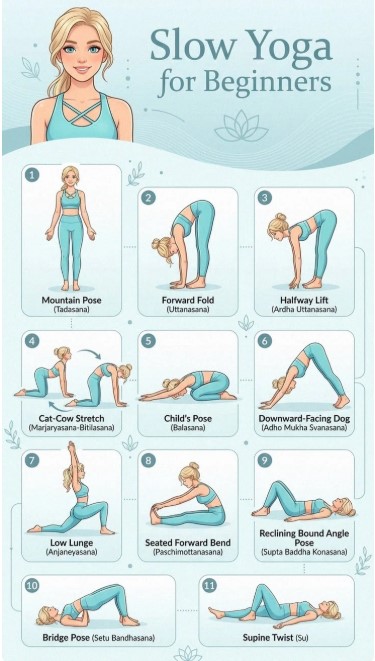
3. Yoga and Flexibility Routine (1–2 Days a Week)
Yoga improves flexibility, balance, and mental wellbeing.
Key Poses:
- Sun Salutations (5–8 rounds)
- Cat-Cow Pose (for spine mobility)
- Downward Dog (stretches hamstrings and calves)
- Child’s Pose (for relaxation)
- Warrior II (builds leg strength and focus)
How to Perform: Hold each pose for 20–30 seconds. Focus on deep breathing. This routine reduces stress and complements strength training days.
Weekly Sample Schedule for Beginners
- Monday: Full Body Strength
- Tuesday: Light Walk or Yoga
- Wednesday: Cardio Circuit
- Thursday: Full Body Strength
- Friday: Yoga/Flexibility
- Saturday: Active Recovery (walk or stretching)
- Sunday: Rest
Nutrition Tips to Support Home Workouts
Fuel your body properly to see better results:
- Eat a protein-rich meal or snack after workouts.
- Include complex carbohydrates like oats, sweet potatoes, and fruits for energy.
- Stay hydrated — drink water before, during, and after exercise.
- Consume vegetables and healthy fats daily for recovery and hormone balance.
Progress Tracking and Motivation
Track your workouts in a notebook or app. Note how many reps you complete and how you feel. Take progress photos every 4 weeks. Celebrate small wins like completing all planned sessions or noticing improved energy. Find a workout buddy or join online fitness communities for accountability.
Common Mistakes to Avoid
- Skipping warm-up and cool-down
- Doing too many exercises too soon
- Ignoring rest days
- Comparing yourself to advanced fitness levels
- Poor form due to rushing
Long-Term Benefits of Consistent Home Workouts
Regular home exercise leads to stronger muscles, better cardiovascular health, improved mood through endorphin release, enhanced sleep quality, and greater self-confidence. Many beginners report feeling more energetic, focused, and resilient within 4–6 weeks.
Home workouts prove that fitness is accessible to everyone. You don’t need fancy equipment — just commitment and the right approach. Start with the routines provided, stay consistent, and gradually increase intensity as your fitness improves.
Your journey to a stronger, healthier body begins with a single workout. Choose one routine today, follow it for the next two weeks, and experience the positive changes yourself. With patience and regularity, home workouts can become a lifelong habit that supports both physical fitness and mental wellbeing.
Read more – presslyy.com