Trump-Modi Tariff Row: Peter Navarro Says India and US Can Work Out 100% Tariff Threat
A Fresh Signal From Washington
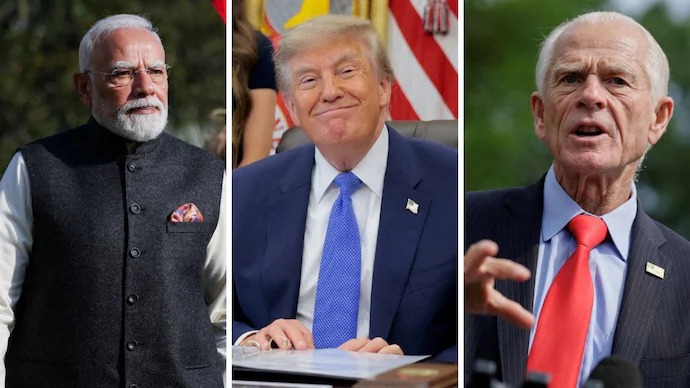
The latest Trump India tariff threat has added another tense chapter to the trade relationship between New Delhi and Washington. Peter Navarro, a senior White House trade adviser, said US President Donald Trump and Prime Minister Narendra Modi have a very good working relationship and would work through the disagreement themselves.
Navarro’s comments arrived as Washington considers stronger economic pressure against countries continuing to purchase Russian oil. The proposed measure could allow tariffs as high as 100 percent on goods from major buyers of Russian energy, including India. The situation is serious, although the proposed 100% tariff should not be treated as an already-imposed duty on Indian goods.
That distinction matters because markets, exporters, and businesses often react differently to an actual tariff compared with a proposed measure. For India, the immediate issue is therefore not simply the headline number, but how the negotiations between the two governments develop over the coming weeks.
Why Russia Is Behind The Dispute
At the centre of the disagreement is India’s continued purchase of Russian crude oil. India increased its Russian oil purchases after the Russia-Ukraine war changed global energy markets and created opportunities to obtain discounted crude. New Delhi has repeatedly viewed energy security and affordable supplies as important national interests.
Washington, however, has taken a much tougher position on Russian energy revenues. US officials argue that purchases of Russian crude provide Moscow with money that can support its war effort. Navarro has previously argued that India’s Russian oil purchases should stop if New Delhi wants to be treated as a strategic partner by Washington.
India has pushed back against criticism over its energy choices. Indian officials have argued that the country is being unfairly singled out while Western economies have also maintained economic relationships involving Russia. This disagreement makes the tariff issue much larger than ordinary trade negotiations because energy policy, geopolitics, and national interests are all connected.
What Peter Navarro Actually Said
Navarro’s latest statement is being watched closely because his comments suggest that Washington does not necessarily see the current dispute as something that must permanently damage the broader relationship. He said Trump and Modi have a very good working relationship and indicated that the two leaders could handle the matter directly.
That message provides some diplomatic breathing room at a time when the proposed tariff figure sounds extremely aggressive. A potential 100 percent tariff would represent a major escalation for Indian exporters if eventually implemented across affected goods. But Navarro did not announce that such a tariff had already been imposed.
Instead, his comments pointed toward negotiations and direct political engagement between the two leaders. That is important for businesses because trade policy can change quickly when governments are still negotiating over specific conditions.
The 100 Percent Tariff Proposal
The proposed 100% tariff on India is linked to legislation designed to increase pressure on countries purchasing Russian oil. The US Senate has passed legislation that could give President Trump authority to impose tariffs of up to 100 percent on major buyers of Russian energy. India and China are among the countries most exposed because of their large Russian energy purchases.
However, legislation moving through Washington does not automatically mean every provision becomes an immediate tariff. There are additional political and legal steps involved before a measure can become effective policy.
That is why headlines describing a guaranteed 100 percent tariff can be misleading. The threat is real and has attracted attention, but the final outcome could still depend on negotiations, presidential decisions, legislative developments, and India’s response regarding Russian crude.
India Faces A Difficult Choice
For India, the situation is complicated because Russian oil has become an important part of its energy strategy. Changing suppliers is possible, but replacing large volumes quickly can create additional costs and logistical challenges.
Oil prices are influenced by global supply, transportation routes, refinery requirements, currency movements, and geopolitical events. India therefore has to consider more than simply choosing between Russia and the United States.
There is also the question of Indian exporters who depend heavily on access to the American market. A very high tariff could make Indian products considerably more expensive for American buyers. Industries such as textiles, footwear, chemicals, jewellery, engineering goods, and other export-oriented sectors could face pressure if tariffs rise sharply.
Previous tariff disputes have already shown how quickly American trade policy can affect Indian exporters. Reuters reported in 2025 that tariffs reaching as high as 50 percent created serious concerns for Indian businesses and jobs.
Why Modi-Trump Relations Matter
The personal relationship between Trump and Modi has become an important part of the conversation around US-India trade. Both governments have strong strategic reasons to maintain cooperation despite disagreements over trade and Russia.
The United States sees India as an important partner in the Indo-Pacific region, particularly as Washington manages its wider competition with China. India, meanwhile, has reasons to maintain close economic, defence, technology, and diplomatic links with America.
That broader relationship could make a complete breakdown over Russian oil less attractive for both sides. Navarro’s latest remarks appear to acknowledge that reality. His statement essentially leaves room for Trump and Modi to negotiate without turning the disagreement into a permanent confrontation.
Still, personal diplomacy cannot remove every economic disagreement. Trade negotiations involve industries, tariffs, market access, energy policy, and domestic political pressures, so any solution would likely require practical compromises rather than only friendly relations.
What Could Happen Next
Several outcomes remain possible from here. One possibility is that India and the United States reach an understanding that reduces the likelihood of the maximum tariff being used. Another possibility is that Washington keeps the tariff threat available as negotiating pressure while discussions continue.
India could also continue diversifying its energy purchases, reducing dependence on Russian crude over time without making a sudden shift. Recent analysis has suggested that India’s diversified oil sourcing gives it some flexibility if Russian imports become less attractive because of trade restrictions.
The third possibility would be a sharper escalation if negotiations fail and Washington chooses to use stronger tariffs against countries purchasing Russian energy.
That outcome would create difficulties for exporters on both sides. American importers could face higher costs for Indian products, while Indian manufacturers could lose price competitiveness in one of their major overseas markets.
Indian Businesses Are Watching Closely
For Indian companies, the biggest concern is uncertainty rather than just the headline tariff percentage. Businesses can often plan around a known duty because they can adjust prices, suppliers, production, or markets.
Sudden policy changes are much harder to manage because companies may have orders already booked, contracts already signed, and shipments already moving through supply chains. Exporters therefore have a strong reason to monitor every announcement from Washington and New Delhi.
Smaller companies could feel the pressure more quickly because they generally have less financial room to absorb higher duties. Larger exporters may have more options, including expanding into Europe, the Middle East, Southeast Asia, and other international markets.
Still, the United States remains a major destination for Indian goods, so replacing American demand overnight would not be simple.
The Bigger US-India Trade Picture
The current tariff dispute should not be viewed separately from the broader US-India economic relationship. Both countries have spent years expanding cooperation in technology, defence, manufacturing, energy, education, and investment.
That makes the current disagreement unusually complicated. Washington wants India to align more closely with American strategic priorities, while New Delhi has traditionally protected its freedom to make independent foreign-policy and energy decisions.
The Russian oil question brings those differences into direct contact. America wants greater pressure on Moscow, while India wants reliable and affordable energy supplies.
The challenge for both governments is finding an arrangement that protects their wider strategic relationship without forcing either side to publicly surrender its core position.
Final Outlook For The Tariff Dispute
The latest statement from Peter Navarro gives some reason to believe that diplomacy remains possible despite the sharp Trump India tariff threat. His message was that Trump and Modi have a strong working relationship and can work through the disagreement themselves.
For now, the proposed 100 percent tariff remains a major warning rather than something that should automatically be treated as a confirmed blanket duty on Indian imports. The coming negotiations will matter greatly for exporters, energy companies, investors, and consumers. India will likely continue protecting its energy interests while seeking to avoid unnecessary damage to its relationship with Washington. The United States, meanwhile, must balance pressure on Russia with the long-term strategic importance of India. Readers and businesses should continue following verified policy announcements as the situation develops.