Trump’s 10% Tariff Move After Supreme Court Blow
The global economic landscape has been shaken by a dramatic confrontation between the United States Supreme Court and President Donald Trump over the legality of sweeping import tariffs. In a landmark decision, the Supreme Court struck down Trump’s broad tariff regime, ruling that he had exceeded his legal authority. In response, Trump quickly announced a new 10% global tariff under a different legal framework, signaling his determination to continue using trade policy as a central pillar of his economic agenda. This development has significant implications for international trade, domestic industries, and the balance of power between the executive and legislative branches of the U.S. government.
Table of Contents
ToggleSupreme Court Blocks Trump’s Emergency Tariffs
The U.S. Supreme Court delivered a major legal setback to Trump’s tariff policy by ruling 6–3 that his sweeping global tariffs were unlawful under the International Emergency Economic Powers Act (IEEPA). The Court determined that the law, enacted in 1977, does not authorize the president to impose tariffs without explicit approval from Congress. Instead, the authority to levy import taxes rests primarily with Congress under the U.S. Constitution.
The ruling invalidated tariffs that had affected imports from nearly all U.S. trading partners and generated tens of billions of dollars in revenue. Many businesses and states had challenged the tariffs, arguing they imposed significant financial burdens and were enacted without proper legal authority. The Court emphasized that emergency powers cannot be used to bypass congressional oversight when it comes to taxation and trade policy.
Chief Justice John Roberts, writing for the majority, stated that when Congress grants tariff authority, it does so clearly and with defined limits. Since the emergency powers law did not explicitly grant such authority, the tariffs were declared unconstitutional. This decision reaffirmed the principle that major economic policies must follow constitutional procedures.
Trump Responds with a New 10% Global Tariff
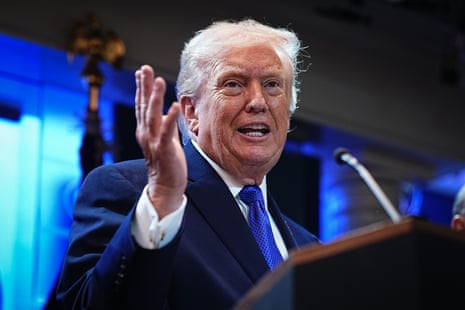
Despite the legal defeat, Trump responded swiftly by announcing a new 10% tariff on imports from all countries. He signed a proclamation invoking Section 122 of the Trade Act of 1974, which allows the president to impose temporary import duties to address balance-of-payments problems or economic threats. The new tariff is expected to take effect almost immediately and could remain in place for up to 150 days unless extended by Congress.
Trump defended his decision, stating that tariffs were essential to protecting American industries, reducing trade deficits, and generating government revenue. He also made clear that the new tariff would be imposed in addition to existing duties and emphasized that his administration would continue pursuing alternative legal routes to maintain tariffs.
The move reflects Trump’s longstanding belief that tariffs are a powerful economic tool. Throughout his political career, he has argued that tariffs can strengthen domestic manufacturing, reduce reliance on foreign goods, and give the United States leverage in trade negotiations.
Legal and Constitutional Implications
The Supreme Court’s decision represents a significant moment in the constitutional balance of power. By blocking Trump’s use of emergency powers to impose tariffs, the Court reaffirmed Congress’s central role in regulating international trade. This ruling sets a precedent that limits presidential authority in economic matters and reinforces the importance of legislative approval for major trade decisions.
However, the ruling did not completely eliminate Trump’s ability to impose tariffs. Instead, it clarified that such measures must be implemented under laws that explicitly grant tariff authority. By invoking the Trade Act of 1974, Trump is attempting to operate within a different legal framework that could withstand judicial scrutiny, at least temporarily.
Legal experts believe the new tariff could still face challenges in courts, especially if critics argue that it exceeds the intended scope of the Trade Act. This suggests that the legal battle over tariffs may continue in the months ahead.
Economic Impact on Global Trade and U.S. Businesses
The tariff dispute has major implications for global trade and the U.S. economy. Tariffs increase the cost of imported goods, which can raise prices for consumers and increase production costs for businesses that rely on foreign materials. While tariffs may benefit certain domestic industries by reducing foreign competition, they can also trigger retaliatory measures from other countries.
The Supreme Court’s decision invalidated tariffs that had generated billions in government revenue, raising questions about whether companies could receive refunds for duties they previously paid. This could create financial and administrative challenges for the government and businesses alike.
At the same time, Trump’s new 10% tariff could affect global supply chains and trade relationships. Countries impacted by the tariff may consider retaliatory measures or seek negotiations with the United States to reduce tensions.
Political and Strategic Significance
The tariff conflict highlights Trump’s broader economic strategy, which prioritizes protectionism and domestic manufacturing. Tariffs have been a central element of his economic policies, aimed at reducing trade deficits and encouraging companies to produce goods within the United States.
Politically, the issue also underscores tensions between the executive branch and the judiciary. Trump strongly criticized the Supreme Court’s decision and vowed to continue pursuing tariffs through other legal means. His response reflects a determination to maintain aggressive trade policies despite legal and political obstacles.
The situation also illustrates the complex relationship between economic policy and constitutional law. While presidents have significant influence over trade policy, their authority is ultimately constrained by laws passed by Congress and interpreted by the courts.
What Comes Next?
The future of Trump’s tariff policy remains uncertain. The newly imposed 10% tariff could face legal challenges, political opposition, or negotiations with Congress. Much will depend on whether lawmakers support the tariff and whether courts uphold its legality under the Trade Act of 1974.
In the meantime, businesses, investors, and governments around the world are closely monitoring the situation. The outcome could reshape international trade policies, influence global economic stability, and redefine the limits of presidential authority in economic decision-making.
Conclusion
The Supreme Court’s rejection of Trump’s global tariffs marks a significant constitutional and economic turning point. By ruling that emergency powers cannot be used to impose sweeping import taxes, the Court reaffirmed Congress’s authority over trade policy. However, Trump’s swift introduction of a new 10% tariff demonstrates his continued commitment to using tariffs as a tool for economic and political leverage.
This ongoing conflict reflects deeper questions about the balance of power, the role of tariffs in modern economic policy, and the future direction of global trade. As legal battles and economic negotiations continue, the world will be watching closely to see how this high-stakes confrontation unfolds.