Daily Workout Plan Featuring the Best Exercises for Full Body Fitness
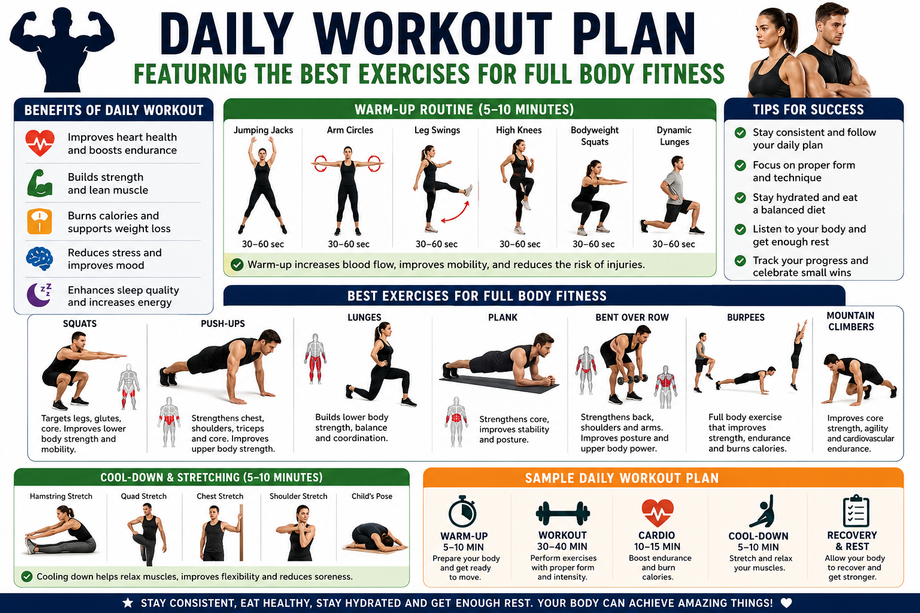
Achieving full-body fitness requires more than focusing on a single muscle group or performing the same workout every day. A well-designed fitness routine should improve strength, cardiovascular endurance, flexibility, mobility, and overall physical health. Full-body workouts are highly effective because they engage multiple muscle groups in a single session, helping individuals burn more calories while building balanced strength.
Research consistently shows that regular physical activity can reduce the risk of chronic diseases, improve mental health, enhance sleep quality, and boost energy levels. Whether you are a beginner or an experienced fitness enthusiast, following a structured daily workout plan can help you achieve your fitness goals more efficiently. The key is combining compound exercises, bodyweight movements, flexibility training, and recovery strategies into one comprehensive routine.
Why Full Body Fitness Matters
Full-body fitness is essential because the body functions as a connected system rather than isolated muscles. Training multiple muscle groups together improves coordination, balance, and functional strength that can be applied to daily activities. A full-body approach also helps reduce the risk of muscular imbalances, which can lead to poor posture and injuries. Additionally, engaging large muscle groups increases calorie expenditure and supports weight management.
People who focus on overall fitness often experience better cardiovascular health, enhanced mobility, and improved endurance. Full-body training also saves time by allowing individuals to work several muscle groups in a single session. This makes it an ideal strategy for busy professionals and anyone seeking maximum fitness benefits from limited workout time.
Benefits of Following a Daily Workout Plan
A daily workout plan provides structure and consistency, which are crucial for long-term fitness success. Regular exercise helps strengthen muscles, improve heart health, and enhance metabolic function. Following a planned routine also makes it easier to track progress and stay motivated. Consistent workouts can improve mental well-being by reducing stress and promoting the release of endorphins, often referred to as feel-good hormones.
A daily exercise habit can also improve sleep quality, boost confidence, and increase energy levels throughout the day. Over time, a structured fitness plan helps individuals build discipline and develop healthy lifestyle habits. The combination of physical and mental benefits makes daily exercise one of the most effective tools for overall wellness.
Warm-Up Routine Before Exercise
Why Warming Up Is Important
A proper warm-up prepares the body for physical activity by gradually increasing heart rate, blood circulation, and muscle temperature. It helps improve joint mobility and reduces the risk of injuries during exercise. Warming up also enhances muscle performance by improving oxygen delivery to working tissues. Many fitness experts recommend spending at least five to ten minutes on dynamic warm-up exercises before starting a workout.
Skipping a warm-up can increase the likelihood of muscle strains and reduced performance. A well-executed warm-up also mentally prepares individuals for exercise, improving focus and workout effectiveness. Incorporating mobility movements into the warm-up routine ensures that muscles and joints are ready for more demanding physical activities.
Recommended Warm-Up Exercises
A good warm-up should include movements that activate the entire body. Jumping jacks are excellent for increasing heart rate and promoting blood circulation. Arm circles help loosen shoulder joints and improve upper-body mobility. Leg swings prepare the hips and lower body for movement. High knees increase cardiovascular activity while activating the core and leg muscles.
Bodyweight squats help engage the glutes, quadriceps, and hamstrings. Dynamic lunges improve balance and flexibility while warming up the lower body. These exercises collectively prepare the body for a safe and productive workout session. Performing each movement for 30 to 60 seconds can effectively prepare the body for exercise.
Best Exercises for Full Body Fitness
Squats are considered one of the most effective full-body exercises because they engage multiple major muscle groups simultaneously. They primarily target the quadriceps, hamstrings, glutes, and core muscles. Squats also improve lower-body strength, balance, and mobility.
Regular squat training can enhance athletic performance and make daily activities such as walking, climbing stairs, and lifting objects easier. Since squats activate large muscle groups, they also contribute to increased calorie burning. Variations such as bodyweight squats, goblet squats, and barbell squats allow individuals of different fitness levels to benefit from the exercise. Maintaining proper form is essential to maximize results and prevent injury.
Push-Ups
Push-ups are a classic bodyweight exercise that effectively strengthen the chest, shoulders, triceps, and core muscles. They require no equipment and can be performed almost anywhere. Push-ups also help improve upper-body endurance and stability. As a compound exercise, they engage multiple muscle groups simultaneously, making them highly efficient for full-body fitness.
Beginners can start with modified push-ups performed on the knees, while advanced individuals can explore challenging variations such as decline push-ups. Consistent practice improves posture, upper-body strength, and muscular endurance. Proper alignment of the body during push-ups is important for maximizing effectiveness and reducing strain on the joints.
Lunges
Lunges are excellent for developing lower-body strength, balance, and coordination. They primarily target the quadriceps, glutes, hamstrings, and calves while also engaging the core muscles for stability. Unlike some exercises that work both legs simultaneously, lunges train each leg independently, helping correct muscular imbalances. They also improve mobility and flexibility in the hips and lower body.
Walking lunges, reverse lunges, and side lunges offer variety and target muscles from different angles. Incorporating lunges into a workout routine can enhance athletic performance and support functional movement patterns. Proper posture and controlled movement are essential for safe execution.
Plank
The plank is one of the best exercises for core strength and stability. It engages the abdominal muscles, lower back, shoulders, and glutes simultaneously. Unlike traditional abdominal exercises that involve movement, the plank is an isometric exercise that challenges the body to maintain a stable position.
Strong core muscles are important for posture, balance, and injury prevention. Regular plank practice can improve overall body control and support performance in other exercises. Beginners can start with shorter hold times and gradually increase duration as strength improves. Maintaining proper alignment from head to heels is crucial for maximizing benefits.
Burpees
Burpees are a highly effective full-body exercise that combines strength training and cardiovascular conditioning. They engage the chest, arms, shoulders, core, legs, and cardiovascular system simultaneously. Because burpees involve multiple movements performed in sequence, they significantly increase heart rate and calorie expenditure. This makes them an excellent choice for improving endurance and supporting weight-loss goals.
Burpees can be modified for beginners or intensified for advanced athletes. Performing them regularly helps build stamina, coordination, and overall fitness. Although challenging, burpees provide one of the most comprehensive full-body workouts available without requiring equipment.
Sample Daily Workout Plan
Morning Session
Starting the day with physical activity can boost energy levels and improve mental focus. A morning workout may begin with a five-minute warm-up followed by three sets of squats, push-ups, lunges, and planks. Moderate-intensity exercise in the morning helps activate muscles and increase metabolism. Many people find that exercising early improves consistency because it reduces the chances of skipping workouts later in the day. Morning sessions also contribute to improved mood and productivity. Completing a balanced workout before daily responsibilities begin can create a positive foundation for the rest of the day.
Evening Session
An evening workout can serve as an excellent way to relieve stress accumulated throughout the day. This session may include burpees, light jogging, stretching, and mobility exercises. Evening workouts can help improve flexibility and muscular recovery when performed at a moderate intensity. For individuals who feel stronger later in the day, evening sessions may allow for higher performance levels. Incorporating relaxation-focused stretches at the end of the workout can support recovery and improve sleep quality. The key is maintaining consistency and choosing a workout time that fits your lifestyle and schedule.
Importance of Recovery and Nutrition
Recovery Strategies
Recovery is a critical component of any fitness plan. Exercise places stress on muscles, and recovery allows them to repair and become stronger. Adequate sleep is one of the most important recovery tools because many physiological repair processes occur during rest.
Stretching and mobility exercises can help reduce muscle stiffness and improve flexibility. Staying hydrated supports recovery by maintaining fluid balance and assisting nutrient transport. Active recovery activities such as walking or light cycling can improve circulation without placing excessive strain on the body. Consistent recovery practices help reduce injury risk and support long-term fitness progress.
Nutrition for Full Body Fitness
Proper nutrition provides the energy and nutrients needed to support exercise performance and recovery. A balanced diet should include lean proteins, complex carbohydrates, healthy fats, vitamins, and minerals. Protein supports muscle repair and growth, while carbohydrates provide fuel for workouts.
Healthy fats contribute to hormone production and overall health. Fruits and vegetables supply essential nutrients and antioxidants that aid recovery. Hydration is equally important because even mild dehydration can negatively affect performance. Combining regular exercise with healthy eating habits creates the foundation for sustainable fitness and long-term health improvements.
Conclusion
A daily workout plan featuring the best exercises for full-body fitness can help individuals improve strength, endurance, flexibility, and overall well-being. Exercises such as squats, push-ups, lunges, planks, and burpees engage multiple muscle groups and provide comprehensive fitness benefits. Consistency, proper warm-up routines, recovery strategies, and balanced nutrition all contribute to long-term success. By following a structured plan and gradually increasing intensity, individuals can achieve sustainable results while reducing the risk of injury. Full-body fitness is not just about appearance; it is about building a healthier, stronger, and more active lifestyle that supports overall quality of life.