How to Create the Perfect Travel Itinerary: A Complete Step-by-Step Guide for Stress-Free Trips
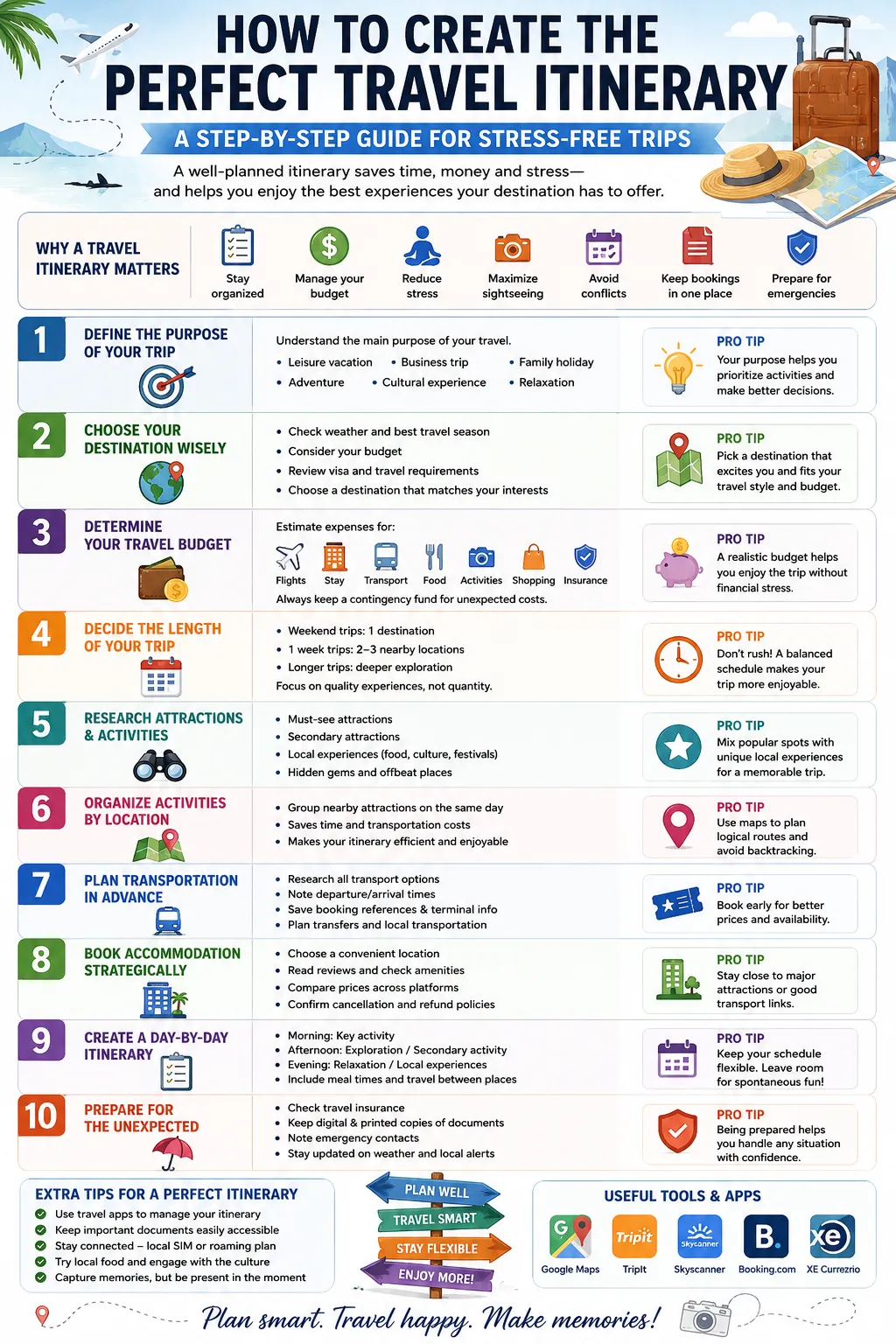
Traveling is one of life’s most rewarding experiences. Whether you are planning a weekend getaway, a family vacation, a business trip, or a month-long international adventure, having a well-structured travel itinerary can make the difference between a smooth journey and a stressful one. A carefully planned itinerary helps travelers maximize their time, manage their budget, avoid common travel mistakes, and enjoy a more organized and memorable experience.
However, creating the perfect travel itinerary is about much more than simply booking flights and hotels. It involves balancing sightseeing, transportation, accommodation, meals, relaxation, and unexpected situations while ensuring the trip remains enjoyable rather than exhausting.
This step-by-step guide will help you create an efficient and flexible travel itinerary that allows you to make the most of every destination.
Why a Travel Itinerary Matters
Many travelers underestimate the importance of planning. While spontaneous adventures can be exciting, a lack of preparation often leads to wasted time, unnecessary expenses, and missed opportunities.
A well-designed itinerary helps you:
- Stay organized throughout the trip
- Manage your travel budget effectively
- Reduce travel-related stress
- Maximize sightseeing opportunities
- Avoid scheduling conflicts
- Keep important bookings in one place
- Prepare for emergencies and delays
Most importantly, a good itinerary gives you confidence and peace of mind before and during your journey.
Step 1: Define the Purpose of Your Trip
Before planning any details, determine the primary purpose of your travel.
Ask yourself:
- Is this a leisure vacation?
- Are you traveling for business?
- Is it a family holiday?
- Are you seeking adventure activities?
- Do you want a cultural experience?
- Is relaxation your main goal?
Understanding the purpose of your trip helps you prioritize activities and allocate your time accordingly.
For example, a business traveler may focus on meetings and convenience, while an adventure traveler may prioritize hiking, trekking, or outdoor experiences.
Step 2: Choose Your Destination Wisely
Selecting the right destination is a crucial part of travel planning.
Consider factors such as:
Weather Conditions
Research the best season to visit your chosen destination. Traveling during favorable weather often enhances the overall experience.
Budget
Some destinations are significantly more expensive than others. Evaluate accommodation, transportation, food, and attraction costs before making a decision.
Travel Restrictions
Check visa requirements, passport validity rules, and any destination-specific entry regulations.
Personal Interests
Choose a destination that aligns with your preferences, whether they involve beaches, mountains, history, wildlife, food, or urban exploration.
Step 3: Determine Your Travel Budget
Budget planning is one of the most important aspects of creating a successful itinerary.
Estimate expenses for:
- Flights or transportation
- Accommodation
- Local transportation
- Food and dining
- Attractions and activities
- Travel insurance
- Shopping and souvenirs
- Emergency expenses
Creating a realistic budget helps prevent overspending and allows you to make informed decisions throughout the planning process.
Consider allocating a contingency fund for unexpected costs that may arise during the trip.
Step 4: Decide the Length of Your Trip
The duration of your trip will influence every aspect of your itinerary.
Avoid the common mistake of trying to visit too many places within a limited timeframe. Constant movement between destinations can lead to fatigue and reduce enjoyment.
Instead, focus on quality experiences rather than the number of locations visited.
For example:
- Weekend trips work best with one destination.
- A week-long vacation may accommodate two or three nearby locations.
- Longer trips allow for deeper exploration and slower travel.
The goal is to create a balanced schedule that feels enjoyable rather than rushed.
Step 5: Research Attractions and Activities
Once your destination is finalized, begin researching attractions, landmarks, and experiences.
Create a list divided into categories:
Must-See Attractions
These are the experiences you absolutely do not want to miss.
Secondary Attractions
Interesting places that can be visited if time allows.
Local Experiences
Include cultural activities, local markets, traditional cuisine, festivals, or unique regional experiences.
Hidden Gems
Explore lesser-known attractions that offer authentic experiences away from crowded tourist areas.
Reading travel guides, destination reviews, and local recommendations can help you identify worthwhile attractions.
Step 6: Organize Activities by Location
One of the most effective itinerary-planning techniques is grouping activities by geographic area.
Instead of traveling back and forth across a city multiple times, organize attractions located near each other on the same day.
This approach offers several benefits:
- Saves transportation costs
- Reduces travel time
- Increases sightseeing efficiency
- Minimizes exhaustion
Many experienced travelers use digital maps to visualize attraction locations before creating daily schedules.
Step 7: Plan Transportation in Advance
Transportation often determines whether a trip runs smoothly.
Research available options, including:
- Flights
- Trains
- Buses
- Rental cars
- Taxis
- Metro systems
- Ride-sharing services
Record important details such as:
- Departure times
- Arrival times
- Booking references
- Terminal information
- Transfer requirements
Having transportation details readily available helps prevent confusion during travel.
Step 8: Choose Accommodation Strategically
Accommodation selection impacts both comfort and convenience.
Rather than choosing solely based on price, consider:
Location
Staying near major attractions or public transportation can save significant time.
Safety
Research neighborhood safety and traveler reviews.
Amenities
Consider Wi-Fi, breakfast options, parking, laundry facilities, and other essential services.
Accessibility
Ensure the property meets any specific accessibility requirements.
Booking accommodation early often provides better choices and pricing.
Step 9: Build a Flexible Daily Schedule
One of the biggest mistakes travelers make is overloading their itinerary.
Leave room for:
- Unexpected discoveries
- Traffic delays
- Weather changes
- Rest periods
- Extended visits to favorite attractions
A practical daily itinerary typically includes:
Morning:
- Major attraction or sightseeing activity
Afternoon:
- Secondary attraction or local experience
Evening:
- Relaxation, dining, shopping, or entertainment
Maintaining flexibility allows you to enjoy spontaneous opportunities without feeling pressured by an overly rigid schedule.
Step 10: Prepare Important Travel Documents
Before departure, organize all essential travel documents.
These may include:
- Passport
- Visa documents
- Flight tickets
- Hotel reservations
- Travel insurance
- Identification cards
- Emergency contact information
- Medical prescriptions
Many travelers store both physical and digital copies of important documents for added security.
Cloud storage and secure travel apps can provide convenient backup access if documents are lost.
Step 11: Include Emergency Planning
Even the best itineraries should account for unexpected situations.
Prepare for:
- Flight cancellations
- Lost luggage
- Medical emergencies
- Weather disruptions
- Transportation delays
Keep emergency contact numbers and local embassy information accessible throughout your trip.
Travel insurance can provide valuable protection against unforeseen circumstances.
Step 12: Review and Finalize Your Itinerary
Before departure, review your complete itinerary carefully.
Confirm:
- Booking dates
- Transportation schedules
- Attraction operating hours
- Reservation confirmations
- Budget estimates
Share your itinerary with a trusted family member or friend, especially for international travel.
A final review helps identify potential conflicts or missing details before the journey begins.
Common Travel Itinerary Mistakes to Avoid
Many travelers unknowingly create ineffective itineraries.
Avoid these common mistakes:
- Over-scheduling every hour
- Ignoring travel time between attractions
- Underestimating transportation delays
- Failing to budget for unexpected expenses
- Skipping rest periods
- Not checking attraction opening hours
- Booking accommodations far from key locations
Learning from these mistakes can significantly improve the quality of your trip.
Conclusion
Creating the perfect travel itinerary is a blend of preparation, organization, and flexibility. A thoughtful itinerary allows travelers to maximize their experiences while minimizing stress, confusion, and unnecessary expenses.
By defining your travel goals, setting a realistic budget, researching attractions, organizing transportation, and maintaining a flexible schedule, you can create a travel plan that enhances every stage of your journey.
The best itineraries are not those packed with endless activities but those that strike the right balance between exploration, comfort, and spontaneity. With proper planning, every trip can become a memorable adventure filled with meaningful experiences and lasting memories.