Effective Study Techniques for Academic Success
Academic success is not determined solely by intelligence or natural ability. Instead, it often depends on the strategies students use to understand, retain, and apply information effectively. Many students spend long hours studying but may not achieve the results they expect because their study methods are not efficient. Using proven study techniques can help learners improve concentration, memory retention, and overall academic performance.
Effective study habits allow students to manage their time wisely, reduce stress during exams, and develop a deeper understanding of the subjects they study. Educational research shows that structured learning methods, active engagement with material, and consistent practice significantly enhance learning outcomes. By adopting practical study strategies and maintaining discipline, students can build a strong foundation for long-term academic success.
Table of Contents
ToggleCreating a Structured Study Plan
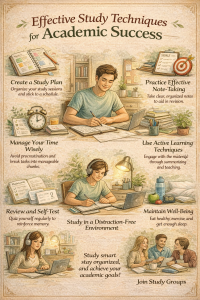
A structured study plan helps students organize their time and maintain a consistent learning routine. Without proper planning, students may feel overwhelmed by large amounts of coursework and deadlines. A study schedule divides subjects and topics into manageable segments, allowing learners to focus on one task at a time.
Developing a study plan also ensures that students allocate sufficient time to each subject based on its complexity and importance. It helps prevent last-minute cramming and promotes regular revision, which improves long-term memory retention. Additionally, a structured plan allows students to track their progress and adjust their schedule when necessary.
By maintaining a well-balanced study routine, students can reduce stress and maintain better control over their academic responsibilities.
Setting Clear Academic Goals
Goal setting is a powerful technique that helps students stay motivated and focused on their studies. Clear academic goals provide direction and encourage learners to maintain consistent effort throughout the semester. These goals can include achieving certain grades, completing assignments on time, or mastering specific concepts.
When students define realistic and measurable goals, they become more aware of their progress and accomplishments. Breaking larger objectives into smaller, achievable tasks makes studying less intimidating and more manageable. This approach also allows students to celebrate small successes along the way, which increases motivation.
Setting academic goals encourages responsibility and helps students develop a sense of purpose in their educational journey.
Using Active Learning Techniques
Active learning involves engaging directly with study material rather than simply reading or memorizing information. Educational studies suggest that active participation improves comprehension and retention because it requires students to process information more deeply.
Examples of active learning techniques include summarizing information in one’s own words, asking questions about the material, and teaching concepts to others. Creating mind maps, diagrams, or concept charts can also help students visualize relationships between ideas.
By actively interacting with the content, students develop critical thinking skills and gain a clearer understanding of complex topics. Active learning encourages deeper engagement and helps learners retain information more effectively.
Practicing Effective Note-Taking
Note-taking is an essential academic skill that helps students capture key ideas and organize information during lectures or study sessions. Well-structured notes make it easier to review material and identify important concepts before exams.
Effective note-taking involves focusing on main ideas rather than writing every word that is spoken or written. Techniques such as the outline method, the Cornell note-taking system, and concept mapping help students structure their notes logically.
Reviewing and revising notes regularly also strengthens understanding and reinforces memory. Organized notes serve as valuable study resources that simplify revision and improve academic performance.
Managing Time and Avoiding Procrastination
Time management plays a crucial role in academic success. Many students struggle with procrastination, which can lead to rushed assignments, increased stress, and lower quality work. Developing good time management skills helps students stay organized and complete tasks more efficiently.
One effective strategy is dividing study sessions into shorter, focused intervals with regular breaks. This method helps maintain concentration and prevents mental fatigue. Prioritizing tasks based on deadlines and difficulty levels also ensures that important assignments receive adequate attention.
By managing time effectively, students can maintain productivity while also balancing academic responsibilities with personal activities.
Creating a Productive Study Environment
The study environment significantly influences concentration and learning efficiency. A quiet, organized, and comfortable study space helps minimize distractions and allows students to focus fully on their work.
A productive study environment should include proper lighting, comfortable seating, and easy access to study materials. Eliminating distractions such as excessive noise, social media notifications, or unrelated activities can improve concentration and productivity.
Students may also benefit from identifying the environment where they study best, whether it is a library, study room, or quiet corner at home. A consistent study environment helps create a routine that supports effective learning.
Using Practice and Self-Testing
Practice and self-testing are highly effective methods for improving knowledge retention. Instead of simply reviewing notes repeatedly, students should test themselves to determine how well they understand the material.
Practice quizzes, flashcards, and problem-solving exercises encourage active recall, which strengthens memory and understanding. Self-testing also helps identify areas where additional study is needed, allowing students to focus on weaker topics.
Regular practice prepares students for exam conditions and builds confidence in their knowledge and abilities. This technique transforms studying from passive review into an interactive learning process.
Maintaining Physical and Mental Well-Being
Academic success is closely connected to overall physical and mental health. Students who maintain healthy lifestyles are better able to concentrate, retain information, and manage academic stress.
Regular physical activity, balanced nutrition, and adequate sleep support brain function and improve cognitive performance. Lack of sleep or poor health habits can negatively affect concentration, memory, and mood.
Students should also practice stress management techniques such as relaxation exercises, mindfulness, or short breaks during study sessions. Maintaining a healthy balance between study and personal well-being contributes to sustainable academic performance.
Collaborating with Peers and Seeking Support
Collaborative learning can enhance understanding by allowing students to exchange ideas and discuss challenging topics. Study groups encourage active discussion and provide opportunities to explain concepts to others, which reinforces learning.
Working with peers can also expose students to different perspectives and problem-solving approaches. However, effective collaboration requires focused discussion and clear objectives to ensure that study sessions remain productive.
Students should also feel comfortable seeking help from teachers, tutors, or academic advisors when they encounter difficulties. Accessing available support resources can clarify complex topics and improve overall academic confidence.
Conclusion
Effective study techniques play a crucial role in achieving academic success. Students who adopt structured learning strategies, set clear goals, and actively engage with study materials are more likely to perform well in their academic pursuits.
Methods such as organized note-taking, time management, self-testing, and maintaining a productive study environment contribute to better learning outcomes. Additionally, maintaining physical and mental well-being supports concentration and long-term academic growth.
By consistently applying these techniques, students can develop strong study habits, improve their academic performance, and build skills that will benefit them throughout their educational and professional lives.