How Indians Are Finding Secret Travel Spots This Summer
Indian travellers in 2026 are increasingly rejecting overcrowded tourist circuits in favour of offbeat escapes that offer solitude, authenticity, and a genuine sense of discovery. From the misty valleys of the Northeast to hidden Himalayan meadows and untouched coastal pockets, the search for “best-kept secrets” has become a defining feature of summer travel this year. While social media has made remote locations more visible than ever, discerning travellers are finding innovative ways to uncover places that still feel personal and relatively untouched.
This shift reflects deeper changes in how Indians approach leisure — prioritizing meaningful experiences, mental rejuvenation, and sustainable exploration over Instagram-perfect crowds.
The Rise of Offbeat Travel in India
Summer 2026 has seen a notable surge in bookings for lesser-known destinations. Reports indicate strong growth in searches and visits to places like Ziro Valley in Arunachal Pradesh, Tirthan Valley in Himachal Pradesh, Majuli Island in Assam, Chopta in Uttarakhand, and Spiti Valley. Travellers from Tier-2 and Tier-3 cities are driving much of this demand, seeking affordable, crowd-free alternatives to traditional hill stations like Manali or hill destinations like Ooty.
Young professionals and families alike are drawn to these spots for their natural beauty, cultural richness, and slower pace. Instead of fighting traffic at popular viewpoints, they are choosing treks through rhododendron forests, stays in traditional homestays, and evenings spent stargazing far from light pollution.
How Indians Are Discovering These Hidden Gems
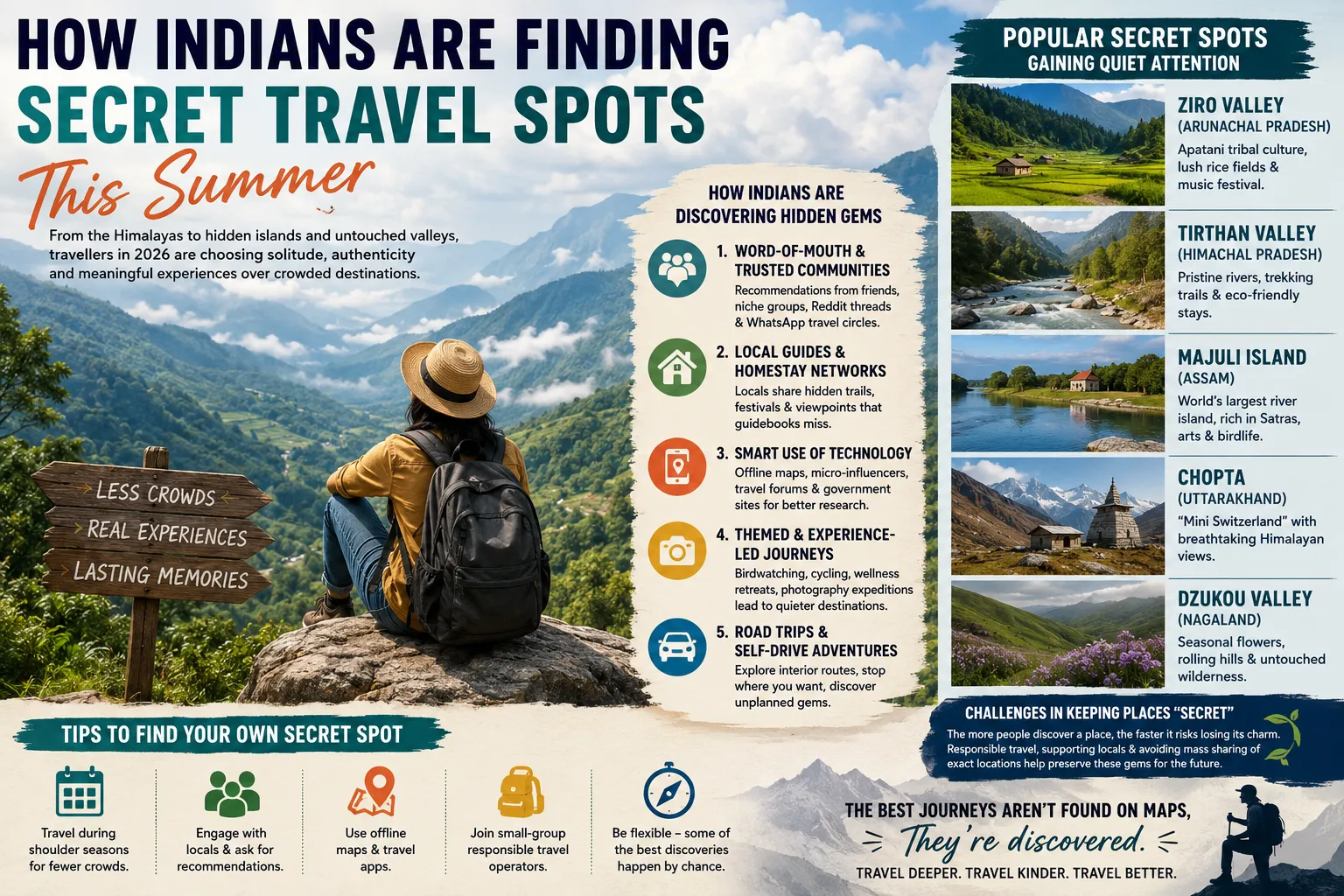
1. Word-of-Mouth and Trusted Communities
Many travellers rely on personal recommendations from friends, family, or niche online communities rather than mainstream travel pages. Closed Facebook groups, Reddit threads, and WhatsApp travel circles often share coordinates and practical tips that don’t appear in viral content. This organic sharing helps preserve the “secret” status of many locations.
2. Local Guides and Homestay Networks
Direct engagement with local communities has become a preferred method. Booking homestays through platforms that connect travellers directly with residents often unlocks access to lesser-known trails, village festivals, and hidden viewpoints. Locals frequently share spots that guidebooks overlook, creating more immersive experiences.
3. Strategic Use of Technology
While social media can spoil hidden gems quickly, savvy travellers use it selectively. They follow micro-influencers focused on responsible travel, use offline map apps to explore beyond popular pins, and research shoulder seasons when crowds are thinner. Many cross-reference multiple sources — blogs, travel forums, and government tourism sites — before finalizing plans.
4. Themed and Experience-Led Journeys
Instead of generic sightseeing, Indians are planning around specific interests: birdwatching in Dibang Valley, cycling through Majuli, wellness retreats in remote Kerala backwaters, or photography expeditions in Zanskar. This focused approach naturally leads to quieter, more specialized destinations.
5. Road Trips and Self-Drive Adventures
The growing popularity of self-drive road trips has opened up interior routes and small towns previously bypassed by package tours. Renting a vehicle and exploring at one’s own pace allows discovery of unplanned stops along the way.
Popular Secret Spots Gaining Quiet Attention
- Ziro Valley (Arunachal Pradesh): Known for its Apatani tribal culture, lush rice fields, and music festival, it offers tranquillity and cultural depth.
- Tirthan Valley (Himachal Pradesh): A paradise for nature lovers with pristine rivers, trekking trails, and eco-friendly stays.
- Majuli Island (Assam): The world’s largest river island, famous for Satras, traditional arts, and birdlife.
- Chopta (Uttarakhand): Often called “Mini Switzerland,” it provides stunning Himalayan views with minimal commercial development.
- Dzukou Valley (Nagaland): Famous for seasonal flowers, rolling hills, and a sense of untouched wilderness.
These destinations offer a balance of accessibility and exclusivity, rewarding those willing to venture slightly off conventional paths.
Challenges in Keeping Places “Secret”
The paradox of modern travel is evident: the more people discover a place, the faster it risks losing its charm. Responsible travellers are addressing this by practicing “leave no trace” principles, supporting local businesses, and avoiding mass sharing of exact locations on public platforms. Many now advocate for low-impact tourism that benefits communities without overwhelming them.
Tips for Finding Your Own Secret Spot
- Travel during shoulder seasons (just before or after peak summer) for fewer crowds.
- Engage with locals upon arrival — ask for recommendations beyond tourist areas.
- Use specialized travel apps and maps for offline exploration.
- Join small-group responsible travel operators who focus on lesser-visited regions.
- Be flexible — some of the best discoveries happen when plans change.
The Bigger Picture
This trend towards secret travel spots signals a maturing Indian travel market. Travellers are becoming more conscious, seeking depth over spectacle and sustainability over speed. It also puts pressure on popular destinations to manage overtourism while encouraging infrastructure development in offbeat areas.
As summer 2026 continues, the message is clear: the most rewarding journeys often lie beyond the crowded paths. By combining curiosity, research, and respect for local ecosystems, Indian travellers are redefining what it means to truly “get away.”
Whether it’s waking up to mist rolling over a hidden valley or sharing a meal with a local family in a remote village, these secret spots offer something increasingly rare — the feeling of having a place, even briefly, all to yourself.