India’s Manufacturing Gap: The Real Challenge in Modi’s Talks with Xi and Putin
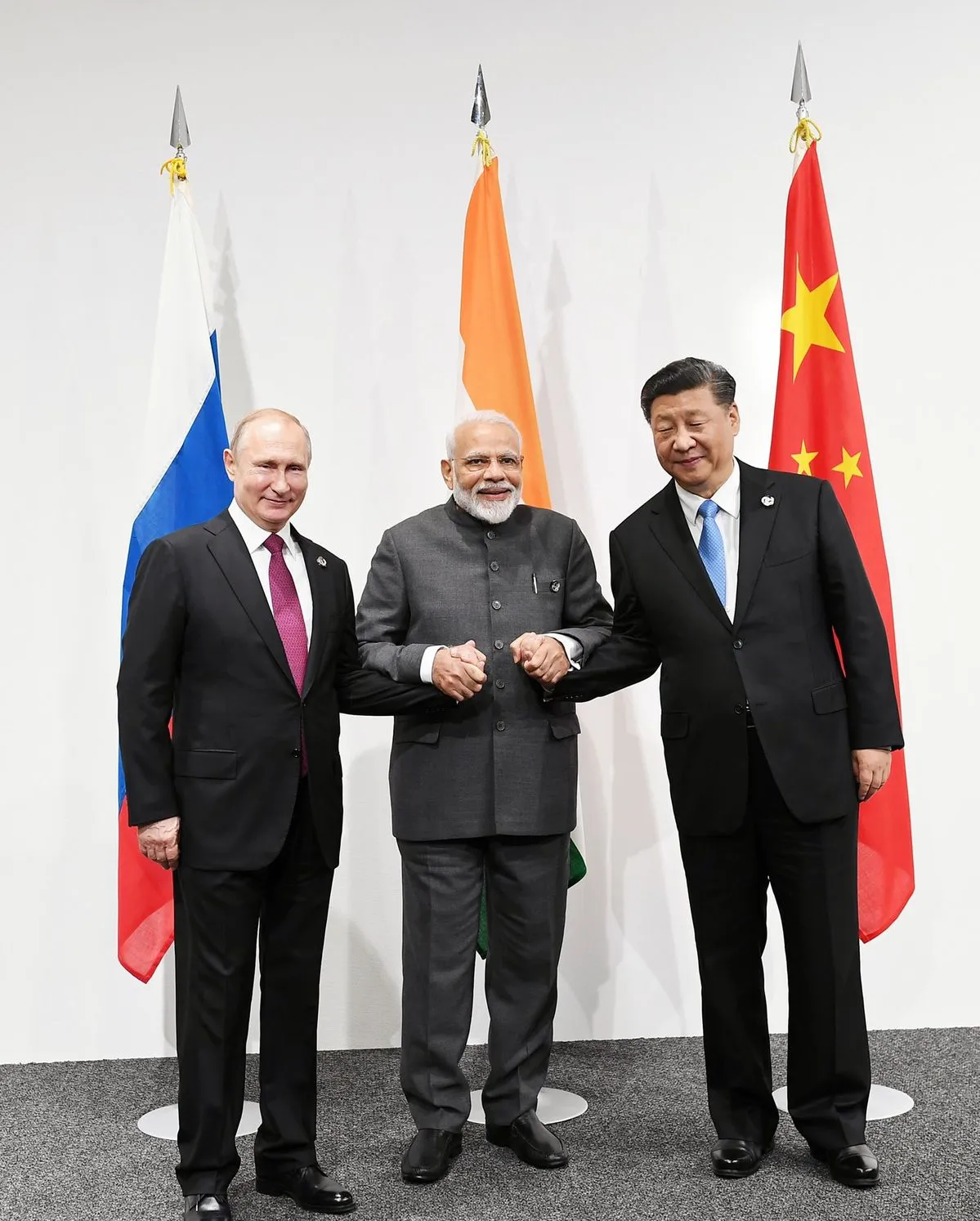
As leaders of the expanded BRICS grouping gather in New Delhi this weekend, the formal agenda will focus on global order, conflicts in distant theatres and the search for alternatives to Western-dominated institutions. Yet a quieter but consequential conversation will unfold on the sidelines. Prime Minister Narendra Modi’s bilateral meetings with Russian President Vladimir Putin and Chinese President Xi Jinping will inevitably confront a persistent domestic reality: the gap between India’s ambitious international economic rhetoric and the more limited state of its industrial capabilities.
The manufacturing sector remains the clearest expression of that gap. For years, successive Indian governments have spoken of turning the country into a global production hub, raising manufacturing’s share of GDP toward 25 percent and integrating deeply into resilient supply chains. The actual numbers tell a more restrained story. Manufacturing continues to account for a relatively modest portion of national output, well below the levels achieved by East Asian peers at comparable stages of development. The shortfall is not merely statistical; it shapes the substance of India’s economic engagement with both Moscow and Beijing.
The Bilateral Context at BRICS
Modi and Putin are scheduled to meet ahead of the formal summit. Their discussions are expected to revisit long-standing efforts to give greater balance to a strategic partnership that remains economically lopsided. Russia has been a critical supplier of energy and defence equipment, but Indian exports to Russia have struggled to keep pace. The two leaders are also due to visit an India-Russia industrial trade fair in the capital, a symbolic attempt to expand commercial linkages beyond traditional areas.
The meeting with Xi carries even greater weight. It marks the Chinese leader’s first visit to India in several years and comes after cautious steps to stabilise ties following the 2020 border crisis. Trade between the two countries has grown substantially, yet the imbalance remains stark. India imports a wide range of intermediate goods, machinery, chemicals and components from China that feed directly into its own manufacturing and assembly operations. Exports in the opposite direction remain limited in both volume and value addition. Any conversation about deeper economic cooperation must therefore navigate this structural asymmetry.
Structural Constraints on Indian Manufacturing
Several well-documented factors continue to constrain India’s industrial expansion. Acquiring serviced industrial land remains difficult and time-consuming in many states. Labour regulations, while undergoing reform in some regions, still present challenges in hiring, skilling and flexibility. Regulatory processes for setting up and expanding manufacturing facilities often involve multiple clearances and significant compliance burdens. These frictions raise the cost of doing business and discourage the kind of large-scale, export-oriented investment that transformed manufacturing elsewhere in Asia.
India has also struggled to develop dense ecosystems of intermediate goods production. Many firms rely on imported components, particularly from China, rather than building domestic supplier networks. This pattern is visible in electronics, where final assembly has expanded but value addition remains limited. Similar dynamics appear in other sectors targeted by production-linked incentive schemes. While some programmes have attracted investment and generated output, the broader goal of deep industrialisation has proved more elusive.
The comparison with China is instructive. China’s manufacturing sector accounts for a far larger share of its economy and of global output. Decades of sustained investment, infrastructure development and integration into global value chains created scale and capability that India has yet to match. Attempts to position India as an alternative destination under “China Plus One” strategies have yielded partial results, but the country has not absorbed a decisive share of the production that has shifted away from China.
Rhetoric Versus Capability
India’s international economic messaging emphasises self-reliance, supply-chain resilience and the ambition to become a developed economy by the middle of the century. These goals are legitimate and politically resonant. The difficulty lies in translating them into the practical industrial capacity required to support them. Trade deficits with major partners, limited success in high-value manufacturing exports, and continued dependence on imported intermediates all point to the same underlying constraint.
This gap becomes particularly visible in conversations with leaders of manufacturing powerhouses. Russia may offer energy security and defence platforms, but it cannot substitute for the industrial technology and intermediate goods that currently flow from China. China, for its part, remains both a competitor and an essential supplier. Any easing of investment or trade restrictions must be weighed against strategic caution and the unresolved border question. Neither relationship can fully compensate for the domestic task of building competitive manufacturing ecosystems.
Policy Responses and Persistent Gaps
The Indian government has not ignored these challenges. Production-linked incentive schemes, infrastructure spending, and efforts to improve the ease of doing business form part of a multi-year attempt to raise industrial output. Some states have moved faster than others in creating investment-friendly environments. Success stories exist in specific segments of electronics, pharmaceuticals and automobiles. Yet the overall picture remains one of incremental rather than transformative progress.
Land, labour and regulatory reforms continue to face political and administrative hurdles. Skill development has not always kept pace with the requirements of modern manufacturing. Logistics costs, though improved, still lag behind those of more competitive production locations. These issues are not new, but they acquire sharper relevance when India seeks to negotiate from a position of greater economic strength with partners such as China and Russia.
Implications for the Summit Conversations
In the rooms where Modi meets Putin and Xi, the formal talking points will cover trade balances, investment opportunities, energy cooperation and geopolitical coordination. Beneath those topics lies the more fundamental question of industrial capability. India’s ability to diversify its supply chains, reduce critical dependencies and expand high-value exports depends less on summit communiqués than on sustained domestic reform.
The BRICS platform itself offers limited direct solutions. The grouping has expanded and grown more diverse, but consensus on concrete economic initiatives remains difficult. Practical cooperation on logistics, payments systems or technology standards may emerge, yet none of these can substitute for the hard work of building competitive factories, supplier networks and skilled workforces at home.
The elephant in the room is therefore not a temporary diplomatic awkwardness. It is a structural feature of India’s current economic position. Acknowledging it does not diminish the country’s achievements or its long-term potential. It simply recognises that international influence in the economic domain ultimately rests on productive capacity. Until manufacturing expands more decisively, the gap between rhetoric and reality will continue to shape India’s most important bilateral conversations.
Read more – theantutuscore.com