How to Improve Work Life Balance While Working from Home
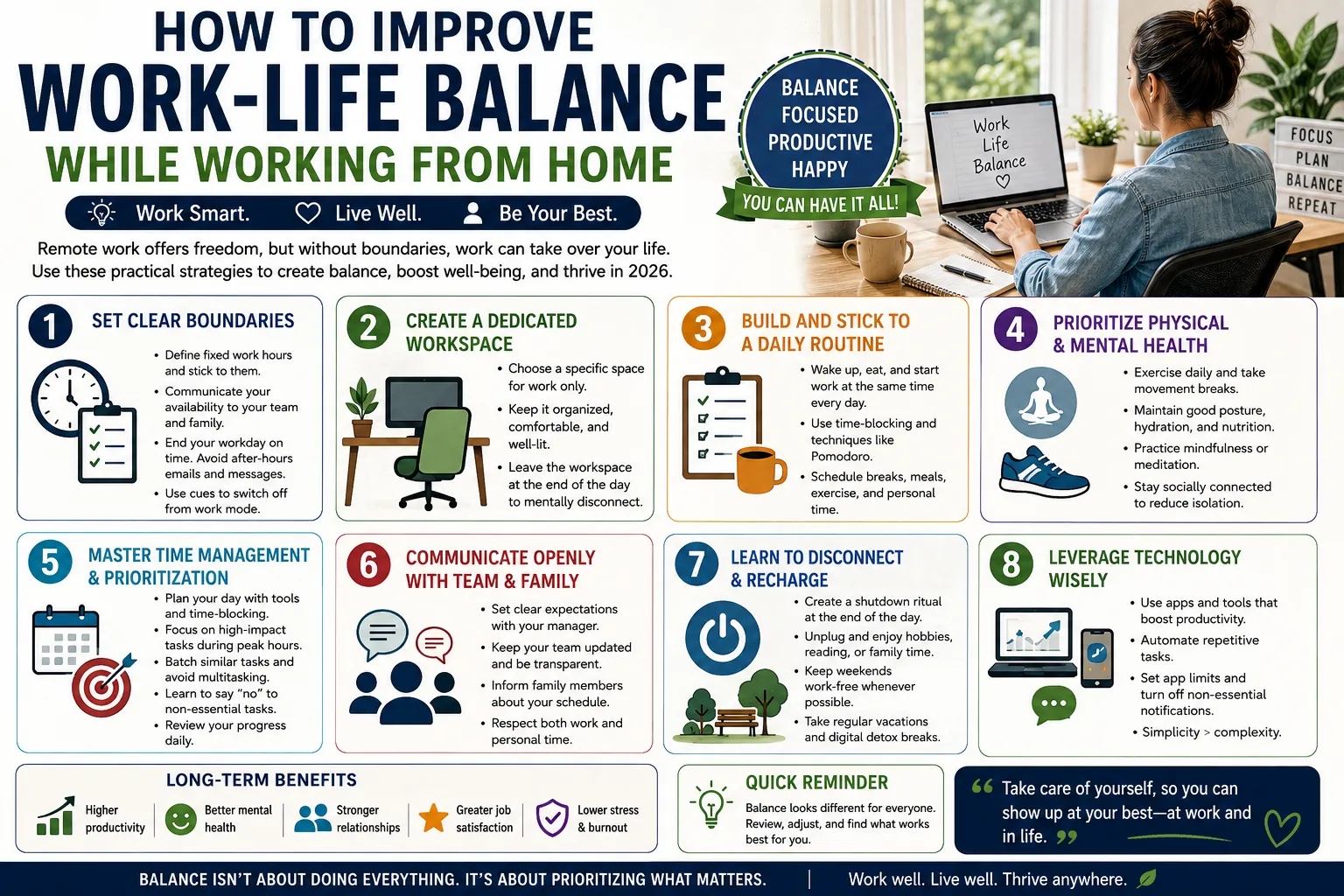
The shift to remote work has offered flexibility and eliminated long commutes for millions of professionals, but it has also blurred the lines between professional and personal life. Without the natural boundaries of office hours and physical separation, many people find themselves working longer hours, facing constant distractions, and struggling with burnout. Improving work-life balance while working from home is not only possible but essential for sustained productivity, mental health, and overall well-being.
This guide provides practical, actionable strategies to help you reclaim balance, set healthy boundaries, and create a more sustainable remote work lifestyle in 2026.
1. Establish Clear Boundaries Between Work and Personal Time
One of the biggest challenges of remote work is the absence of a clear “end of day.” Start by defining fixed working hours that align with your most productive periods and communicate them clearly to your team and family. For example, commit to starting work at 9 AM and logging off by 6 PM consistently.
Use physical or digital cues to signal the transition: close your laptop, change out of work clothes, or take a short walk at the end of the workday. Avoid checking work emails or messages after your designated hours. Setting these boundaries helps your brain switch off from work mode and prevents the slow creep of work into evenings and weekends.
2. Create a Dedicated Workspace
Working from the couch or bed may feel comfortable initially, but it confuses your brain’s association between spaces and activities. Designate a specific area exclusively for work — even if it’s a corner of a room. Keep this space organized, well-lit, and ergonomically friendly with a proper chair, monitor at eye level, and good lighting.
When you leave this workspace at the end of the day, it psychologically signals the end of work. This separation is crucial for mental detachment and better sleep quality.
3. Build and Stick to a Daily Routine
Structure your day as you would in an office environment. Wake up at a consistent time, exercise, have breakfast, and begin work at the same hour daily. Include short breaks using techniques like the Pomodoro method (25 minutes focused work followed by a 5-minute break).
Schedule time for meals, exercise, family interactions, and personal hobbies. Treat these personal commitments with the same respect as work meetings. A predictable routine reduces decision fatigue and creates a sense of normalcy and control.
4. Prioritize Physical and Mental Health
Remote work can lead to sedentary lifestyles and increased screen time. Make movement a non-negotiable part of your day — whether it’s morning yoga, midday walks, or evening exercise. Aim for at least 30 minutes of physical activity daily.
Pay attention to ergonomics to prevent back pain and posture issues. Stay hydrated and maintain a balanced diet. Equally important is mental health: practice mindfulness, meditation, or journaling to manage stress. Disconnect from work completely during evenings to recharge.
Social connection is often overlooked in remote setups. Schedule regular catch-ups with friends and family to combat isolation, which is a common side effect of working from home.
5. Master Time Management and Prioritization
Without office oversight, it becomes easy to lose track of time or overcommit. Use tools like digital calendars, task managers, and time-blocking techniques to organize your day. Prioritize high-impact tasks during your peak energy hours and batch similar activities together.
Learn to say “no” to non-essential meetings or tasks that spill into personal time. Set realistic daily goals and review them at the end of each day. This focused approach boosts productivity while preventing work from expanding to fill all available time.
6. Communicate Openly with Your Team and Family
Clear communication is the foundation of healthy remote work-life balance. Discuss expectations with your manager regarding response times and availability. Many companies now support flexible policies — take advantage of them.
At home, explain your work schedule to family members so they understand when you are unavailable. Likewise, protect personal time by communicating when you need uninterrupted family moments. Mutual understanding reduces resentment and conflicts.
7. Learn to Disconnect and Recharge Effectively
One of the most important skills in remote work is knowing when to unplug. Implement a “shutdown ritual” — reviewing completed tasks, planning the next day, and closing all work applications at a fixed time.
Engage in hobbies, reading, or spending quality time with loved ones without guilt. Weekends should ideally be work-free unless absolutely necessary. Regular vacations and digital detox periods help prevent burnout and restore creativity.
8. Leverage Technology Wisely
Use technology to support balance rather than erode it. Set app limits, use focus modes on devices, and turn off non-essential notifications. Tools for automation can reduce repetitive tasks and free up time.
However, avoid the temptation to adopt every new productivity app. Simplicity often works best.
Long-Term Benefits of Better Balance
Professionals who successfully maintain work-life balance while working from home report higher job satisfaction, better relationships, improved creativity, and lower stress levels. Companies with supportive remote policies also see higher retention and productivity.
Remember that balance looks different for everyone. What works for one person may need adjustment for another based on family responsibilities, job nature, or personal energy patterns. Regularly review and tweak your approach every few months.
Final Thoughts
Working from home offers incredible freedom, but without intentional effort, it can become all-consuming. By setting clear boundaries, building supportive routines, prioritizing health, and communicating effectively, you can enjoy the benefits of remote work while protecting your personal life and well-being.
The key is consistency and self-compassion. Start with small changes — perhaps implementing fixed work hours and a dedicated workspace — and gradually build better habits. Over time, these practices will help you become more productive at work and more present in your personal life.
In today’s hybrid world, mastering work-life balance is not a luxury but a necessity for long-term success and happiness. Take control of your remote work experience today and create a lifestyle that supports both your career ambitions and personal fulfillment.