How to Create a Calm Home Environment for Better Living
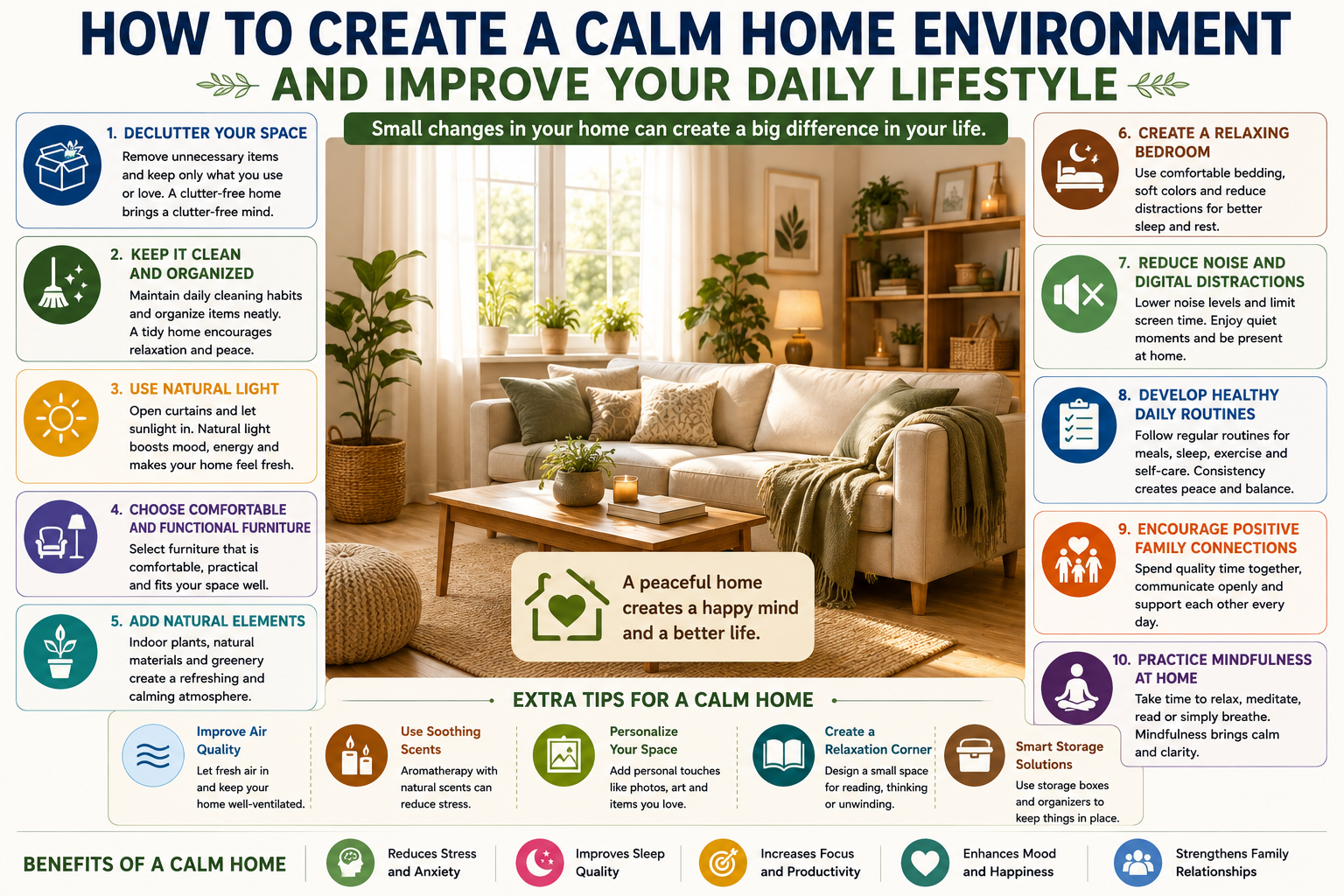
A calm home environment plays a vital role in supporting physical health, emotional well-being, and overall quality of life. In today’s fast-paced world, where work responsibilities, digital distractions, and busy schedules often create stress, the home should be a place of comfort, relaxation, and balance. A peaceful living space can help reduce daily stress, improve focus, encourage better sleep, and strengthen relationships with family members.
Creating a calm home does not require expensive renovations or luxury furniture. Instead, it involves making thoughtful changes to your surroundings and daily habits. Simple improvements such as reducing clutter, organizing living spaces, improving lighting, maintaining cleanliness, and developing healthy routines can transform the atmosphere of any home.
Whether you live in a large house or a small apartment, building a peaceful environment can positively influence your mood, productivity, and overall lifestyle.
Why a Calm Home Environment Matters
Your surroundings have a direct impact on your mental and emotional well-being. A cluttered, noisy, or disorganized space can increase stress levels and make it more difficult to relax or concentrate.
A calm home creates an environment where you can recharge after a busy day. It encourages relaxation, improves concentration, and supports healthy daily habits.
Research in environmental psychology suggests that organized and comfortable living spaces can contribute to reduced stress, improved emotional balance, and greater life satisfaction. A peaceful home also provides a better environment for family interaction, work, and personal development.
Start by Decluttering Your Living Space
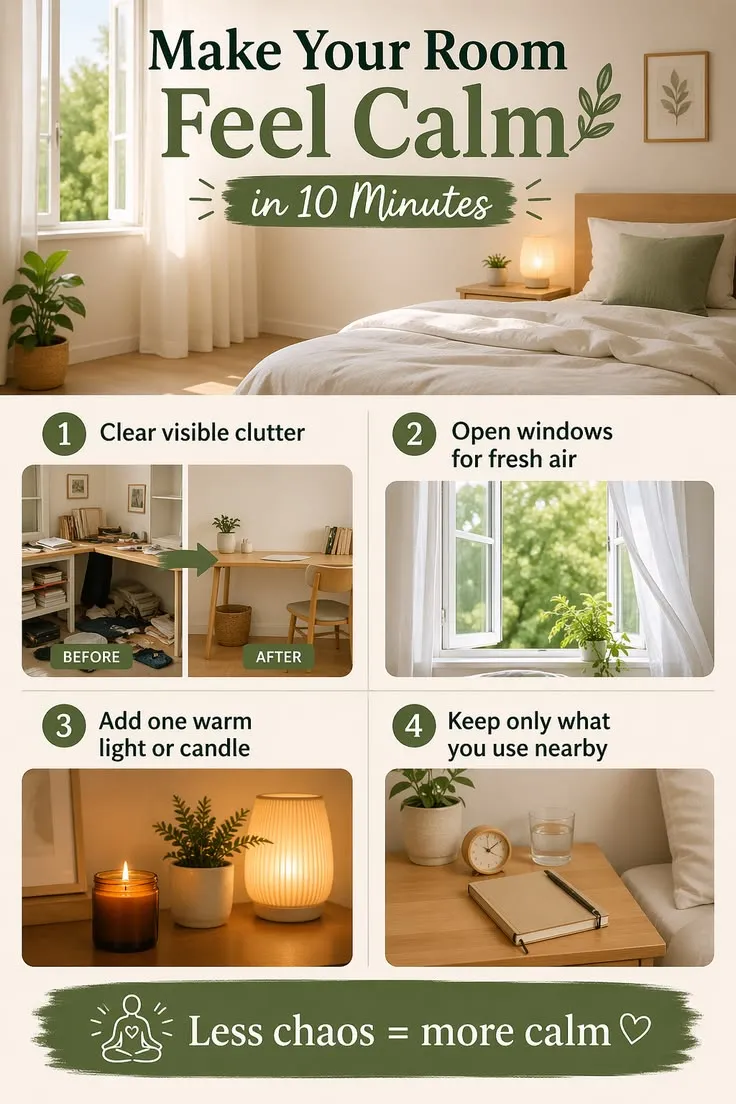
One of the most effective ways to create a peaceful home is by reducing unnecessary clutter. Too many unused items can make rooms feel crowded and overwhelming, while organized spaces often feel more relaxing and functional.
Begin by organizing one room at a time. Remove items that are no longer useful, arrange essential belongings neatly, and create designated storage areas for everyday objects.
Decluttering is not about making your home look perfect. It is about creating a space that feels comfortable, practical, and easy to maintain.
Regular organization also reduces the time spent searching for items and helps maintain a cleaner environment.
Keep Your Home Clean and Organized
Cleanliness plays a major role in creating a calming atmosphere. Dust, clutter, and untidy spaces can make a home feel stressful, while a clean environment promotes relaxation and comfort.
Develop simple cleaning habits that fit your daily routine. Making the bed, washing dishes promptly, wiping surfaces, and keeping floors clean can make a noticeable difference.
Rather than waiting for large cleaning sessions, regular maintenance helps keep your home organized without becoming overwhelming.
A tidy home also supports better hygiene and creates a welcoming environment for both family members and guests.
Use Natural Light Whenever Possible
Lighting has a significant influence on mood and productivity. Natural daylight can make rooms feel brighter, more open, and more inviting.
Open curtains or blinds during the day to allow sunlight into your home. Position furniture to maximize natural light and create brighter living spaces.
When natural light is limited, use soft and warm indoor lighting that creates a comfortable atmosphere instead of harsh brightness.
Well-balanced lighting supports relaxation while making your home feel more pleasant throughout the day.
Choose Comfortable and Functional Furniture
Furniture should support both comfort and functionality. A calm home does not require expensive decorations but should provide spaces where you can relax comfortably.
Choose furniture that fits the available space without making rooms feel crowded. Comfortable seating, supportive mattresses, and practical storage solutions contribute to a peaceful environment.
Keeping furniture arrangements simple and organized also improves movement throughout the home.
Add Natural Elements to Your Home
Bringing natural elements indoors can create a refreshing and relaxing atmosphere. Indoor plants, natural materials, wooden furniture, and decorative items inspired by nature can make living spaces feel more welcoming.
Houseplants not only enhance the appearance of a room but also create a stronger connection with nature, which many people find calming.
Even simple additions such as fresh flowers or natural textures can improve the overall feel of your home.
Create a Relaxing Bedroom Environment
The bedroom should be one of the most peaceful areas of the home because quality sleep is essential for overall health.
A comfortable mattress, supportive pillows, clean bedding, and a quiet environment can contribute to better rest.
Keeping electronic distractions to a minimum before bedtime can also help create a more relaxing atmosphere.
A well-organized bedroom encourages relaxation and supports healthy sleep habits.
Reduce Noise and Digital Distractions
Constant noise and excessive screen use can make it difficult to relax. While some background sounds are unavoidable, reducing unnecessary noise can improve comfort.
Creating quiet periods during the day, lowering television volume, and limiting unnecessary notifications from digital devices can contribute to a calmer environment.
Many people also benefit from setting aside technology-free time to focus on family, hobbies, reading, or relaxation.
Managing digital distractions helps improve mindfulness and emotional well-being.
Develop Healthy Daily Routines
A peaceful home is supported not only by its physical appearance but also by the routines practiced within it.
Simple habits such as maintaining regular meal times, following a consistent sleep schedule, exercising, and planning daily activities create stability and reduce unnecessary stress.
Morning and evening routines can help organize the day while creating a greater sense of balance.
Healthy routines also make it easier to maintain cleanliness and organization over time.
Personalize Your Living Space
Your home should reflect your personality and provide comfort. Personal touches such as family photographs, artwork, books, meaningful decorations, or favorite colors can make a house feel more welcoming.
Personalization should remain balanced so that the space feels comfortable rather than overcrowded.
Creating an environment that reflects your interests encourages a stronger emotional connection to your home.
Improve Indoor Air Quality
Fresh air contributes to a healthier and more comfortable living environment. Opening windows regularly can improve ventilation and reduce indoor stuffiness.
Keeping your home clean, controlling dust, and maintaining proper airflow support both comfort and overall well-being.
A fresh indoor environment often feels more relaxing and enjoyable.
Encourage Positive Family Connections
A calm home environment also depends on healthy relationships. Spending quality time together, communicating openly, and supporting one another can improve the atmosphere within the home.
Simple activities such as sharing meals, having conversations, or enjoying hobbies together strengthen family connections.
Positive interactions create emotional security and contribute to a happier household.
Practice Mindfulness at Home
Mindfulness encourages people to slow down and appreciate the present moment. Creating small opportunities for relaxation, reading, meditation, deep breathing, or quiet reflection can improve emotional well-being.
Even spending a few minutes each day away from distractions can help reduce stress and improve mental clarity.
A peaceful home becomes even more valuable when it supports both physical comfort and emotional balance.
Frequently Asked Questions (FAQs)
Why is a calm home environment important?
A calm home environment helps reduce stress, improves focus, supports better sleep, and contributes to overall mental and emotional well-being.
Can a small home feel peaceful?
Yes. Organization, cleanliness, proper lighting, and simple daily habits can create a calm atmosphere regardless of the size of the home.
How can I make my home more relaxing?
Reducing clutter, improving lighting, adding natural elements, maintaining cleanliness, limiting noise, and following healthy routines can all help create a more relaxing living space.
Conclusion
Creating a calm home environment is one of the most effective ways to improve your daily lifestyle. A peaceful home supports better mental health, increases comfort, encourages healthy habits, and provides a place where you can truly relax after the demands of everyday life.
Simple changes such as organizing your space, maintaining cleanliness, using natural light, creating healthy routines, and strengthening family relationships can transform your home into a positive and welcoming environment.
A calm home is not defined by its size or cost but by how it makes you feel. By making thoughtful improvements and maintaining consistent habits, you can create a living space that supports happiness, balance, and long-term well-being.