Why India Has Not Yet Turned Its Literary Heritage Into Tourism Gold
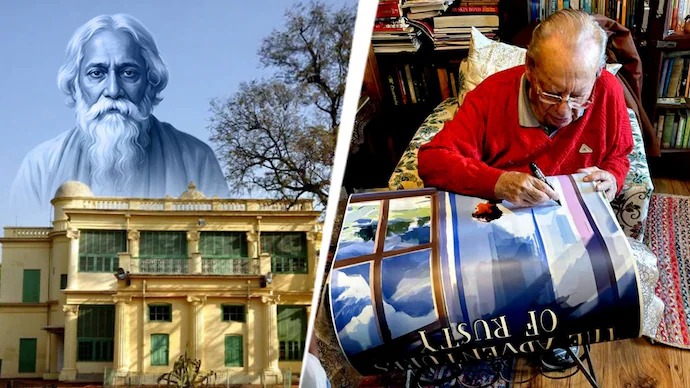
India has no shortage of writers, books, old homes, quiet towns, and places connected with famous literary figures. Yet literary tourism in India remains a surprisingly small part of the country’s larger tourism industry. Readers may know the names of Rabindranath Tagore, Ruskin Bond, R K Narayan, Premchand, Sarojini Naidu, and many others, but visiting the places connected with their lives is still not a mainstream travel habit.
That feels strange when you look at what India already has. There are houses where writers lived, schools where they studied, streets that appeared in their writing, landscapes that shaped their imagination, and libraries holding valuable collections. The raw material for literary tourism is already sitting there. What seems to be missing is the effort to connect these places with modern travellers.
India Already Has The Stories
Rabindranath Tagore’s connection with Santiniketan is perhaps the most obvious example of how literature, culture, education, and travel can come together naturally. The place is not simply associated with one famous writer, because Tagore’s ideas shaped the entire cultural character of the area.
Then there is Ruskin Bond and the hill landscape around Mussoorie and Landour, where generations of readers have developed an emotional connection with the writer’s world. His stories made ordinary mountain roads, old houses, small shops, rain, forests, and quiet railway journeys feel memorable.
The interesting thing is that these destinations do not need completely artificial attractions. Their strongest asset already exists in people’s minds, because readers arrive carrying memories from books.
Why Readers Do Not Travel
The problem may partly come from the way Indian tourism has traditionally been marketed. Beaches, forts, temples, wildlife parks, mountains, food trails, and luxury experiences usually get much more attention than literary landmarks.
A traveller visiting a city might be told about a palace or a famous market, but rarely receives a detailed literary map showing where a particular author lived, wrote, studied, or found inspiration.
This creates a simple gap between literature and tourism. People may love a writer without knowing that they can actually visit places connected with that writer.
Many readers probably would be interested if the experience were easier to discover. They need directions, background information, opening hours, walking routes, museums, guided tours, and some reason to spend a few hours there.
Tagore Offers A Huge Opportunity
Tagore’s legacy provides India with one of its strongest possibilities for building a serious literary tourism circuit. His association with Santiniketan, Kolkata, and several other locations creates a wide cultural network rather than one isolated attraction.
The challenge is presenting that network in a way that feels relevant to today’s traveller. A museum filled with old objects can be valuable, but younger visitors may want something more interactive and accessible.
Audio walks could explain important locations through stories and passages from the author’s life. Digital maps could connect important buildings and landmarks. Small exhibitions could explain how particular places influenced Tagore’s thinking and creative work.
This does not mean turning every literary location into a theme park. In fact, too much commercialisation could destroy the atmosphere that makes these places meaningful.
Ruskin Bond Shows Another Path
Ruskin Bond’s relationship with the hills demonstrates something different. His popularity is closely connected with the atmosphere of the places he writes about, especially the landscapes around Mussoorie and Landour.
Readers often associate his writing with pine trees, mountain weather, old houses, railway stations, lonely roads, and small communities. Those elements themselves can become part of a literary travel experience.
A carefully designed Ruskin Bond trail could connect locations associated with his life and writing while allowing visitors to explore the surrounding town at their own pace.
Bookshops, cafés, libraries, walking tours, storytelling sessions, and local heritage buildings could all become part of such an experience. The idea does not require enormous investment at the beginning.
Sometimes a clear map and a well-researched guide can create more value than an expensive tourist attraction.
Small Towns Could Benefit Most
Literary tourism could be particularly useful for smaller Indian towns that do not have the same tourism visibility as major destinations. A famous writer can give an otherwise overlooked location a strong identity.
Imagine visiting a town because a favourite novelist lived there, then spending money at local cafés, bookshops, guesthouses, transport services, and small businesses. The economic impact spreads beyond a single museum or heritage building.
This model could also encourage travellers to stay longer. Someone visiting a literary landmark for one hour might leave quickly, but someone following a literary trail could spend an entire day or weekend exploring the surrounding area.
That longer stay matters for local tourism economies, especially in places that struggle to attract visitors outside peak seasons.
Literature And Heritage Need Better Links
India has thousands of heritage locations, but literary heritage often gets separated from architectural or cultural heritage. That division does not make much sense.
A writer’s home can be historically important because of its architecture, but its deeper value may come from the person who lived there. A school can be an ordinary building until visitors learn that an influential writer once studied inside it.
Tourism authorities could therefore combine literary landmarks with existing heritage circuits. A city walking tour could include architecture, food, history, and literature instead of treating each category separately.
That would make literary tourism less niche and much easier for ordinary tourists to understand.
Books Can Become Travel Guides
One major opportunity remains almost completely underused. Indian literature itself can act as a travel guide.
Readers already build mental pictures of places through books. They imagine towns, forests, railway stations, neighbourhoods, rivers, and mountains while reading stories.
Tourism campaigns could work with publishers, authors, literary organisations, and local historians to turn those imagined places into real travel routes. Book-based walking tours could explain the setting behind famous works without reducing the experience to simple sightseeing.
Even school and college reading lists could connect literature with field trips. Students studying a writer could visit the relevant museum, hometown, library, or cultural centre as part of their learning.
That would create a completely different relationship between education and tourism.
Digital Platforms Could Change Things
The absence of information is another major problem. Many literary locations are difficult to discover online, especially when visitors are searching for specific authors or books.
A central digital platform for literary tourism in India could solve part of this problem. Visitors could search an author’s name and find associated places, photographs, historical details, maps, nearby attractions, and suggested itineraries.
QR codes at heritage locations could provide additional information without requiring large physical infrastructure. Podcasts and audio guides could make walking tours more interesting for independent travellers.
Social media could help as well, although literary tourism should not depend entirely on viral content. The goal should be to create useful travel information that remains valuable after the trend disappears.
Local Communities Should Lead
There is also a danger in developing literary tourism only from the top down. Local communities need to be involved because they understand the character of their towns better than distant tourism agencies.
Local writers, teachers, booksellers, historians, artists, guides, and residents can contribute stories that may never appear in official brochures.
Their involvement could make literary tours more authentic while creating additional employment opportunities. Young people could be trained as literary guides, researchers, storytellers, or heritage interpreters.
This approach would also help prevent literary tourism from becoming another generic commercial package that looks identical in every city.
India Can Build Something Different
India does not need to copy literary tourism models from Europe or other countries. The country has its own complicated literary history, with multiple languages, traditions, regions, and storytelling cultures.
A serious literary tourism strategy could include writers from Hindi, Bengali, Tamil, Malayalam, Marathi, Kannada, Urdu, Assamese, English, and many other Indian literary traditions.
That diversity could actually become the biggest strength of the sector. One state could build a Tagore-related trail, another could focus on regional poets, while another could develop routes around modern novelists and writers.
The result would be a much broader picture of Indian culture than conventional tourism sometimes provides.
The Opportunity Is Still Waiting
India’s literary heritage is not missing. The writers are not missing either, and neither are the places connected with their lives and work.
What is missing is a stronger bridge between reading and travelling. People already become emotionally attached to fictional towns, characters, landscapes, and authors, but the tourism industry rarely gives them a clear way to follow those connections in the real world.
Literary tourism in India could create quieter, slower, more meaningful travel experiences while also supporting smaller towns and protecting cultural heritage. It could bring books out of libraries and classrooms without turning literature into a commercial gimmick.
Conclusion
India has an unusually rich literary inheritance, from Tagore’s Santiniketan to the Himalayan world associated with Ruskin Bond and countless regional literary landmarks. Yet literary tourism in India remains relatively underdeveloped compared with its enormous cultural potential. Better heritage mapping, digital guides, local walking tours, museums, book-based travel routes, and community participation could gradually change that situation. The opportunity is not about building expensive attractions everywhere, but about making existing literary places easier to discover and understand. With the right approach, India’s books could become more than something people read, because they could also become places people travel to experience. Explore your region’s literary heritage and discover the stories behind the places you already know.
Read More :- DigitalsDynamo.com