Centre Calls Musk’s Starlink ‘Oligarchs’ Claim Baseless
The Ministry of Communications on Thursday rejected allegations by SpaceX chief Elon Musk that “certain oligarchs” were blocking Starlink’s plans in India. In a clear and strongly worded statement, the Centre described any suggestion that India’s regulatory framework for satellite communication services is unfair or discriminatory as “baseless and misconceived.” The government insisted that its authorisation process is fair, transparent and applied equally to all players.
Musk’s Allegation
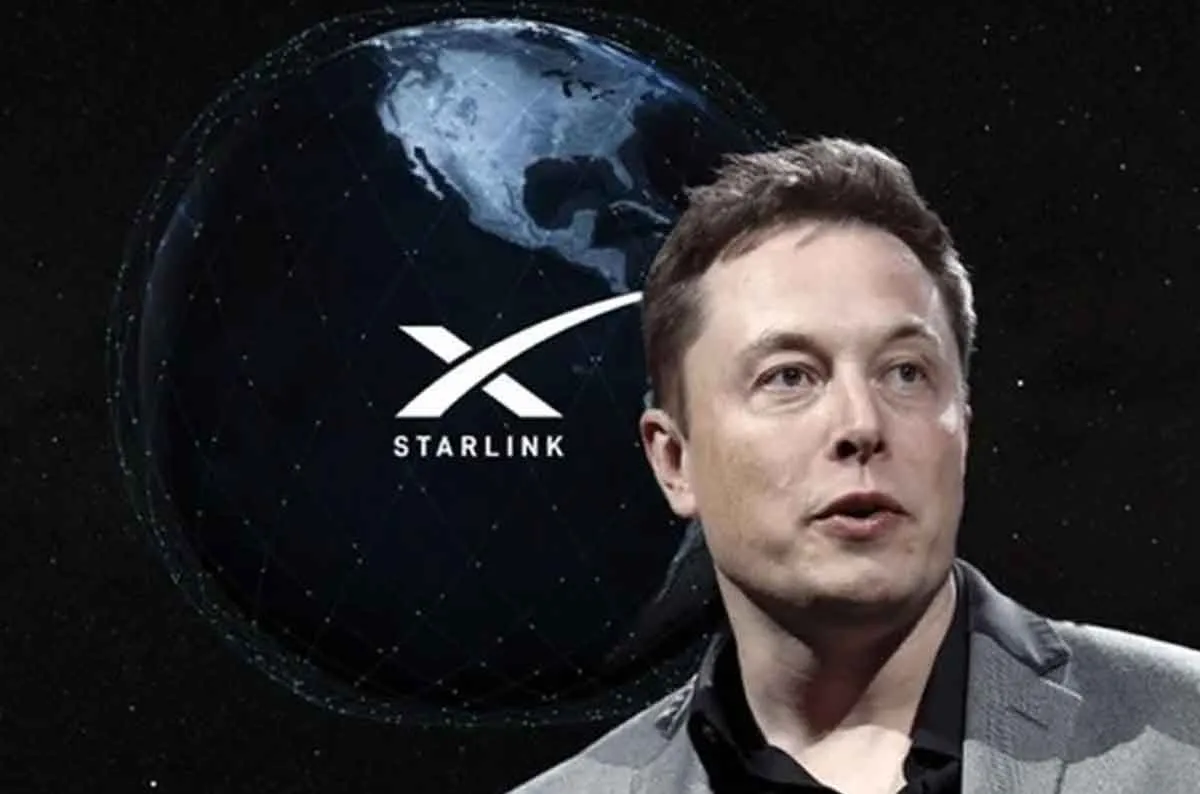
A day earlier, Musk had responded to a social media post about the need for Starlink in India by claiming that the service was being obstructed. “Unfortunately, we are being blocked by certain oligarchs in order to maintain their monopolistic chokehold on the Indian people. You can guess who they are… This is a crime against the people of India,” he wrote. He did not name any individuals or companies, yet the remark was widely interpreted as a reference to dominant domestic telecom players.
The comment quickly gained attention, coming at a time when Starlink has been waiting for final clearances to begin commercial operations in the country despite having secured an initial licence.
The Government’s Point-by-Point Response
The Ministry of Communications stated that India has put in place a fair and non-discriminatory authorisation framework for all telecommunication services, including satellite communications. Under this framework, telecom licences have been granted to three entities for Global Mobile Personal Communication by Satellite services using non-geosynchronous orbit satellites. The grant of these licences, the ministry said, reflects the government’s commitment to enabling satellite communication services in India.
Crucially, the statement clarified that every licensee is required to demonstrate compliance with security conditions. These conditions are designed to ensure the safety of users and the protection of their data. Security assessments are currently under way for all three licensed entities. Only after an entity successfully completes this process can it move to the next stage of seeking spectrum assignment.
“At present, all the three entities are at broadly the same regulatory stage,” the ministry emphasised. Therefore, any claim that the framework or its application is discriminatory does not hold.
Context of the Regulatory Process
Satellite broadband has been a closely watched sector in India. The government has opened the space for multiple players while maintaining strict requirements around national security, data localisation and operational control. Starlink, along with other applicants linked to major Indian telecom groups, has navigated the same sequence of approvals: licence grant, security clearance and spectrum allocation.
The process has taken time. Security evaluations for satellite systems involve detailed scrutiny of ground stations, data routing, encryption standards and the ability to comply with lawful interception requirements. Officials have consistently maintained that these steps apply uniformly and are not designed to favour any particular operator.
Why the Exchange Matters
Musk’s intervention brings into the open the tensions that often accompany the entry of global technology platforms into heavily regulated markets. India represents a vast potential market for satellite internet, particularly in remote, hilly and island regions where terrestrial networks remain limited. At the same time, the country has prioritised security and the development of domestic capabilities in critical communications infrastructure.
By responding promptly and in detail, the government sought to close the door on any narrative of preferential treatment. The explicit reference to three licensees being at the same stage was intended to demonstrate that Starlink is not being singled out or delayed for commercial reasons.
The Road Ahead for Satellite Broadband
Once security clearances are completed, the next decisive step will be spectrum assignment. The allocation of appropriate frequency bands and the finalisation of commercial terms will determine how quickly services can be rolled out. Industry observers expect the process to move forward in a sequenced manner once the security phase concludes for each applicant.
For consumers, especially those in underserved areas, the eventual launch of multiple satellite broadband services could improve connectivity options and introduce competition on pricing and coverage. For the companies involved, the current phase remains one of regulatory compliance rather than market competition.
A Firm Defence of Policy
The Centre’s statement leaves little room for ambiguity. It asserts that the rules are the same for everyone, that security checks are mandatory and ongoing for all players, and that accusations of oligarchic interference or discriminatory application of the law are unfounded. In doing so, the government has sought to reaffirm the integrity of its satellite communication policy while signalling that global operators must meet the same standards as domestic ones.
Musk’s comments have drawn fresh attention to the pace of Starlink’s India plans. The official response makes clear that the government views the current stage as a routine, uniform regulatory process rather than an obstacle created by private interests. As security assessments progress, the focus will shift to spectrum and commercial rollout—the stages that will ultimately determine when satellite internet services become widely available to Indian users.
Read more – thebnssection.com