Daily Self-Care Routines That Improve Quality of Life
Self‑care is a deliberate practice of actions that support emotional, physical, and psychological well‑being. It’s not just a trendy term — daily self‑care is linked to reduced stress, improved mood, better health habits, and an enhanced quality of life overall. Research underscores that even small acts — like walking, hydration, sleep routines, or brief mindfulness — can make tangible differences in daily well‑being.
In today’s fast‑paced world, integrating self‑care into everyday life is essential: it promotes resilience, prevents burnout, boosts energy, and fosters balanced living. Whether you’re a student, professional, parent, or retiree, building simple self‑care rituals can transform how you feel, think, and interact with others. In this article, we explore a variety of evidence‑based self‑care routines that you can practice daily to improve your quality of life.
1. Prioritize Sleep and a Consistent Sleep Routine
A consistent sleep routine is foundational to self‑care and overall quality of life. Experts recommend aiming for 7–9 hours of restful sleep each night, as sleep supports emotional regulation, memory consolidation, and physical restoration. Establishing a bedtime ritual — such as winding down with calm activities or reducing screen exposure before sleep — trains the body and mind to relax, making it easier to fall and stay asleep.
Getting enough sleep also enhances mood, concentration, and day‑to‑day performance. Poor or inconsistent sleep is linked to increased stress, irritability, and decreased immunity. By valuing sleep as a non‑negotiable part of your routine, you lay the groundwork for daily resilience and health.
2. Move Your Body Every Day
Daily movement, especially walking, can significantly elevate both physical and mental health. Scientific studies show that walking 7,000 steps or more per day is associated with a lower risk of depressive symptoms and overall improvements in mood and physical fitness.
Walking releases endorphins — chemicals in the brain that lift mood — reduces stress hormone levels, and improves sleep, memory, and cognitive function. Even if you can’t meet a step target, 15–30 minutes of low‑impact movement such as a brisk walk, gentle yoga, or a dance session contributes to stress relief and better emotional balance. Moving daily doesn’t require intense workouts — simple consistency matters most.
3. Practice Mindfulness and Deep Breathing
Mindfulness is the act of being fully present in the moment without judgment. Incorporating a short mindfulness practice or purposeful deep breathing into your day — for even 5–10 minutes — helps reduce stress, calm your nervous system, and improve emotional clarity. Mindfulness and breathwork can lower cortisol (the stress hormone) and increase emotional regulation.
You don’t need elaborate techniques: just a few slow deep breaths while focusing on your body’s sensations or a short guided meditation can shift you into a calmer state. Many people find this practice particularly effective in the morning or during moments of overwhelm.
4. Drink Enough Water and Stay Hydrated
Hydration is a simple yet often overlooked aspect of daily self‑care. Drinking sufficient water daily supports energy levels, digestion, skin health, and overall bodily functions. Keeping a reusable water bottle handy and mindfully sipping throughout the day helps maintain consistency.
Staying hydrated helps maintain cognitive focus — dehydration is linked to fatigue, headaches, and irritability. Pairing hydration with routine habits, like drinking a glass upon waking or with meals, helps make it consistent and effortless.
5. Eat Balanced, Nourishing Meals
Nutrition plays a powerful role in self‑care and quality of life. Eating balanced meals that include whole foods — like vegetables, lean proteins, and whole grains — fuels your body with essential nutrients that support energy levels, immune function, and brain health.
When you eat mindfully and consistently, you avoid extreme hunger cues that may lead to stress eating or energy crashes. Consider planning meals ahead of time and prepping healthy snacks so you’re less likely to reach for processed foods. A healthy, regular diet directly impacts how you feel physically and mentally each day.
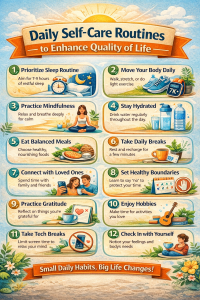
6. Take Daily Breaks and Step Away from Stressors
Allowing yourself micro‑breaks during the day — even for a few minutes — can significantly reduce stress and rejuvenate your focus. Regular brief pauses help the body and mind reset, lower anxiety, and prevent burnout from prolonged work or emotional effort.
These breaks could be as simple as stepping outside for fresh air, stretching, or chatting briefly with a friend. Structured breaks are especially important if your day involves long periods of sitting or screen time; stepping away refreshes both focus and mood.
7. Connect with Loved Ones and Build Support
Strong social connections are a key component of mental self‑care. Interacting with family, friends, or supportive peers provides emotional comfort, reduces feelings of loneliness, and boosts happiness.
You don’t need extensive conversations every day — even a brief exchange, shared meal, or simple check‑in can enhance your emotional wellbeing. Prioritizing regular connection fosters a sense of belonging and reminds you that you aren’t navigating life alone.
8. Set Healthy Boundaries to Protect Your Energy
Learning to set boundaries is an important self‑care skill that improves life quality. Boundaries help define how much time and emotional energy you devote to work, relationships, and obligations, preventing overwhelm and burnout.
Boundaries might involve saying “no” to requests that overextend you, limiting screen time before bed, or scheduling time for rest without guilt. Establishing clear limits nurtures self‑respect and prevents stress from building over time.
9. Practice Gratitude and Positive Reflection
Daily gratitude practices — like writing down a few things you’re thankful for — can shift your focus from negative to positive aspects of life, enhancing your emotional well‑being. Consistent gratitude practices are linked with lower stress, stronger mood, and increased life satisfaction.
A simple nightly routine of reflecting on highlights of your day, or journaling about positive moments, trains your brain to notice good things more deeply, increasing long‑term happiness.
10. Engage in Activities You Enjoy
Engaging in hobbies and enjoyable activities supports psychological wellness and boosts joy. Whether it’s reading, playing music, crafting, gardening, or creative pursuits, hobbies provide a sense of purpose, reduce stress, and offer meaningful engagement outside of work or obligations.
Doing things you love daily — even if for a short time — keeps your life well‑rounded and helps prevent burnout. These moments of pleasure are essential for emotional equilibrium and overall happiness.
11. Declutter Digital Life with Tech Breaks
In a digital era, reducing screen time can be an important self‑care practice. Constant notifications, social media scrolling, or digital overload can increase stress and anxiety. Taking intentional breaks from screens gives your mind space to relax and can improve focus, creativity, and sleep quality.
Consider scheduling tech‑free moments each day — such as during meals, before bedtime, or upon waking — to connect more deeply with your physical surroundings and inner thoughts.
12. Check In With Your Body and Mind
Self‑awareness — noticing how your body and emotions respond to stressors — is central to effective self‑care. Checking in each day allows you to notice when you’re tired, overwhelmed, or need extra rest or support. Improved self‑awareness helps you regulate emotions and respond to stress more adaptively.
Simple practices like pausing to notice fatigue, hunger, or mood shifts throughout the day help you take timely actions — like resting earlier, eating better, or seeking connection — rather than reacting later when stress has already built up.
Conclusion: Self‑Care as a Daily Investment in Quality of Life
Daily self‑care routines are not indulgences — they are evidence‑based habits that sustain your physical, emotional, and mental well‑being. Consistency is far more impactful than intensity; small daily acts like walking, proper sleep, hydration, brief mindfulness, and meaningful connections compound over time, leading to better mood, less stress, stronger relationships, and a more vibrant, fulfilling life.
Remember, self‑care isn’t about perfection. It’s about making mindful choices that support your well‑being regularly. Try incorporating a few of these practices today — and as you tailor them to your lifestyle, you’ll notice improvements not just in how you feel, but in how you live.