Travel Planning Guide for Stress-Free Vacations in 2026
Whether you’re dreaming of a tropical escape, a cultural city tour, or a rejuvenating nature retreat in 2026, careful travel planning can make all the difference between a chaotic trip and a truly relaxing vacation. As travel becomes more seamless and accessible, so too do the expectations of travelers seeking memorable, stress‑free experiences. But without proper preparation, even the most beautiful destinations can become overwhelming.
This comprehensive guide will walk you through essential travel planning strategies — from choosing the perfect travel window to packing smartly, budgeting wisely, and designing an itinerary that amplifies joy and minimizes stress. Each section explores insightful facts and best practices that experienced travelers and experts recommend for stress‑free vacations in 2026.
1. Set Clear Vacation Goals and Budget First
Before booking flights or hotels, take time to define why you want to travel and what you hope to experience. Some vacations focus on relaxation and unwinding, while others are adventure‑packed with activities and exploration. Knowing your vacation style helps you make decisions that align with your expectations.
Equally important is setting a realistic travel budget. Travel planning experts emphasize that early cost planning helps avoid financial stress during and after your vacation. Travelers should list expected expenses — including flights, accommodation, food, transport, experiences, and unexpected costs — before finalizing anything. This first step ensures your plans reflect what your finances can comfortably support, which is key to stress‑free travel. ([turn0reddit47])
2. Choose the Right Travel Period
Timing your trip wisely can greatly enhance your experience and reduce crowds, long lines, and inflated prices. Travel professionals recommend considering shoulder seasons — the months just before or after peak tourist periods — as ideal for calmer, more enjoyable vacations. During these times, many popular destinations offer pleasant weather, fewer crowds, and more authentic experiences with locals.
Travelers who visit outside busy holiday windows often find improved price availability for flights and accommodation, more flexible itineraries, and a more relaxed pace throughout their journey. Choosing your travel window strategically is one of the most effective ways to plan a stress‑free trip in 2026. ([turn0search1])
3. Decide Where to Go with Purpose
Selecting your destination is one of the first major decisions in travel planning. Think about the experiences you value most: cultural immersion, outdoor adventure, relaxation on beaches, family‑friendly attractions, or food and wine exploration. Researching destinations that match your interests helps you choose a place that genuinely excites you — and avoids destinations that might feel rushed or stressful.
Consider also practical resources like travel advisories and seasonal conditions. If safety is a concern, look at local conditions and prepare accordingly. Choosing a destination with clear expectations not only avoids unpleasant surprises but ensures your vacation aligns with your travel goals. ([turn0search7])
4. Plan Your Itinerary With Balance and Flexibility
A detailed itinerary provides structure for your vacation, yet overplanning can create unnecessary stress. Travel experts highlight that leaving space for spontaneity allows travelers to enjoy unexpected discoveries, rest when needed, and avoid the fatigue of a rigid schedule.
Start by identifying your “must‑do” activities and then organize your days around a gentle rhythm, including blocks of unplanned downtime. Avoid packing too many activities into each day — instead, allow time for rest, local exploration, or even spontaneous experiences that may become the most memorable part of your trip. A balanced itinerary improves peace of mind and allows you to enjoy vacation moments as they unfold. ([turn0search4])
5. Book Early and Secure Important Reservations
One of the most consistent travel planning tips is to book early. Early booking not only secures better pricing for flights, hotels, and attractions, but also reduces last‑minute stress on limited‑availability services. Many travelers find that reserving popular accommodations, tours, or dining experiences months ahead ensures they get the best options and avoid disappointment.
Additionally, bundling travel bookings — such as flights and hotels together — often leads to savings and greater convenience. By securing your major travel arrangements well in advance, you decrease the chances of last‑minute stress and create a firm foundation for your vacation. ([turn0search6])
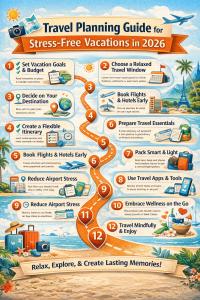
6. Organize Travel Logistics and Documents
Preparing logistics ahead of time helps smooth the start and flow of your vacation. This includes organizing travel documents (passports, visas, tickets), travel insurance, and personal identification before departure. Keeping everything in a dedicated digital folder or travel wallet avoids panic at the airport or hotel check‑in.
Travel professionals also recommend alerting your bank or credit card companies about international travel to prevent unexpected declines. Confirming smartphone connectivity, map coverage, and emergency contacts ahead of departure ensures you’re prepared for everyday travel needs. Planning these logistics well before the trip simplifies your journey and eliminates unnecessary hassles. ([turn0search7])
7. Pack Smartly and Efficiently
Packing sustainably and wisely is a critical step in travel planning that greatly affects your experience. Overpacking can make travel physically and mentally exhausting, while underpacking might lead to unnecessary purchases or discomfort.
A few packing habits that greatly reduce stress include organizing items by category, using packing cubes or tech kits for accessories, and decanting toiletries into travel‑friendly containers. Travelers should also check airline security rules and destination climate forecasts to ensure they pack appropriate clothing and essentials. When your luggage is thoughtfully prepared, the beginning and end of your trip feel far smoother and more relaxed. ([turn0search8])
8. Use Technology to Stay Organized
Travel technology has become an essential tool for planning stress‑free vacations. From itinerary planning apps to digital maps, technology keeps your bookings, reservations, and travel information in one place. Many apps now let you track crowd levels in real time, manage bookings, download offline maps, and access safety information, all of which help reduce the pressure of travel logistics.
These digital tools serve as personal travel assistants, minimizing manual research and helping you focus on enjoyment rather than anxiety. Integrating travel tech into your planning process definitely adds convenience and greater control over your travel experience. ([turn0search1])
9. Minimize Travel Stress at the Airport
Airport logistics can often be one of the most stressful parts of travel if not approached with preparation. Long lines at check‑in, security delays, and flight connections can drain your energy before your vacation even begins. To reduce this stress, arrive at the airport with plenty of time, be familiar with airline rules, and bring personal comforts like hydration, snacks, or entertainment.
Travelers also find it helpful to prepare for delays by anticipating longer queues and scheduling buffer time, especially during peak travel periods. Being mentally and logistically prepared for the airport phases of travel sets a calm tone for the rest of your journey. ([turn0news25])
10. Embrace Wellness on the Go
Vacations are meant to refresh your mind and body — not wear you out. Integrating wellness into your trip planning ensures you return home rejuvenated. Simple practices like scheduling time for rest, staying hydrated, light stretching during long travel segments, and maintaining mindful breathing during transitions help reduce fatigue.
Whether you’re exploring new cities or relaxing at the beach, make wellness an intentional part of your vacation. This mindset ensures your travel experience is enjoyable and physically rewarding. ([turn0search3])
11. Personalize Your Travel Experience
A truly memorable vacation reflects your interests, not someone else’s travel agenda. Personalizing your itinerary with experiences tailored to your desires — whether it’s local food trails, hidden markets, wellness retreats, small‑town explorations, or cultural classes — adds depth and meaning to your vacation.
Travelers who design trips around personal preferences often avoid overcrowded tourist circuits and discover unique places and experiences that speak to who they are. A personalized approach not only enhances satisfaction but creates travel memories that last a lifetime. ([turn0search1])
12. Practice Mindful Travel and Presence
The ultimate goal of vacation planning is not just efficient logistics, but emotional fulfillment. Once your planning is complete, embrace presence — the act of being fully immersed in your surroundings and experiences. This means putting phones away at times, savoring local flavors, engaging with locals respectfully, and allowing small moments of quiet reflection.
Mindful travel turns passive sightseeing into active experience, creating a deeper connection with your destination, its people, and yourself. When you arrive home, you return not only refreshed, but changed in thoughtful and meaningful ways.
Conclusion: Travel Planning as a Path to Joy
Stress‑free vacations in 2026 don’t happen by accident — they result from thoughtful, intentional planning that puts your peace of mind first. From defining clear goals and budgeting to smart packing and flexible itineraries, each step in the planning process contributes to a smoother, more satisfying travel experience.
Traveling can be one of life’s greatest joys when preparation reduces anxiety and invites curiosity, flexibility, and wonder. With the strategies outlined here, your next vacation can be calmer, richer, and more memorable — a true reflection of what travel is meant to be: exploration, rest, and life‑enhancing connection.