Chewing Sugary Gum After Beetroot: A Surprising Boost for Blood Pressure Control
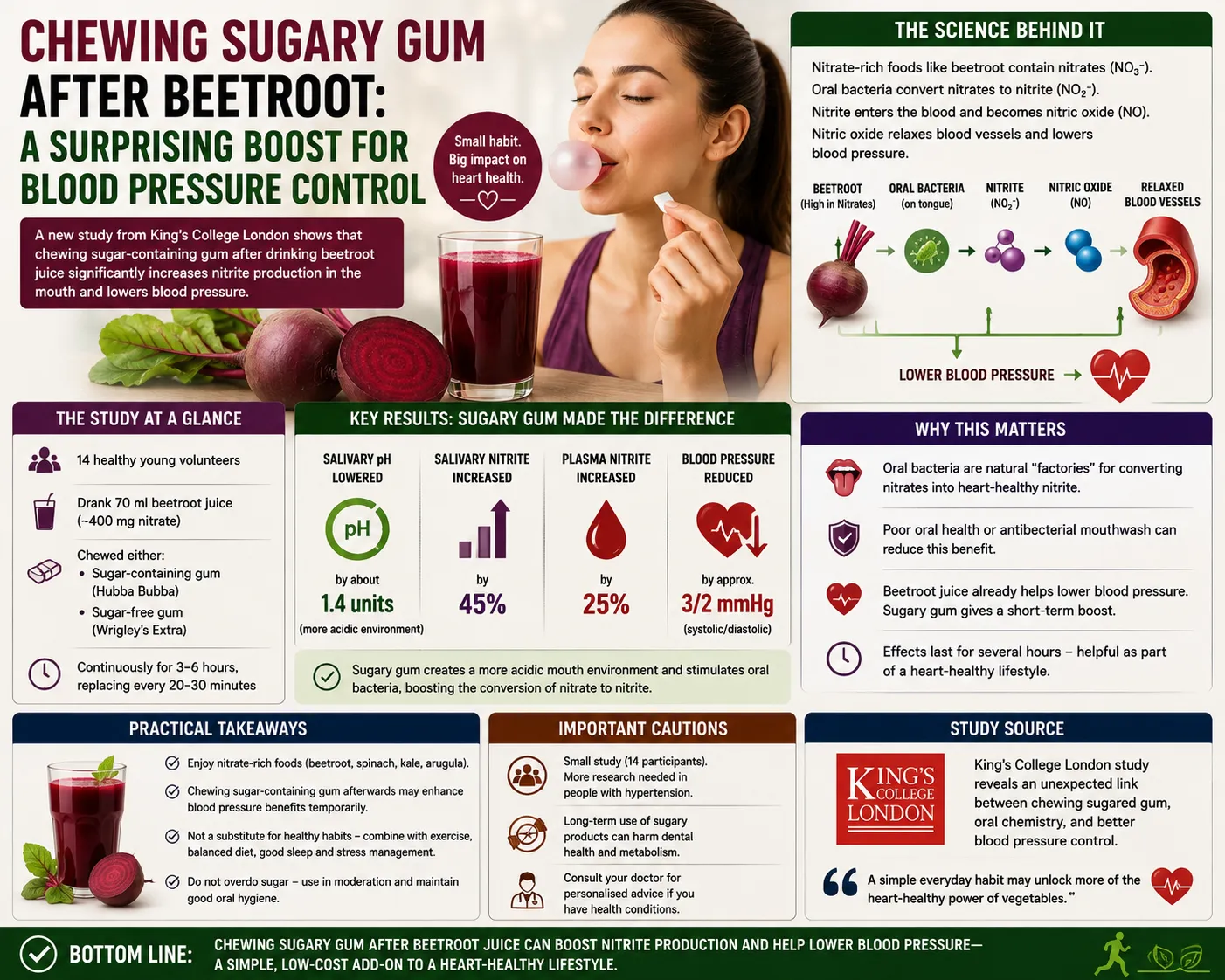
A groundbreaking study from King’s College London has uncovered an unexpected synergy between nitrate-rich foods like beetroot and a simple everyday habit: chewing sugary gum. Researchers found that chewing sugar-containing gum after consuming beetroot juice significantly enhances the conversion of dietary nitrates into nitrite, leading to a modest but meaningful reduction in blood pressure. This discovery sheds new light on the critical role of oral bacteria and saliva chemistry in cardiovascular health, potentially offering a practical, low-cost strategy to amplify the benefits of heart-friendly vegetables.
The research, published recently, challenges previous assumptions about oral pH and nitrate metabolism. For years, scientists knew that nitrate-rich vegetables such as beetroot, spinach, and kale contribute to lower blood pressure through the nitrate-nitrite-nitric oxide pathway. Dietary nitrates are reduced by beneficial bacteria on the tongue and in the mouth to nitrite, which is then absorbed into the bloodstream and converted to nitric oxide—a potent vasodilator that relaxes blood vessels and improves circulation. However, the new findings reveal that creating a slightly more acidic oral environment through sugary gum can accelerate this process.
Study Design and Key Findings
In this randomized crossover trial, 14 healthy young volunteers participated in two sessions. Each time, they consumed a concentrated 70-millilitre shot of beetroot juice providing approximately 400 mg of nitrate. Following the juice, participants chewed either sugar-containing Hubba Bubba bubble gum or sugar-free Wrigley’s Extra gum continuously for three to six hours, replacing pieces every 20-30 minutes. Researchers meticulously monitored saliva pH, nitrite levels in saliva and plasma, and blood pressure over the period.
The results were striking. Chewing sugary gum lowered salivary pH by about 1.4 units compared to the sugar-free version, creating a more acidic environment. This shift correlated with a 45% increase in salivary nitrite production and a 25% rise in circulating nitrite levels in the body. Consequently, participants experienced a reduction in both systolic and diastolic blood pressure by approximately 3/2 mmHg—modest yet clinically relevant, especially when sustained through dietary habits.
Contrary to earlier laboratory-based assumptions that suggested acidic conditions might inhibit nitrate-reducing bacteria, this in-vivo study demonstrated the opposite effect in living participants. The sugar in the gum likely stimulates greater bacterial activity or alters the oral microbiome dynamics in ways that enhance nitrate reduction efficiency.
The Science of Oral Bacteria and Heart Health
This research highlights the emerging understanding of the oral microbiome as a key player in systemic health. Beneficial bacteria on the tongue and gums act as natural “factories” for converting inorganic nitrates from food into bioactive nitrite. Factors that disrupt this microbiome—such as antibacterial mouthwashes, poor oral hygiene, or certain medical conditions—can the cardiovascular benefits of nitrate-rich diets.
Beetroot juice has been extensively studied for its blood pressure-lowering effects. Regular consumption can reduce systolic pressure by around 3-5 mmHg on average, with effects noticeable within hours and potentially more pronounced in older adults or those with hypertension. The addition of sugary gum appears to amplify this acute response temporarily, lasting several hours post-consumption. While not a long-term solution on its own, it points to innovative ways to optimize dietary interventions.
Experts emphasize that the mechanism involves not just acidity but the interplay between saliva flow, bacterial communities, and nitrate availability. Sugary gum increases saliva production and provides fermentable carbohydrates that may fuel specific nitrate-reducing species, leading to greater nitrite output.
Practical Implications and Broader Context
For individuals managing blood pressure, this finding offers an intriguing, accessible adjunct to a heart-healthy diet. Incorporating beetroot juice or nitrate-rich meals followed by a period of chewing sugary gum could provide a short-term boost—ideal for those seeking natural approaches alongside lifestyle changes. However, researchers caution that the benefits are temporary and best viewed as part of a comprehensive strategy including balanced nutrition, exercise, stress management, and regular medical check-ups.
Importantly, this does not endorse excessive sugar consumption. The study used controlled amounts of gum over a limited period in a clinical setting. Long-term reliance on sugary products carries risks for dental health and metabolic issues. Sugar-free alternatives did not yield the same enhancement, suggesting the need for further research into non-sugar methods that safely lower oral pH or stimulate similar bacterial responses.
The study also adds to growing evidence on how oral health influences cardiovascular outcomes. Conditions like periodontitis can impair nitrate reduction, reducing the effectiveness of beetroot and similar foods. Maintaining good oral hygiene while preserving beneficial bacteria emerges as a dual priority for heart health.
Limitations and Future Directions
Conducted with a small group of young, healthy volunteers, the study provides proof-of-concept rather than definitive clinical guidance. Larger trials involving diverse populations, including those with hypertension, are needed to confirm generalizability and explore long-term effects. Questions remain about optimal timing, gum type, frequency, and potential interactions with medications or other dietary factors.
Future research may investigate alternative ways to modulate oral pH or microbiome composition—perhaps through specific probiotics, prebiotic foods, or innovative chewing products designed for cardiovascular benefits without added sugars. Integrating these insights with personalized nutrition could revolutionize preventive cardiology.
A New Perspective on Everyday Habits
This discovery exemplifies how seemingly unrelated daily routines can interact with nutrition in profound ways. What began as an investigation into nitrate metabolism has revealed a fascinating connection between chewing gum, oral chemistry, and blood vessel function. It reinforces the idea that heart health is influenced by interconnected systems—from the mouth to the microbiome to circulation.
For now, the message is one of cautious optimism. Enjoying nitrate-rich vegetables like beetroot remains a scientifically supported strategy for supporting healthy blood pressure. Pairing it thoughtfully with habits that enhance its effects—while prioritizing overall dietary balance—could offer additional advantages. As scientists continue to unravel the complexities of the oral-systemic axis, simple interventions grounded in solid research may become powerful tools in the fight against hypertension, a leading global health challenge.
In summary, the King’s College London study opens an exciting chapter in nutritional science. Chewing sugary gum after beetroot may provide a temporary edge in lowering blood pressure by optimizing nitrite production through oral bacteria. While more research is warranted, it encourages us to think creatively about how everyday actions can support cardiovascular wellness. Combined with proven lifestyle measures, such insights pave the way for more effective, holistic approaches to heart health in the years ahead.
