Best Ways to Store Vegetables and Keep Them Fresh Longer
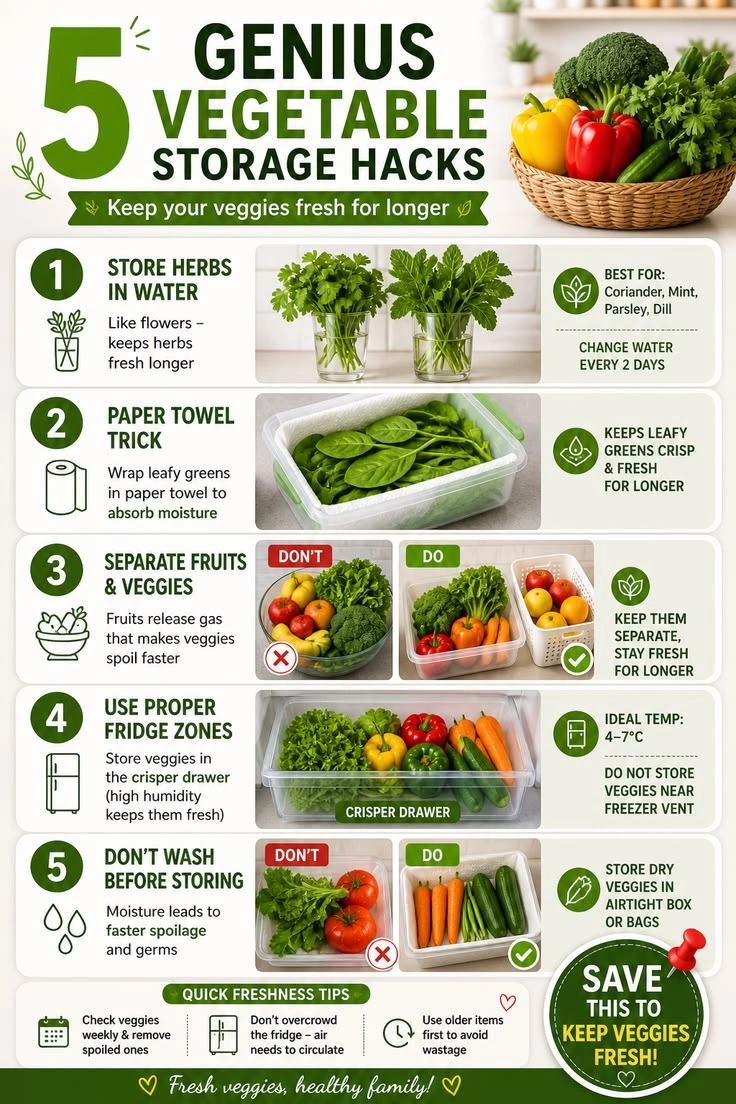
Proper vegetable storage is one of the simplest yet most effective ways to reduce food waste, save money, and maintain optimal nutrition. Many people unknowingly shorten the life of fresh produce through incorrect storage methods. With the right techniques, you can extend the freshness of vegetables by days or even weeks, preserving their flavor, texture, and nutritional value. This guide provides practical, proven strategies to store different types of vegetables effectively at home.
Understanding the Basics of Vegetable Storage
Vegetables are living foods that continue to respire after harvest. They need specific conditions — temperature, humidity, and airflow — to slow down spoilage. Two critical factors are ethylene gas (a natural ripening hormone) and moisture control. Some vegetables produce ethylene, which can accelerate spoilage in others, while excess moisture often leads to mold and rot.
General Rules:
- Most vegetables prefer high humidity (85–95%) but hate being wet.
- Never store ethylene-producing vegetables (tomatoes, bananas, apples) near sensitive ones (leafy greens, broccoli).
- Allow some airflow while preventing dehydration.
- Store root vegetables and tubers away from light to prevent sprouting.
Best Storage Methods by Vegetable Type
Leafy Greens (Spinach, Lettuce, Kale, Coriander)
Leafy greens are highly perishable. Remove any damaged or yellow leaves first. Wash them only when ready to use, as excess moisture causes faster spoilage. For storage, wrap loosely in paper towels or a clean kitchen cloth to absorb moisture, then place in a perforated plastic bag or airtight container in the refrigerator’s crisper drawer. Change the paper towels if they become damp. Well-stored leafy greens can last 7–10 days.
Root Vegetables (Carrots, Beets, Radishes)
These vegetables store best in cool, humid conditions. Remove the green tops immediately, as they continue drawing moisture from the roots. Store unwashed carrots and beets in the crisper drawer wrapped in slightly damp paper towels or in breathable bags. For longer storage, place them in a container with some moisture but not direct water contact. Properly stored root vegetables can remain fresh for 2–4 weeks.
Cruciferous Vegetables (Broccoli, Cauliflower, Cabbage)
Broccoli and cauliflower are sensitive to ethylene and prefer cold storage. Store them unwashed in loose plastic bags or containers with good airflow in the refrigerator. For cabbage, keep the outer leaves intact until use. These vegetables typically stay fresh for 7–14 days when stored correctly.
Tomatoes
Tomatoes lose flavor and texture when refrigerated. Store ripe tomatoes at room temperature, stem side down, away from direct sunlight. Only refrigerate them if they are overripe and you want to slow further ripening. Once cut, store tomatoes in the refrigerator in an airtight container and use within 2–3 days.
Potatoes, Onions, and Garlic
These staples prefer cool, dark, and dry conditions. Store potatoes in a well-ventilated basket or paper bag in a cool pantry area — never in the refrigerator, as cold temperatures convert starches to sugars. Keep onions and garlic in a cool, dry place with good airflow. Avoid storing potatoes and onions together, as onions release gases that can cause potatoes to sprout faster.
Cucumbers and Bell Peppers
These vegetables are sensitive to cold injury. Store cucumbers at room temperature if consuming within a few days, or wrap them in paper towels and place in the warmest part of the refrigerator. Bell peppers last longer when stored unwashed in the crisper drawer in perforated bags.
Asparagus and Celery
Treat asparagus like fresh flowers — trim the ends and store upright in a jar with 2–3 inches of water, loosely covered with a plastic bag in the refrigerator. Change the water every 2 days. Celery stays crisp when wrapped in aluminum foil or stored in a container with a little water.
Advanced Techniques for Maximum Freshness
- Use of Crisper Drawers: Most modern refrigerators have humidity-controlled crisper drawers. Set them to high humidity for leafy greens and low humidity for items that rot easily like cucumbers.
- Paper Towel Method: Placing a dry paper towel in storage containers absorbs excess moisture and significantly extends shelf life for berries, greens, and herbs.
- Ethylene Management: Use ethylene absorbers (available as small sachets) in your refrigerator or store produce separately based on their ethylene production.
- Freezing for Long-Term Storage: Blanch and freeze vegetables like beans, peas, and spinach for months-long preservation while retaining most nutrients.
- Vacuum Sealing: For serious home preservers, vacuum sealing removes air and dramatically extends freshness, especially for cut vegetables.
Common Storage Mistakes to Avoid
- Washing vegetables before storing (except for hardy ones like potatoes).
- Storing everything in the refrigerator without checking specific needs.
- Overcrowding the refrigerator, which reduces airflow.
- Keeping vegetables in sealed plastic bags without ventilation.
- Storing near ethylene-producing fruits like bananas and apples.
Smart Organization Tips
Designate specific areas in your refrigerator and pantry for different vegetable types. Use clear containers and labels to track storage dates. Adopt the “first in, first out” principle — use older produce first. Consider investing in reusable produce bags made of breathable fabric or silicone alternatives that help regulate moisture.
The Bigger Picture: Why Proper Storage Matters
Beyond reducing waste, correct storage preserves vitamins, minerals, and antioxidants. Many vegetables lose significant nutritional value within days of improper storage. By extending freshness, you also support sustainable living by minimizing food waste, which has environmental and economic benefits.
Start implementing these methods gradually. Begin with high-waste items like leafy greens and salad vegetables. Over time, you will develop an intuitive understanding of how to keep your produce at its best.
With these practical techniques, you can enjoy fresher, tastier vegetables for longer while making the most of your grocery budget. Proper storage transforms how long your vegetables remain vibrant and nutritious, contributing to healthier meals and a more sustainable kitchen.
Read more – medianewsqo.com