CPI vs CPM: Kerala Left’s Deputy LoP Tussle
The Left Democratic Front in Kerala is witnessing an unusual public confrontation between its two main constituents. The Communist Party of India has staked a firm claim to the post of Deputy Leader of the Opposition in the state Assembly, while the Communist Party of India (Marxist) insists the position belongs to it by long-standing convention. The disagreement, which has played out through party mouthpieces and public statements, reflects deeper questions about collective leadership after the LDF’s heavy defeat in the May 2026 Assembly elections.
Background of the Dispute
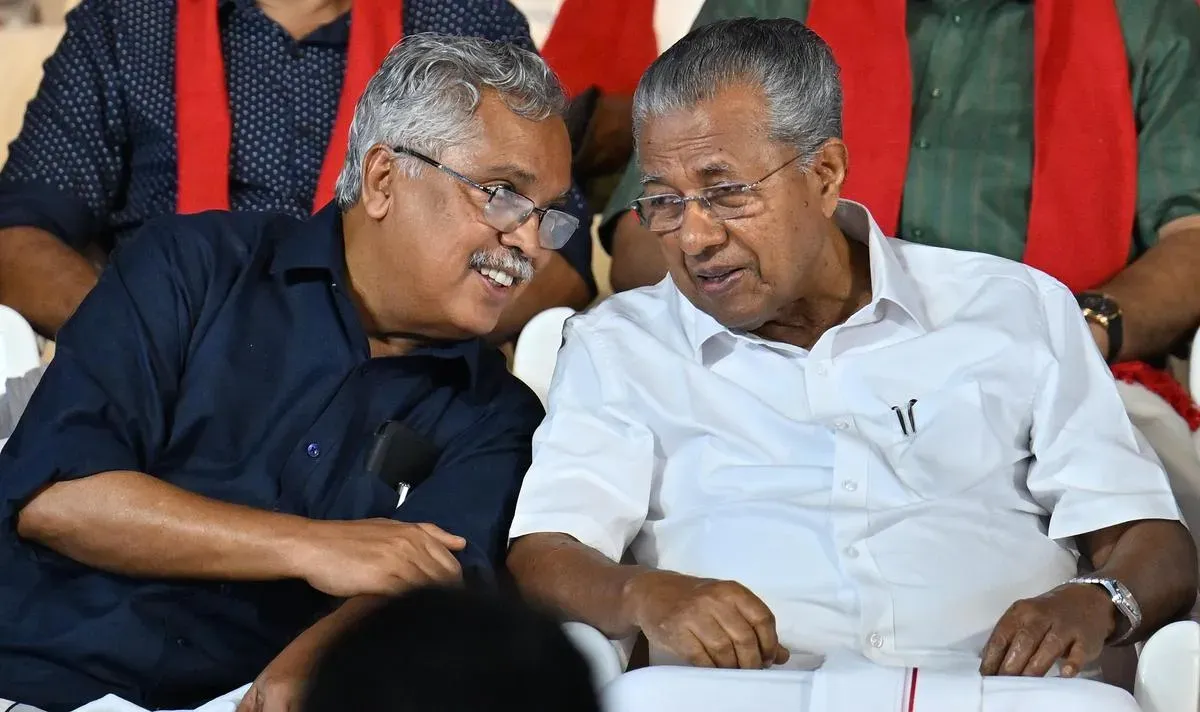
In the 140-member Kerala Assembly, the LDF was reduced to 35 seats. The CPI(M) accounts for 26 of those legislators, while the CPI has eight. After the results, the CPI(M) named former Chief Minister Pinarayi Vijayan as Leader of the Opposition. The CPI then began pressing for the Deputy Leader’s post, arguing that the electoral setback demanded a more shared approach to leadership within the alliance.
The CPI maintains that post-election discussions among LDF partners had underlined the need for collective leadership. Senior CPI leader Rajaji Mathew Thomas wrote in the party daily that this principle formed the basis of the party’s demand. CPI State Secretary Binoy Viswam has repeatedly described the claim as non-negotiable and linked it to the party’s self-respect and its role as a founding partner of the LDF.
CPI(M)’s Position on Tradition
The CPI(M) has rejected the demand by pointing to historical practice. Party leaders note that the Deputy Leader of the Opposition post has remained with the CPI(M) since 1980. State secretariat member C. N. Mohanan argued in the party newspaper that the CPI’s claim runs contrary to established convention and questioned whether the smaller party believed it had grown stronger after the alliance’s defeat. He cautioned against steps that could damage Left unity.
Leader of the Opposition Pinarayi Vijayan has been equally clear. He stated that he would recommend a CPI(M) leader for the post to the Speaker, leaving little ambiguity about his party’s stance. The CPI(M) has indicated that it views the matter as settled by precedent and by its numerical strength within the LDF legislature party.
Public Exchange and Escalation
What began as an internal alliance discussion has moved into the open. Articles in the respective party newspapers have traded arguments over political legacy, coalition etiquette and the meaning of collective functioning. CPI leaders have criticised what they see as unilateral decision-making, while CPI(M) functionaries have described the CPI’s insistence as a pressure tactic.
The dispute has also drawn external comment. The Indian Union Muslim League, an ally of the rival United Democratic Front, has publicly praised the CPI and characterised it as being forced into a secondary role. CPI leaders have responded by reaffirming their commitment to the LDF and rejecting any suggestion of a shift in allegiance. At the same time, LDF convenor T. P. Ramakrishnan has called for the matter to be resolved through discussion rather than public argument.
Deeper Tensions Within the Alliance
The contest over a single post has become a proxy for longer-running differences. During the LDF’s decade in power, the CPI had periodically expressed discomfort over issues such as the handling of certain security cases, development projects and, more recently, the state government’s approach to the PM-SHRI education scheme. After the 2026 defeat, some of these criticisms have resurfaced in sharper form. Sections within the broader Left have also begun discussing the concentration of authority and the need for wider consultation.
The CPI argues that visible representation in key Opposition positions would strengthen the alliance’s collective character and help it recover politically. The CPI(M) counters that coalition discipline and established norms cannot be set aside simply because of an electoral reverse. Both parties continue to stress that their ultimate goal is the preservation of Left unity, even as their public statements reveal clear divergence on how that unity should be practised.
Current Status and Possible Paths
As of now, the post remains unresolved. The CPI has said it remains confident of a favourable outcome through discussion and has welcomed calls for dialogue within the LDF. The CPI(M) has shown little sign of yielding on the principle of precedent. Intermediate efforts by senior leaders to lower the temperature have produced statements of mutual respect but no settlement on the substantive claim.
The episode carries implications beyond the allocation of one office. A prolonged public disagreement risks projecting an image of disunity at a time when the LDF is attempting to regroup as an effective Opposition. It also raises questions about how the alliance will manage internal differences while confronting a strengthened United Democratic Front government.
Broader Significance for Kerala Politics
Kerala’s Left has long prided itself on organisational coherence and ideological clarity. The open tussle between its two principal parties therefore stands out. For the CPI, the demand represents an assertion of equal partnership after years of junior status. For the CPI(M), defending the post is a defence of both numerical reality and historical practice.
How the two parties navigate the disagreement will influence the LDF’s ability to present a united front in the Assembly and in the wider political arena. Whether the eventual resolution emphasises tradition or collective accommodation will signal the direction the alliance takes in the aftermath of its electoral setback. For the moment, the Left in Kerala finds itself engaged in an internal debate that is as much about power-sharing and political culture as it is about a single legislative post.
Read more – themenuspark.com , scorematchup.com