Home Loan Dilemma After Rate Hike: Higher EMI or Longer Tenure?
When interest rates rise, home loan borrowers face a familiar but consequential choice. A higher equated monthly instalment can accelerate repayment and reduce the total interest paid over the life of the loan. Keeping the EMI unchanged and extending the tenure can protect monthly cash flow but often increases the overall cost of borrowing. The recent upward revision in the policy repo rate has brought this trade-off back into sharp focus for floating-rate borrowers across the country.
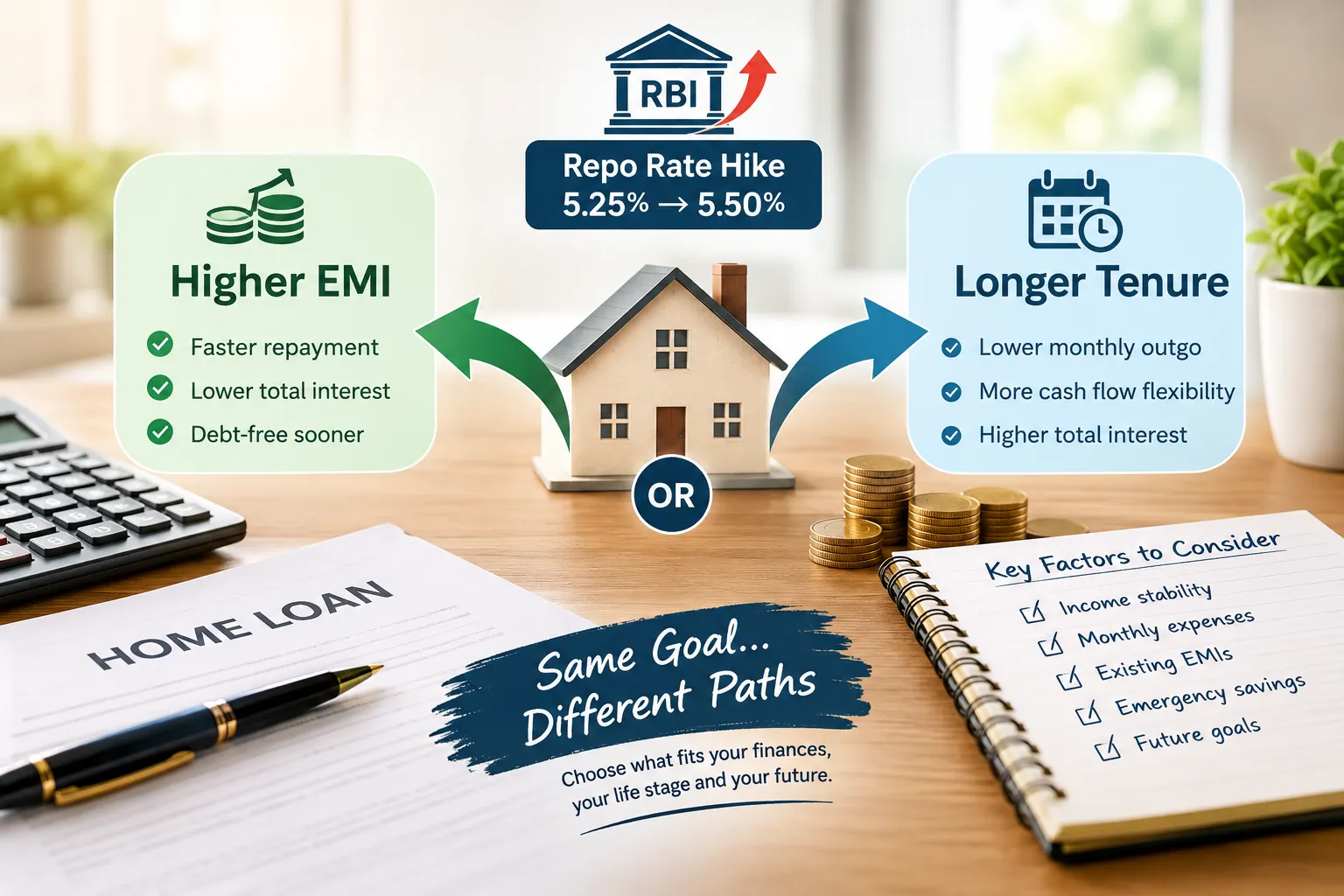
The Reserve Bank of India raised the repo rate by 25 basis points to 5.50 per cent. For loans linked to external benchmarks such as the repo rate, lenders may revise the applicable interest rate at the next reset date. Depending on the loan agreement and the bank’s practice, the higher rate can translate into an increased EMI, a longer repayment period, or a combination of both. Borrowers must decide which path aligns better with their financial situation and long-term goals.
Two Different Priorities, One Shared Goal
Borrowers approach the decision from different life stages and risk preferences. One set of borrowers, particularly those closer to retirement, prioritises becoming debt-free while they still have a regular salary. For them, absorbing a higher monthly outflow today is preferable to carrying a home loan into a period of lower or fixed income. They may be willing to reduce discretionary spending or temporarily scale back certain investments to free up cash for larger EMIs.
Younger borrowers or those with tighter monthly budgets often take the opposite view. Their immediate concern is preserving cash flow for living expenses, children’s education, or other commitments. Extending the tenure keeps the EMI at a manageable level even if it means paying interest for a longer period. Both groups share the desire to repay the loan responsibly; they differ on the timing and the monthly burden they are prepared to accept.
Why Raising the EMI Usually Costs Less Overall
Financial experts generally observe that increasing the EMI is the more economical option over the long term, provided the household can comfortably afford the higher payment. When the EMI rises, a larger portion of each instalment goes toward reducing the outstanding principal. As the principal declines faster, the interest charged in subsequent months also falls. The loan is extinguished earlier, and the cumulative interest outgo is lower.
By contrast, keeping the EMI unchanged after a rate increase means a greater share of each payment continues to service interest. The outstanding principal declines more slowly, the repayment period lengthens, and the borrower remains in debt for additional months or years. Illustrative calculations shared by advisers show that the difference in total interest can run into several lakhs of rupees on typical loan amounts, depending on the outstanding balance, remaining tenure and the size of the rate change.
Assessing Personal Capacity Before Deciding
The mathematically cheaper option is not always the right one for every household. Borrowers need to examine several practical factors. Income stability is central: those with predictable salaries and limited risk of disruption are better placed to absorb a higher EMI. Monthly expenses, existing EMIs on other loans, and essential outflows must leave sufficient surplus after the increased home-loan instalment. Emergency savings should remain intact; dipping into contingency funds to service a larger EMI can create vulnerability.
Upcoming financial commitments also matter. Planned education expenses, medical needs, or other large outlays may make an immediate increase in the home-loan EMI difficult. Conversely, borrowers who expect salary growth or have discretionary spending that can be trimmed may find the higher EMI manageable.
Practical Paths Available to Borrowers
Lenders typically offer three broad approaches after a rate revision. The first is to increase the EMI and retain the original tenure. This path suits those with adequate monthly surplus and a preference for faster debt reduction. The second is to keep the EMI unchanged and allow the tenure to extend. This provides short-term relief to the household budget at the cost of higher lifetime interest. The third is a combination: a moderate rise in the EMI accompanied by a limited extension of the tenure, striking a middle path between cash-flow comfort and interest savings.
In addition to these options, many borrowers consider part-prepayments when they have surplus funds. Even modest annual prepayments can meaningfully shorten the remaining tenure or reduce the interest burden, especially when applied early in the loan’s life. Communication with the lender is important. Borrowers should confirm the revised interest rate, the reset date, and whether the bank intends to adjust the EMI, the tenure, or both. Written confirmation helps avoid surprises.
Balancing Present Comfort and Future Freedom
The decision ultimately rests on a clear-eyed assessment of current capacity and future priorities. Those nearing the end of their working years may reasonably prioritise the peace of mind that comes with a debt-free retirement, even if it requires temporary lifestyle adjustments. Younger borrowers with longer earning horizons and competing cash-flow demands may prefer to protect monthly liquidity while still making steady progress on the principal.
There is no universal answer that fits every situation. What remains consistent is the value of understanding the long-term cost difference between the two main options and matching the choice to one’s income stability, emergency buffers and life-stage goals. After a rate hike, taking the time to review the loan statement, speak with the lender, and evaluate personal finances can help borrowers navigate the dilemma with greater clarity and confidence.
In the current environment, floating-rate home loan borrowers have an opportunity to revisit their repayment strategy rather than simply accept the default path chosen by the bank. Whether the preference is to retire free of debt or to keep monthly obligations firmly under control, an informed decision today can shape both the cost of the loan and the financial flexibility available in the years ahead.
Read more – Lpainhand.com