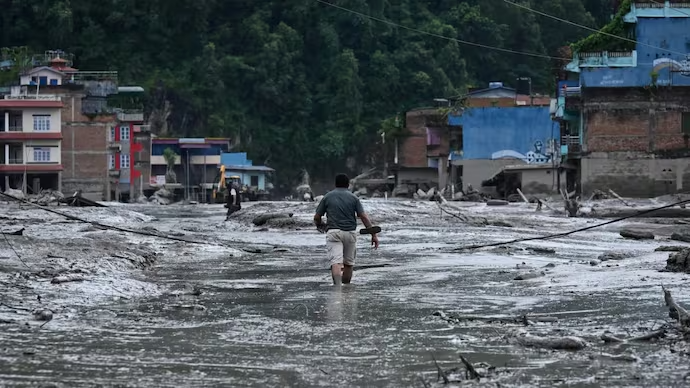
Nepal Flood Horror Deepens: Death Toll Hits 626 as 2,400+ Remain Missing
Nepal is facing one of its most devastating flood disasters in recent years, with the death toll reaching 626 as rescue teams struggle to reach people still missing after catastrophic flash floods in the Himalayan region. The disaster has left thousands of families waiting for information while heavy rain, damaged roads and unstable terrain continue to slow down search operations.
The Nepal flood disaster began on Wednesday after a major glacial collapse near the China border triggered an enormous rush of water, ice, rocks and mud through mountain river systems. Rasuwa and several areas of central Nepal were among the worst affected, with bridges, roads, settlements and hydropower facilities swept away within a very short period.
Death Toll Continues To Rise
The latest official figures have put Nepal’s death toll at 626, while thousands of people remain unaccounted for across Nepal and the neighbouring Tibet region. Authorities have warned that these numbers could continue changing as rescue teams reach isolated locations and identify recovered bodies.
Across Nepal and Tibet combined, nearly 3,000 people are still reported missing according to the latest updates. Nepal has reported more than 1,900 missing people, while hundreds remain unaccounted for on the Tibetan side of the border. The figures are particularly difficult to verify because communication networks and road connections have been badly damaged.
Among those missing are foreign nationals, including tourists, workers and pilgrims who were travelling through the border region when the disaster struck. This has added another layer of urgency to an already complicated rescue operation.
How The Himalayan Flood Began
The disaster was not simply a result of ordinary monsoon rainfall. A glacial collapse near the Nepal-China border triggered an avalanche involving ice and rocks, sending huge quantities of water and debris into downstream river systems.
The sudden surge travelled through the Bhotekoshi and Trishuli river areas, creating extremely dangerous conditions for communities located along the waterways. The force of the flood damaged infrastructure that normally provides access to remote Himalayan settlements.
In several locations, roads disappeared under mud and debris while bridges were either destroyed or rendered unusable. Hydropower facilities were also badly affected, making it harder for emergency teams to reach certain areas and communicate with people who may still be trapped.
The combination of steep Himalayan terrain, unstable slopes and continuing rainfall has made the situation even more difficult for authorities.
Heavy Rain Slows Rescue Work
One of the biggest problems facing rescuers is the weather itself. Rain and thick fog have repeatedly interrupted helicopter operations and ground searches.
Nepal temporarily suspended some search and rescue activity because poor visibility and rainfall created additional risks for rescue personnel. In mountainous areas, even a short period of heavy rain can cause landslides, rockfalls and sudden increases in river levels.
For families waiting for missing relatives, the delays are especially painful. Rescue workers have to balance the need to search quickly with the danger of sending teams into areas that could experience another flood or landslide.
The situation is also changing rapidly. A location that appears accessible in the morning can become dangerous later if rainfall increases or water levels rise.
New Flood Threats Remain
The immediate disaster has not completely ended. Authorities are continuing to monitor lakes that formed or expanded upstream following the flooding.
Two barrier lakes remain under observation because a sudden release of stored water could create another dangerous surge downstream. One of the lakes has shown signs of shrinking, but experts have warned that the situation remains unstable.
Officials are particularly concerned about the possibility of a natural dam failing. If a large quantity of stored water suddenly escapes, communities that have already suffered major destruction could face another wave of flooding.
Chinese authorities have also warned about instability in the wider region, where numerous glacial lakes exist across the high-altitude Himalayan landscape. This means rescue teams are not only searching for survivors but also watching for signs of another emergency.
Roads And Bridges Washed Away
The scale of infrastructure destruction is one of the main reasons the rescue operation has become so complicated.
The flood damaged roads and bridges connecting remote communities with larger towns. Some areas can no longer be reached through normal ground transportation, forcing authorities to rely on helicopters, temporary routes and specialist rescue equipment.
The destruction of bridges is especially serious in mountainous Nepal because many communities depend on a small number of crossings for access to hospitals, markets, government services and emergency support.
At the border crossing near Gyirong, rescuers faced an extremely difficult journey because normal roads had been destroyed. A Chinese rescue team reportedly had to travel through mountains, forests and steep terrain using ropes before reaching the heavily damaged area.
The scenes found there demonstrated how powerful the flood had been, with buildings and infrastructure left severely damaged after the torrent passed through.
Foreign Nationals Among Missing
The disaster has also affected international travellers who were in Nepal and nearby border areas.
Authorities have reported hundreds of foreign nationals among those still missing. Many were travelling as tourists, workers or religious pilgrims, making the situation a concern for several governments.
The Himalayan border region is regularly used by visitors travelling towards religious and tourist destinations. When roads and communication systems fail, it becomes difficult for families outside Nepal to receive reliable information about their relatives.
Some tourists have already been rescued, while authorities continue working to identify people who remain unaccounted for.
The challenge now extends beyond simply locating people. Authorities must establish identities, provide medical assistance, arrange transportation and reconnect survivors with their families.
Nepal Requests Technical Assistance
Nepal has indicated that it needs specialised international assistance in several areas rather than a general replacement of its own search and rescue teams.
Authorities are seeking technical expertise for complicated tunnel rescues, restoration of damaged transportation and communication networks, identification of recovered bodies and DNA testing.
This is important because some of the most difficult rescue locations involve damaged infrastructure and confined spaces where ordinary rescue methods may not be enough.
India has already sent relief supplies, including medicines, food, blankets and water purification materials. Additional specialist teams and equipment are also expected to support Nepal’s recovery efforts.
China is also dealing with serious damage on its side of the border and has been involved in rescue and assessment work around the affected crossing areas.
Huge Reconstruction Bill Ahead
The rescue operation is only the first stage of Nepal’s crisis. Rebuilding the damaged region could take years and require billions of dollars.
Nepal’s finance minister has estimated that the country could need between $4 billion and $5 billion for reconstruction. The final figure could change as officials complete detailed assessments of destroyed homes, roads, bridges, power facilities and other infrastructure.
The economic impact could be significant for communities that depend on tourism, transportation, hydropower and local trade.
Small businesses and households in affected areas may also face long periods without normal access to markets and services. Rebuilding roads alone will be a major challenge because many damaged routes pass through difficult Himalayan terrain.
What Happens Next In Nepal
The immediate priority remains finding survivors and accounting for people who are still missing. Search teams will have to work around rainfall, fog, landslide risks and unstable water levels.
At the same time, authorities must prevent a second disaster by closely monitoring the upstream lakes and river systems. Evacuation warnings may remain necessary for communities located near vulnerable waterways.
The situation is also expected to change as more information comes from remote locations. The death toll and missing-person figures could be revised as communication improves and rescue teams reach areas that remain cut off.
For thousands of families, however, the numbers represent something much more personal. Every missing person’s name means someone is still waiting for confirmation, hoping that a rescue team reaches their loved one in time.
Nepal Flood Disaster Leaves Long Road Ahead
The latest Nepal flood disaster has exposed how quickly conditions can change in the Himalayan region when glacial instability, extreme weather and vulnerable infrastructure combine. With 626 deaths confirmed in Nepal and thousands still missing across Nepal and Tibet, the emergency remains far from over.
The next few days will be critical for rescue teams, particularly as weather conditions and upstream water levels continue to be monitored. Beyond the search operation, Nepal faces a massive reconstruction challenge involving roads, bridges, hydropower projects, homes and communication networks.
The priority now is clear: protect communities from further flooding, locate those still missing and provide urgent support to survivors. International technical cooperation, careful monitoring and sustained relief efforts will be essential as Nepal moves from emergency response toward recovery.
Read More :- RedTeaDetoxCleanse.com