How RSS Addressed Gen Z Concerns BJP Missed
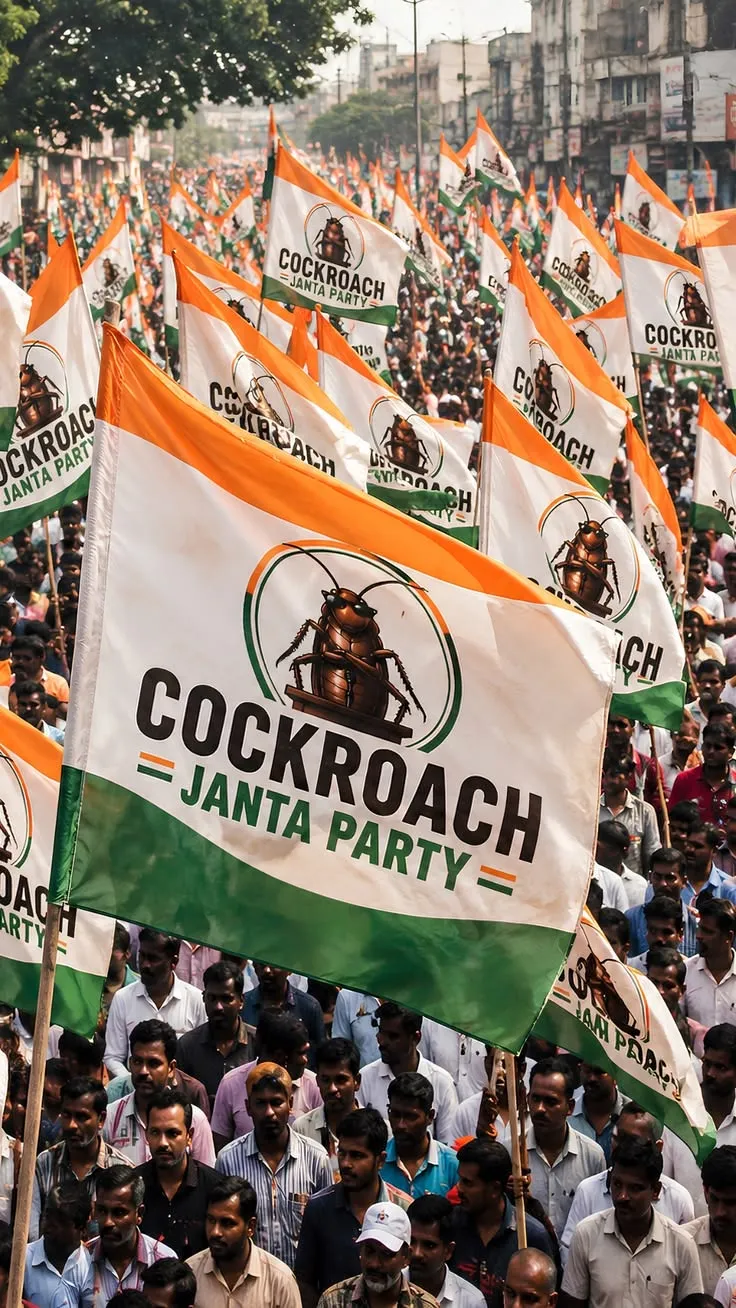
RSS chief Mohan Bhagwat’s recent interaction with young participants in Mumbai has been widely read as a deliberate attempt to engage Gen Z and Gen Alpha on terms that differed markedly from the political handling of the Cockroach Janta Party-led student protests. Where the protests had exposed a gap between official messaging and youth sentiment, Bhagwat’s remarks appeared to acknowledge grievances, defend the legitimacy of protest, and avoid equating dissent with disloyalty.
The Context of the Protests
The Cockroach Janta Party began as a satirical social-media response to public frustration over examination irregularities, including allegations surrounding the NEET paper leak, and broader anxieties about unemployment and institutional trust. What started as online parody rapidly drew real-world participation. Gatherings at Jantar Mantar and other locations amplified demands for accountability in the education system. The agitation culminated in the resignation of Union Education Minister Dharmendra Pradhan in late July 2026.
The intensity of the mobilisation prompted introspection within the broader Sangh Parivar. Leaders privately and publicly recognised a disconnect with younger cohorts who communicate primarily through digital platforms, expect direct answers, and are less receptive to traditional hierarchical messaging. The BJP responded by directing its youth organisations to intensify outreach. The RSS, for its part, scheduled a large-scale interaction between its chief and roughly 2,000 teenagers and young adults.
Bhagwat’s Approach in Mumbai
On 6 August 2026, Bhagwat addressed an audience of Gen Z and Gen Alpha participants at an event in Mumbai linked to a youth conference. His tone and content stood out for several reasons. He stated that the grievances raised by the younger generation were genuine. He explicitly rejected the idea that protesting youth should be labelled anti-national, describing them instead as “our people” and “our next generation.” He characterised protest itself as a legitimate form of dialogue in a democracy—one intended to build consensus rather than create permanent divisions.
He also observed that the new generation asks questions and expects logical answers, and suggested that it responds more readily to appeals grounded in honesty, patriotism and service than to top-down instruction. In doing so, he framed listening and relationship-building as essential rather than optional.
Where the Contrast Lay
Coverage of the event has drawn a clear contrast with the earlier political response to the Cockroach Janta Party protests. During the height of the agitation, official and party-linked messaging was often perceived as defensive or quick to question the motives and national commitment of the demonstrators. That approach, critics argued, deepened alienation rather than bridging it.
Bhagwat’s intervention reversed several of those notes. He did not begin by challenging the patriotism of the protesters. He did not treat agitation as inherently illegitimate. He accepted that when dialogue fails, public protest becomes a predictable democratic response. And he positioned the younger generation as more honest and responsive to genuine appeals than some of their elders. These positions effectively ticked boxes that the political leadership had earlier crossed or left unmarked.
Listening Without Immediate Rebuttal
One of the most noted aspects of the Mumbai interaction was the willingness to listen first. Bhagwat’s remarks suggested that leadership is not solely about delivering speeches or winning elections, but about engaging a generation that demands reasoned answers. By speaking in a register that acknowledged agency and intelligence on the part of the young audience, he offered a different model of outreach—one that treats questioning as a feature of the cohort rather than a threat.
This approach aligns with a longer organisational emphasis within the RSS on continuous engagement with youth through shakhas, educational institutions and training programmes. The Mumbai event, however, carried particular political resonance because it followed so closely on a high-visibility youth protest that had forced a ministerial resignation.
Implications for Political Communication
The episode illustrates a recurring tension in contemporary Indian politics: how established organisations and parties communicate with a demographic that is digitally fluent, sceptical of authority, and highly sensitive to tone. Formal political messaging that relies on hierarchical reassurance or quick moral framing can backfire when the audience expects recognition of its specific grievances.
Bhagwat’s comments supplied a template that prioritises three elements: validation of concerns, affirmation of democratic rights including protest, and an invitation to dialogue grounded in a sense of shared belonging. Whether political parties can or will consistently adopt a similar register remains an open question. The BJP has already moved to increase youth-wing activity and has experimented with more direct digital communication from senior leaders. The RSS interaction, however, set a distinct tonal benchmark.
A Generational Challenge
Gen Z and Gen Alpha in India are coming of age amid intense competition for education and employment, frequent controversies over examination integrity, and a media environment that amplifies both official narratives and their rebuttals in real time. Movements such as the Cockroach Janta Party demonstrated how quickly satire and shared frustration can coalesce into visible pressure. Responding effectively requires more than organisational mobilisation; it requires a willingness to accept that the questions being asked are legitimate even when they are uncomfortable.
By stating that the protesters were not anti-national, that their grievances were real, and that protest itself can serve democratic dialogue, Bhagwat addressed precisely those sensitivities. In the process, the RSS projected an ability to recalibrate its public posture toward the young more agilely than the electoral party associated with it had managed during the peak of the agitation.
An Offering of a Different Register
The Mumbai interaction does not resolve the underlying issues of examination integrity, employment or institutional trust. It does, however, demonstrate an alternative communicative strategy: one that begins with recognition rather than rebuttal, that separates dissent from disloyalty, and that treats the demand for logical answers as a generational characteristic rather than an act of defiance. In the aftermath of a protest movement that forced a high-level political concession, that difference in approach has been widely noted as the RSS ticking boxes the BJP had earlier left unchecked.
Read more – laicaicai.com