Over 20 BRS MLAs Including KTR Suspended from Telangana Assembly
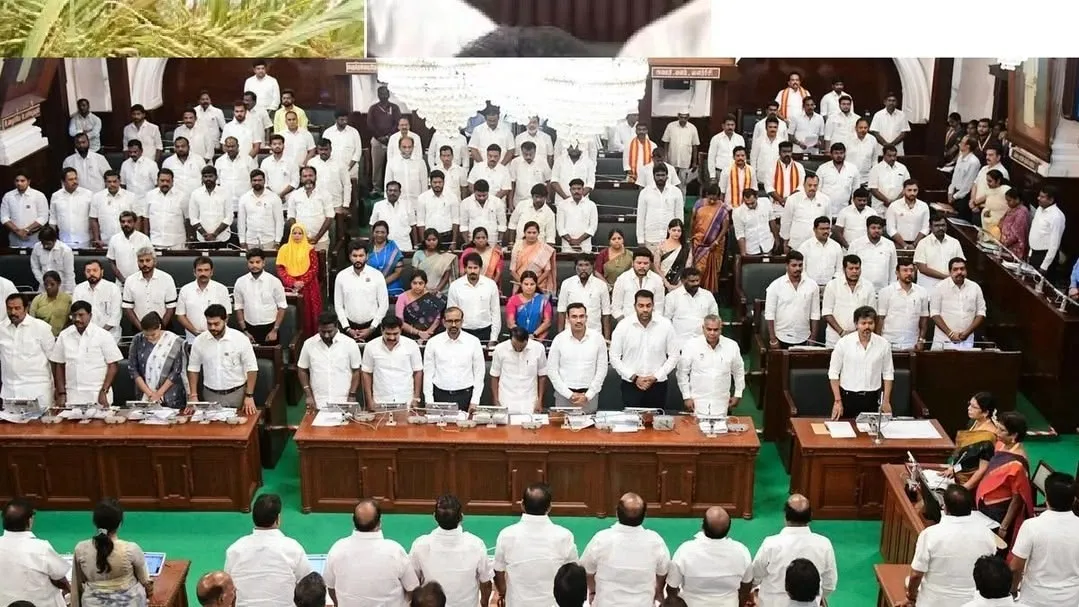
The Telangana Legislative Assembly witnessed a sharp escalation in tensions on the third consecutive day of its Monsoon Session when Speaker Gaddam Prasad Kumar suspended more than 20 legislators belonging to the Bharat Rashtra Samithi. Among those suspended were senior party leaders K.T. Rama Rao, popularly known as KTR, and T. Harish Rao. The action followed repeated disruptions that prevented the smooth conduct of House proceedings.
The BRS, which has a total of 27 members in the 119-member Assembly, found a large section of its strength barred from participating for the remainder of the session. The suspensions came after Legislative Affairs Minister D. Sridhar Babu moved a formal motion citing continuous obstruction by the opposition members.
Background to the Disruptions
The Monsoon Session had already seen heated exchanges between the ruling Congress and the principal opposition BRS. On the first day, BRS legislators and some MLCs attempted to enter the Assembly premises wearing black T-shirts carrying slogans critical of the Congress government’s performance after completing roughly 1,000 days in office. Police intervention led to a scuffle in which several BRS leaders, including women legislators, alleged rough treatment.
BRS leaders subsequently demanded a discussion on what they described as high-handedness by the police against their women members. They also raised strong objections to alleged public remarks by a Congress legislator that they interpreted as wishing for the demise of BRS president and Leader of the Opposition K. Chandrasekhar Rao. Party members sought the suspension of the Congress MLA concerned and insisted on a debate under the relevant rules of the Assembly.
When these demands were not immediately taken up in the manner they sought, BRS members entered the well of the House, raised slogans demanding “justice,” and refused to return to their seats despite repeated appeals from the Speaker and senior ministers.
The Suspension Decision
On the third day, the situation remained unchanged. BRS legislators continued to occupy the area near the Speaker’s podium and disrupted proceedings. Minister Sridhar Babu then moved a motion seeking their suspension for the rest of the Monsoon Session. Speaker Gaddam Prasad Kumar accepted the motion and announced the names of the suspended members.
Those named included K.T. Rama Rao, T. Harish Rao, Anil Yadav, G. Jagadish Reddy, Kaushik Reddy, Madhavaram Krishna Rao, Kova Lakshmi, K. Manik Rao, Chinta Prabhakar, K. Prabhakar Reddy, Marri Rajashekhar Reddy, P. Rajeswar Reddy, Sabita Indra Reddy, Kalvakuntla Sanjay, Talasani Srinivas Yadav, D. Sudheer Reddy, V. Sunitha Laxma Reddy, K. Venkatesh, Vijayudu, K.P. Vivekananda and others. Reports consistently placed the number of suspended MLAs above 20.
Following the announcement, the House was briefly adjourned. The suspensions significantly reduced the opposition’s numerical presence for the remaining days of the session.
Political Context and Counter-Allegations
The ruling Congress side responded to the BRS protests by raising its own set of concerns. Treasury benches pointed to an incident in Siddipet district, where BRS workers reportedly performed a purification ritual involving turmeric water outside K. Chandrasekhar Rao’s farmhouse after a protest by Dalit Congress activists. Congress leaders described the act as insulting to Dalit communities and demanded discussion on it.
Deputy Chief Minister Mallu Bhatti Vikramarka and other ministers stated that they wished KCR a long and healthy life, distancing the government from any alleged death wishes. They also accused certain BRS members of using inappropriate language against the Speaker in earlier interventions.
These exchanges underscored the deep political polarisation between the two parties. The BRS, which ruled Telangana for nearly a decade before the 2023 Assembly elections, has positioned itself as a vigorous opposition, frequently highlighting unfulfilled promises and law-and-order issues. The Congress government, in turn, has sought to project itself as focused on governance while accusing the previous regime of various shortcomings.
Implications for the Session and Beyond
With a substantial portion of the BRS strength suspended, the opposition’s ability to intervene effectively in the remaining sittings of the Monsoon Session has been curtailed. Legislative business, including bills and discussions on government policies, is likely to proceed with reduced opposition participation inside the House.
BRS leaders indicated they would continue to raise their concerns outside the Assembly, including through a planned meeting with the Governor. Party working president K.T. Rama Rao and other senior figures have framed the suspensions as an attempt to silence legitimate opposition voices rather than a response to procedural violations.
Suspensions of this scale are not unprecedented in Indian legislatures, where Speakers have occasionally resorted to such measures to restore order when disruptions become prolonged. However, the removal of more than 20 members from a party that already holds a minority of seats alters the balance of debate for the duration of the session.
Broader Political Dynamics in Telangana
The episode reflects the continuing intensity of political competition in Telangana. Since assuming office, the Congress government under Chief Minister A. Revanth Reddy has faced sustained criticism from the BRS on issues ranging from implementation of election guarantees to administrative decisions. The BRS, for its part, has used every available platform to question the ruling party’s performance and to defend the record of its own previous governments.
Incidents involving police action against opposition legislators and alleged personal remarks against senior leaders tend to heighten emotions and make compromise more difficult. In such an atmosphere, the Speaker’s role in maintaining order becomes particularly challenging, as any firm action risks being portrayed as partisan by the affected side.
As the Monsoon Session continues without a large section of the principal opposition, attention will turn to whether the government can advance its legislative agenda smoothly and how the BRS responds politically outside the House. The suspensions may provide short-term procedural relief for the Treasury benches, yet they also risk deepening the sense of confrontation that has marked the early days of the session.
The events of 9 September underline the fragile nature of legislative decorum when underlying political grievances remain unaddressed. Both sides face the task of finding ways to conduct robust debate without descending into prolonged disorder that ultimately limits the Assembly’s ability to transact public business.
Read more – amazonsalesday.org