How to Lose Body Fat Naturally: Sustainable, Science-Backed Strategies for Lasting Results
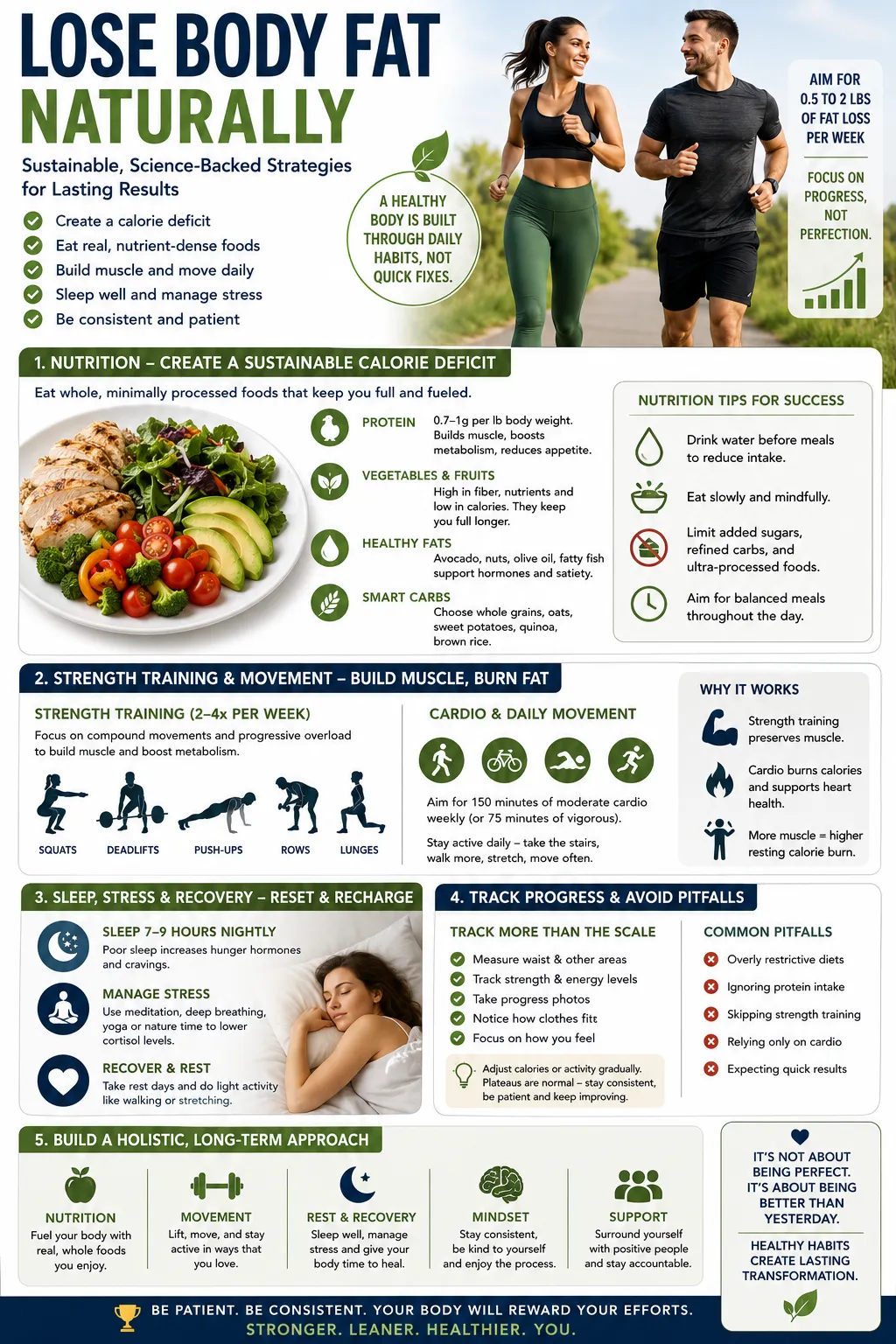 Losing body fat naturally focuses on sustainable lifestyle changes that create a calorie deficit while preserving muscle, metabolism, and overall health. Unlike fad diets or extreme measures, natural approaches emphasize balanced nutrition, regular movement, quality sleep, and mindful habits that support long-term fat reduction without compromising well-being. This method not only trims excess fat but also improves energy, mood, and disease risk factors.
Success stems from consistency rather than perfection. By understanding the principles of energy balance and prioritizing nutrient-dense foods and strength-building activities, individuals can achieve gradual, maintainable fat loss—typically aiming for 0.5 to 2 pounds per week to minimize muscle loss and metabolic slowdown.
Creating a Sustainable Calorie Deficit Through Nutrition
The foundation of fat loss is consuming fewer calories than the body expends, but quality matters as much as quantity. Prioritize whole, minimally processed foods that promote satiety and nutrient density. A balanced plate should include lean proteins, healthy fats, fiber-rich vegetables, and complex carbohydrates.
Protein is particularly effective, as it boosts metabolism, reduces appetite, and helps preserve muscle during a deficit. Aim for 0.7 to 1 gram per pound of body weight from sources like chicken, fish, eggs, Greek yogurt, beans, and tofu. High-protein meals stabilize blood sugar and curb cravings, making adherence easier.
Incorporate plenty of vegetables and fruits for fiber, which aids digestion and fullness while being low in calories. Healthy fats from avocados, nuts, olive oil, and fatty fish support hormone production and satisfaction. Limit added sugars, refined carbs, and ultra-processed items, which can spike hunger and provide empty calories. Hydration is key—drinking water before meals can reduce intake and support metabolic functions.
Meal timing and mindfulness also play roles. Eating slowly, without distractions, helps recognize fullness cues. Some find success with balanced distribution across the day rather than extreme restrictions, ensuring steady energy for daily activities.
The Power of Strength Training and Movement
Exercise accelerates fat loss by increasing calorie burn and building muscle, which elevates resting metabolic rate. Strength training is essential, as it signals the body to retain lean mass during a deficit. Focus on compound movements like squats, deadlifts, push-ups, rows, and lunges, performed 2-4 times weekly with progressive overload.
Even without heavy weights, bodyweight or resistance band routines yield benefits. Studies show resistance training can lead to noticeable reductions in body fat percentage while improving strength and body composition. Combine this with cardiovascular activity—brisk walking, cycling, swimming, or HIIT—for additional calorie expenditure and heart health. Aim for 150 minutes of moderate cardio weekly, plus daily movement like taking stairs or short walks.
Avoid excessive cardio alone, which may lead to muscle loss if nutrition is inadequate. A balanced routine of strength and movement supports fat oxidation without burnout.
Optimizing Sleep, Stress, and Recovery
Sleep profoundly impacts fat loss. Poor sleep disrupts hunger hormones (ghrelin increases appetite; leptin decreases), leading to cravings for high-calorie foods. Aim for 7-9 hours nightly in a cool, dark environment. Consistent bedtime routines enhance recovery and metabolic regulation.
Chronic stress elevates cortisol, which can promote abdominal fat storage. Incorporate stress-reduction practices like meditation, deep breathing, yoga, or nature time. These not only lower cortisol but improve adherence to healthy eating and exercise habits.
Recovery days are vital. Active recovery through light walks or mobility work prevents overtraining while maintaining momentum. Listening to your body prevents plateaus and injuries.
Tracking Progress and Avoiding Common Pitfalls
Monitor more than the scale: measure waist circumference, track energy levels, strength gains, and how clothes fit. Photos and body composition assessments provide fuller pictures of fat loss versus water or muscle fluctuations. Adjust calories or activity gradually if progress stalls—metabolic adaptation is normal but manageable with periodic refeeds or strength focus.
Common pitfalls include overly restrictive diets leading to rebound, neglecting protein, or ignoring strength training. Sustainability is key: choose enjoyable foods and activities for lifelong habits. Consult professionals for personalized advice, especially with underlying conditions.
Building a Holistic, Long-Term Approach
Natural body fat loss integrates nutrition, movement, sleep, and mindset. Focus on habits that enhance health markers beyond aesthetics—better blood sugar control, reduced inflammation, and improved mood. Community support, whether through groups or accountability partners, boosts motivation.
As seasons and life demands change, flexibility ensures continued progress. Celebrate non-scale victories like increased stamina or better-fitting clothes to maintain enthusiasm.
Conclusion
Losing body fat naturally is achievable through evidence-based strategies centered on nutrient-rich eating, consistent strength and movement practices, quality rest, and stress management. By creating a moderate calorie deficit while fueling the body properly, individuals can shed fat sustainably while gaining strength, energy, and confidence. Patience and consistency transform these practices into lasting lifestyle changes that support not just a leaner physique but vibrant health for years ahead. Start with small, actionable steps today—your body will adapt and reward your efforts over time.