Healthy Snacks for Weight Loss: Nutritious and Delicious Snack Ideas
Introduction
Weight loss is not about skipping meals or avoiding food altogether. Instead, it involves making healthier food choices that nourish the body while maintaining a calorie deficit. One of the most effective yet often overlooked strategies for successful weight management is choosing healthy snacks. Smart snacking helps stabilize blood sugar levels, prevents excessive hunger between meals, supports energy levels, and reduces the likelihood of overeating during main meals.
Many people associate snacks with unhealthy foods such as chips, cookies, sugary beverages, and processed treats. However, nutritious snacks can play an important role in a balanced weight-loss plan when they are rich in protein, fiber, healthy fats, vitamins, and minerals. Research consistently shows that consuming nutrient-dense foods improves satiety, supports metabolism, and encourages healthier eating habits throughout the day.
This guide explores the best healthy snacks for weight loss, explains what makes a snack beneficial, and provides practical tips to help you make smarter food choices for long-term success.
Why Healthy Snacking Matters for Weight Loss
Healthy snacking helps bridge the gap between meals and prevents extreme hunger, which often leads to overeating. When blood sugar levels remain stable, energy levels improve and cravings for high-calorie processed foods decrease.
Nutritious snacks also contribute essential vitamins, minerals, antioxidants, and dietary fiber that support overall health. Rather than viewing snacks as unnecessary calories, they should be considered an opportunity to improve nutritional intake while supporting weight-loss goals.
Choosing balanced snacks can improve concentration, enhance physical performance, and reduce unhealthy eating patterns throughout the day.
What Makes a Snack Weight-Loss Friendly?
Not every snack supports healthy weight management. The best snacks contain a combination of protein, dietary fiber, and healthy fats because these nutrients promote fullness and slow digestion.
Protein helps preserve lean muscle mass while increasing satiety. Fiber supports digestive health and reduces hunger by slowing the emptying of the stomach. Healthy fats provide long-lasting energy and help regulate appetite when consumed in moderate portions.
A weight-loss-friendly snack should also be relatively low in added sugars, refined carbohydrates, and unhealthy saturated or trans fats. Whole, minimally processed foods are generally better choices than packaged snacks containing artificial ingredients and excessive sodium.
Best High-Protein Snacks for Weight Loss
Protein-rich snacks are among the most effective choices for controlling hunger. They help maintain muscle mass during weight loss and require more energy for digestion than simple carbohydrates.
Greek yogurt is an excellent option because it contains high-quality protein, calcium, and probiotics that support digestive health. Cottage cheese provides a similar nutritional profile and pairs well with fresh fruit or vegetables.
Boiled eggs are another convenient snack packed with protein, vitamins, and healthy fats. Roasted chickpeas offer a plant-based alternative that combines protein with dietary fiber. Edamame, tofu cubes, and grilled chicken slices are also nutritious options for people looking to increase protein intake.
Including protein in snacks helps reduce cravings and promotes longer-lasting fullness between meals.
Fiber-Rich Snacks That Keep You Full
Fiber is essential for healthy digestion and appetite control. High-fiber foods slow digestion, improve gut health, and help maintain stable blood sugar levels.
Fresh fruits such as apples, pears, berries, and oranges are naturally rich in fiber and antioxidants. Vegetables like carrots, cucumbers, celery, and bell peppers provide satisfying crunch with very few calories.
Whole-grain crackers paired with hummus, air-popped popcorn without excessive butter, and oatmeal made with minimal added sugar are additional fiber-rich snack choices.
Regular consumption of fiber has been associated with improved weight management because it helps people feel full while consuming fewer calories.
Fruits and Vegetables as Healthy Snack Choices
Fruits and vegetables are among the most nutrient-dense foods available. They are naturally low in calories while providing vitamins, minerals, antioxidants, and water that support overall health.
Apple slices with natural peanut butter create a balanced combination of carbohydrates, healthy fats, and protein. Banana with a handful of nuts offers sustained energy before exercise. Mixed berries with plain yogurt provide antioxidants along with high-quality protein.
Vegetable sticks served with hummus or yogurt-based dips make an excellent savory snack that satisfies hunger without excessive calories.
Choosing colorful fruits and vegetables also ensures a wide variety of nutrients that support immune function and overall wellbeing.
Healthy Fats That Support Weight Management
Healthy fats are often misunderstood during weight loss. Although fats contain more calories than protein or carbohydrates, they also promote fullness and improve nutrient absorption.
Nuts such as almonds, walnuts, pistachios, and cashews contain healthy unsaturated fats, protein, fiber, and important minerals. Seeds including chia seeds, flaxseeds, pumpkin seeds, and sunflower seeds offer similar nutritional benefits.
Avocado is another excellent source of healthy fats that can be enjoyed with whole-grain toast or vegetable slices.
Because these foods are calorie-dense, portion control remains important. Consuming moderate amounts supports weight management while providing long-lasting energy.
Homemade Healthy Snack Ideas
Preparing snacks at home allows greater control over ingredients and portion sizes.
Some nutritious homemade snack ideas include:
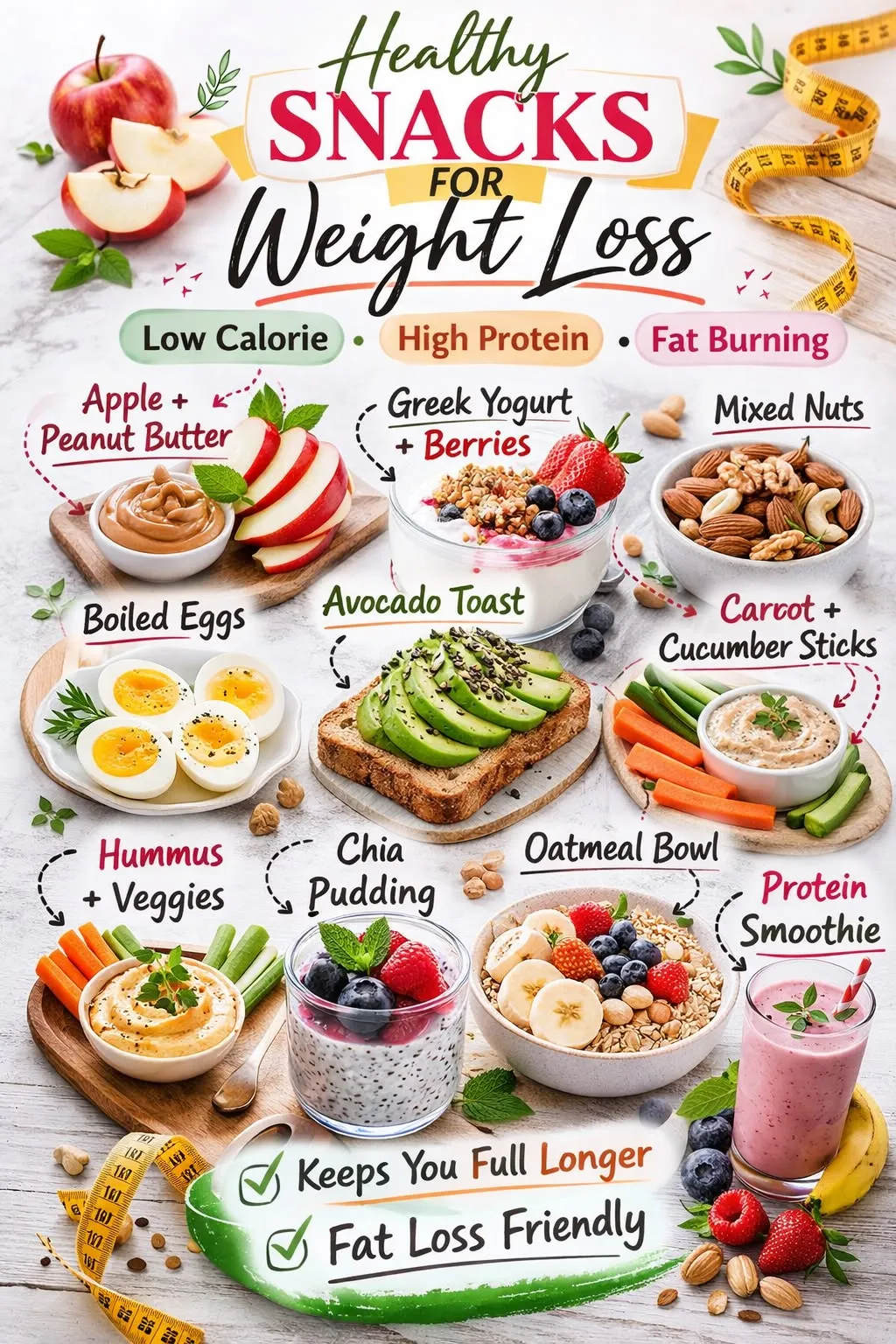
- Greek yogurt topped with fresh berries
- Apple slices with peanut or almond butter
- Roasted chickpeas seasoned with herbs
- Homemade trail mix with nuts and seeds
- Cottage cheese with cucumber and tomatoes
- Vegetable sticks with hummus
- Oatmeal energy bites made with oats and nuts
- Hard-boiled eggs with sliced vegetables
- Smoothies prepared with fruit, yogurt, and spinach
- Whole-grain toast topped with avocado
These snacks provide balanced nutrition while reducing reliance on processed convenience foods.
Snacks to Limit During Weight Loss
Many packaged snacks are high in refined carbohydrates, added sugars, unhealthy fats, and sodium. Although they may temporarily satisfy cravings, they often lead to rapid hunger shortly afterward.
Foods such as potato chips, sugary breakfast bars, candy, pastries, sweetened beverages, cookies, and fried snack foods provide excess calories with limited nutritional value.
Highly processed snacks may also contribute to overeating because they are designed to be extremely palatable while offering little satiety.
Replacing these foods with whole-food alternatives supports healthier eating habits and improves long-term weight management.
Portion Control and Mindful Snacking
Even healthy foods can contribute to weight gain if consumed in excessive amounts. Portion control is an important aspect of successful weight management.
Instead of eating directly from large packages, serve snacks into smaller bowls or containers. Eating slowly and paying attention to hunger and fullness signals encourages mindful eating and reduces unnecessary calorie intake.
Planning snacks in advance also helps prevent impulsive food choices when hunger strikes.
Mindful snacking allows individuals to enjoy food while maintaining awareness of portion sizes and nutritional quality.
Lifestyle Habits That Complement Healthy Snacking
Healthy snacks work best when combined with an overall healthy lifestyle. Regular physical activity supports calorie balance, improves metabolism, and preserves lean muscle mass during weight loss.
Adequate sleep helps regulate hormones that control appetite, reducing cravings for high-calorie foods. Managing stress through exercise, meditation, yoga, or deep breathing can also reduce emotional eating.
Drinking sufficient water throughout the day supports digestion and may help distinguish true hunger from thirst.
A consistent routine that includes balanced meals, regular movement, quality sleep, and mindful eating creates a strong foundation for sustainable weight loss.
Common Snacking Mistakes to Avoid
One of the most common mistakes is skipping meals and relying heavily on snacks throughout the day. This often results in poor nutrition and excessive calorie intake.
Choosing snacks based solely on calorie content instead of nutritional value is another mistake. Low-calorie processed foods may lack protein and fiber, making them less satisfying.
Eating while watching television, working, or using a smartphone can lead to mindless overeating because people become less aware of portion sizes.
Finally, assuming that all foods labeled “healthy” are suitable for weight loss can be misleading. Reading nutrition labels and practicing portion control remain essential.
Conclusion
Healthy snacks can become a valuable part of an effective weight-loss plan when chosen wisely. Rather than avoiding snacks altogether, selecting nutrient-rich foods that provide protein, fiber, healthy fats, vitamins, and minerals helps control hunger, maintain energy levels, and reduce cravings for unhealthy foods.
Whole foods such as fruits, vegetables, yogurt, nuts, seeds, legumes, and whole grains offer lasting satisfaction while supporting overall health. Combined with regular exercise, proper hydration, adequate sleep, and mindful eating habits, healthy snacking contributes to sustainable weight management and long-term wellness.
The key to successful weight loss is consistency rather than restriction. Making smart snack choices every day can help you stay on track with your health goals while enjoying delicious, satisfying foods that nourish your body.